
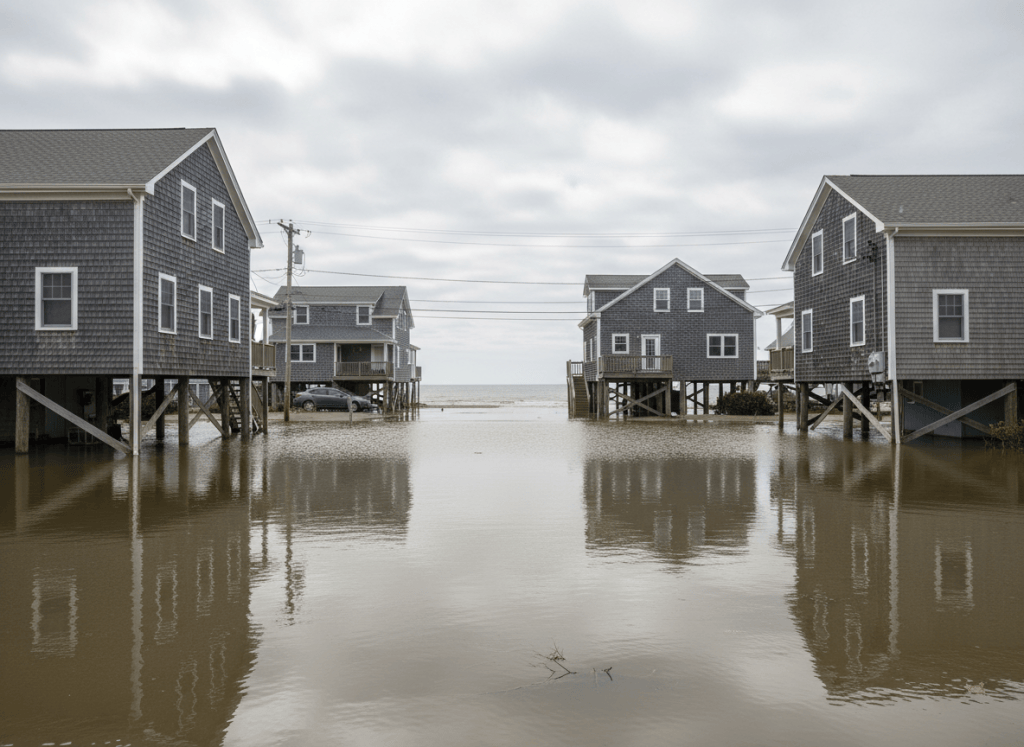
Standard homeowners, renters and condominium policies do not cover flood damage. In New Jersey, separate flood insurance can matter far beyond the Shore because heavy rain, river overflow, tidal water and rapid surface runoff can affect properties outside the highest-risk mapped zones.
What counts as flood?
Flood insurance addresses qualifying inundation from overflowing inland or tidal waters, unusual and rapid accumulation of surface water and certain mudflows or shoreline erosion. A burst pipe inside one home is generally a different type of water loss and may be handled under a homeowners or renters policy.
What NFIP building coverage can protect
- Foundation walls and anchorage systems
- Electrical and plumbing systems
- Furnaces and water heaters
- Central air-conditioning equipment
- Built-in appliances
- Permanently installed cabinets and flooring
- Certain detached-garage coverage
What contents coverage can protect
- Furniture and clothing
- Electronics
- Portable appliances
- Washers and dryers
- Window air conditioners
- Certain rugs and artwork, subject to limits
Homeowners can purchase building and contents coverage. Renters generally purchase contents coverage because the landlord insures the building. Building and contents coverage have separate limits and deductibles.
What flood insurance does not cover
- Temporary housing and additional living expenses
- Most vehicles
- Currency and many valuable papers
- Financial losses from business interruption
- Earth movement even when associated with water
- Moisture or mold that could have been prevented
- Some property and improvements below the lowest elevated floor
NFIP limits
NFIP residential policies generally offer up to $250,000 of building coverage and up to $100,000 of contents coverage for homeowners. Renters can purchase contents coverage up to $100,000. Higher-value properties may need excess or private flood insurance.
The 30-day waiting period
NFIP coverage normally takes effect 30 days after purchase. Exceptions include coverage purchased in connection with making, increasing, extending or renewing a mortgage; certain policy changes at renewal; newly designated high-risk zones; and qualifying wildfire-related flooding.
Waiting until a hurricane is approaching is generally too late.
Do properties outside a high-risk zone need coverage?
A lender may require flood insurance for certain mapped zones, but lender requirements do not identify every meaningful risk. Flooding can occur outside high-risk areas. Review FEMA maps, local drainage and prior-loss information, elevation and the property’s surroundings.
NFIP versus private flood insurance
Private policies may offer different limits, pricing, waiting periods and coverage features. Compare definitions, exclusions, loss settlement, additional living expenses, basement limitations, deductibles and cancellation or nonrenewal conditions. Confirm that a mortgage lender accepts the selected policy.
Ways to reduce flood risk and cost
- Obtain an elevation certificate when useful.
- Elevate utilities and mechanical equipment.
- Install compliant flood vents.
- Use flood-resistant materials in exposed areas.
- Protect important contents above likely water levels.
- Maintain drainage and sump systems.
- Review community mitigation and rating information.
Questions before buying
- What flood definition applies?
- Are building and contents both covered?
- What are the separate deductibles?
- How are basement contents treated?
- Is replacement cost or actual cash value used?
- Are temporary housing costs covered?
- When does the policy begin?
- Will the lender accept the policy?
Official resources
General consumer information only. Coverage depends on the policy and property. Verify current terms with the insurer, NFIP and lender.

