Category: Money & Taxes

Practical guides on New Jersey property taxes, ANCHOR payments, insurance, junk fees, and other money issues that affect homeowners and renters.

  • AI Finds the Best Internet Providers & Speeds by NJ Address 2026

    If you’ve ever paid for “high-speed internet” in New Jersey and still dealt with buffering, dead zones, or random outages, you know the scam. The name on the bill means nothing. The speed at your address is what matters.

    And providers don’t advertise that honestly.

    AI fixes this fast.

    These tools check internet providers by exact NJ address. Not town. Not county. Your street. Your house. They show real speeds, reliability, and which providers actually perform where you live.

    I’m talking minutes, not days.

    This is huge for work-from-home households, kids streaming everything, and anyone who’s tired of paying premium prices for mediocre service. You see what’s available, what’s worth it, and what to avoid before you sign anything.

    For NJ residents juggling remote work, school, and entertainment on one connection, this clarity saves money and frustration.

    Final takeaway. Internet bills shouldn’t feel like a gamble. Knowing your real options changes everything.

    Read the full statewide guide:
    https://exitdesk.wordpress.com/2025/12/11/how-new-jersey-residents-are-using-ai-in-2026-to-beat-high-taxes-insurance-rates-and-everyday-costs/

  • NJ Grocery Price Comparison Guide: Updated ShopRite, Acme and Aldi Method

    This guide has been consolidated. Exit Desk does not operate a universal live “AI grocery price checker,” and maintaining two articles that promise the same unsupported tool would mislead readers and create unnecessary duplication.

    Use the updated guide instead: How to Compare Grocery Prices in New Jersey: ShopRite, Acme, Aldi and More.

    The current guide explains how to compare a representative basket using store-specific listings, weekly circulars, digital coupons and unit prices. It also explains the limits of AI-generated price claims and New Jersey’s 2026 Fair Price Protection Act.

  • AI Grocery & Household Savings Tools for High-Cost NJ Towns 2026

    If you’ve walked out of ShopRite lately and felt personally attacked by the receipt, you’re not alone. Groceries in New Jersey are out of control. Same cart. Same stuff. Somehow $60 more than last year.

    What most people don’t realize is how random pricing really is. Same items. Same stores. Different prices depending on town, timing, and sales you never see unless you hunt for them.

    AI fixes that.

    These tools track grocery and household prices across NJ stores and flag where you’re getting crushed. ShopRite. Acme. Aldi. BJ’s. They show you which store is cheaper for your actual list, not some generic basket.

    I’m talking minutes, not days.

    They also catch patterns. When prices spike. When sales actually matter. When bulk buys make sense and when they’re a trap. This matters in high-cost NJ towns where every dollar feels like it’s already spoken for.

    The best part is how fast it changes habits. You stop loyalty shopping. You stop guessing. You stop assuming one store is always cheaper. You follow the math.

    Takeaway. Groceries aren’t getting cheaper. But overpaying is optional now if you’re willing to spend five minutes checking before you go.

    Read the full statewide guide:
    https://exitdesk.wordpress.com/2025/12/11/how-new-jersey-residents-are-using-ai-in-2026-to-beat-high-taxes-insurance-rates-and-everyday-costs/

  • AI Pension & Social Security Estimator for NJ Retirees 2026

    If you’re anywhere near retirement in New Jersey, you’ve probably had this thought at 2 a.m.
    “Am I actually going to be okay… or am I about to be very not okay?”

    Between pensions, Social Security, taxes, and healthcare, nothing is straightforward. Everyone gives you a different answer. Your buddy says one thing. Google says another. And the government websites read like they were written to confuse you on purpose.

    This is where AI finally makes itself useful.

    These estimators let NJ retirees plug in real numbers. Not guesses. Your work history. Your pension details. When you plan to claim Social Security. Married or single. Survivor benefits. It runs the scenarios and shows you what changes if you claim early, wait, or coordinate with a pension.

    And yeah, the timing matters. A lot.

    I’m talking minutes, not days.

    What really helps NJ residents is seeing the tax impact. Social Security taxation. Pension income. How it all stacks with property taxes that never seem to go down. These tools don’t sugarcoat it. They show you what hits your bank account every month.

    The big win here is confidence. You stop guessing. You stop relying on “I heard.” You see the numbers and adjust before it’s too late to change anything.

    Takeaway. Retirement isn’t about one big decision. It’s about timing. If you haven’t run your numbers from a few different angles, you’re leaving peace of mind on the table.

    Read the full statewide guide:
    https://exitdesk.wordpress.com/2025/12/11/how-new-jersey-residents-are-using-ai-in-2026-to-beat-high-taxes-insurance-rates-and-everyday-costs/

  • AI FAFSA, Financial Aid & College Funding Estimator for NJ Parents 2026

    FAFSA season hits NJ parents like a brick every year. You sit down thinking it’ll take twenty minutes. Three hours later you’re still clicking through questions that feel designed to break you.

    And the worst part. You finish it and still have no idea what kind of aid you’re actually getting.

    That’s changing fast.

    AI FAFSA and college funding estimators let NJ parents run the numbers before they even touch the real application. You plug in income, assets, family size, and which colleges you’re looking at. It estimates aid, flags red zones, and shows how different choices change the outcome.

    This matters more than people realize. Small tweaks. Timing. Who claims what. What savings hurt you and which ones don’t. These tools make that visible instead of mysterious.

    I’m talking minutes, not days.

    For NJ families staring down tuition numbers that look like a down payment on a house, this kind of clarity is huge. It turns FAFSA from a panic event into a planning tool.

    No guarantees. No magic money. Just a clear picture before you commit to anything that locks you in for years.

    Takeaway. If college is even remotely on your radar and you haven’t run the numbers ahead of time, you’re flying blind. This fixes that.

    Read the full statewide guide:
    https://exitdesk.wordpress.com/2025/12/11/how-new-jersey-residents-are-using-ai-in-2026-to-beat-high-taxes-insurance-rates-and-everyday-costs/

  • AI Childcare & Dependent Care Tax Credit Calculator for NJ Families 2026

    If you’re paying for childcare in New Jersey, you already know the pain. Daycare costs more than a car payment. Sometimes more than rent. And that’s before summer camps, aftercare, and random “activity fees” that show up out of nowhere.

    Here’s the part that makes people angry later. There are tax credits and deductions that help. A lot of them. And most NJ families either miss them completely or mess them up.

    That’s where AI saves real money.

    These calculators let you plug in what you actually paid for childcare or dependent care. Not estimates. Real numbers. It then runs your situation through the current NJ and federal rules and tells you what you qualify for. Clean. Clear. No guessing.

    It flags mistakes too. Like claiming the wrong parent. Using the wrong provider info. Missing credits because your income fell into a weird middle zone. Stuff TurboTax won’t always explain until it’s too late.

    I’m talking minutes, not days.

    For families juggling work schedules, school pickups, Wawa dinners, and everything else, this is one of those “why didn’t anyone tell me this sooner” moments.

    Bottom line. If you paid for childcare or dependent care last year and didn’t double-check your credits, you probably left money on the table. This is how you stop doing that.

    Read the full statewide guide:
    https://exitdesk.wordpress.com/2025/12/11/how-new-jersey-residents-are-using-ai-in-2026-to-beat-high-taxes-insurance-rates-and-everyday-costs/

  • AI Disability Insurance Explainer for NJ Workers 2026

    If you think disability insurance is something other people need, let me stop you right there. That’s what everyone thinks. Until they can’t work for a few months and the bills don’t care.

    In New Jersey, missing a paycheck hits different. Rent. Mortgage. Property taxes that feel like a second mortgage. Groceries that somehow cost more every week. You miss one income stream and the whole thing wobbles.

    Disability insurance is supposed to be the safety net. In reality, most people have no idea what they actually have. Or worse. They think they’re covered and they’re not.

    Here’s where AI finally earns its spot at the table.

    These tools break disability insurance down in plain English. You tell it what you do for work, how much you make, whether you’re union, private sector, self-employed. It explains what New Jersey’s state disability covers and where the gaps are. No legal gibberish. No scare tactics.

    It also shows you the difference between short-term, long-term, employer plans, and private policies. More importantly, it shows you what actually pays out and what looks good on paper but never delivers.

    I’m talking minutes, not days.

    This is huge for NJ workers who think, “I’ll be fine.” Because fine turns into panic real fast when your paycheck stops and the bills don’t.

    The takeaway is simple. You don’t need more insurance. You need to know what you actually have and what it really does. This makes that painfully clear without sitting through a sales pitch.

    Read the full statewide guide:
    https://exitdesk.wordpress.com/2025/12/11/how-new-jersey-residents-are-using-ai-in-2026-to-beat-high-taxes-insurance-rates-and-everyday-costs/

  • Verified New Jersey Consumer Guides: Taxes, Insurance, Benefits and Costs

    Editor’s note: Exit Desk has retired the earlier version of this article. It made overly broad claims about what general-purpose AI tools could verify or save across taxes, insurance, benefits and legal matters. Those claims were not sufficiently supported, and one broad AI article is not a safe substitute for current, topic-specific guidance.

    Use a current New Jersey guide instead

    Where AI can and cannot help

    AI can help organize questions, summarize text you provide and create a checklist for reviewing an official source. It should not be trusted to retrieve private insurer quotes, determine legal eligibility, predict a tax appeal, calculate benefits from incomplete facts or identify the cheapest option in every ZIP code. Never upload account numbers, medical records, full legal notices or other sensitive documents to a general-purpose tool without understanding how the service handles that information.

    For consequential decisions, verify dates, eligibility rules, forms and complaint procedures with the responsible New Jersey or federal agency. Use a licensed professional when the decision depends on individual legal, financial, tax, insurance or medical facts.

  • AI Life Insurance Quote Checker for NJ Households 2026

    If the words “life insurance” make your eyes glaze over, you’re not alone. Most people in New Jersey deal with it the same way they deal with DMV mail. Ignore it until it becomes a problem.

    Here’s the thing though. Life insurance in NJ is one of those quiet money leaks. Not flashy. Just bleeding you slowly every month while you’re busy worrying about property taxes, groceries, and why Parkway traffic is somehow worse than last year.

    I found out the hard way that most people are either overinsured or paying way too much for what they have. Sometimes both.

    This is where AI actually earns its keep.

    These new AI quote checkers let you plug in your real situation. Age. Health basics. Family size. Mortgage. Kids. Zip code. All of it. Not the fake “average American” nonsense. Actual New Jersey reality.

    In seconds, it pulls quotes across carriers and shows you the spread. Same coverage. Wildly different prices. Some companies straight up punish NJ residents. Others don’t. You’d never know unless you lined them up side by side.

    What shocked me was how fast it spots junk policies. High premiums. Low payout. Clauses buried so deep you’d need a law degree and a magnifying glass. The tool flags that stuff instantly.

    I’m talking minutes, not days.

    It also shows you when term life actually makes more sense than whole life. Nobody at a kitchen table sales pitch is going to tell you that. Their commission depends on you not knowing.

    If you’ve got a family, a mortgage, or even just someone who’d be screwed if your income disappeared, this isn’t optional adulting. This is protecting your house from becoming a financial disaster overnight.

    And no. This isn’t about buying more insurance. It’s about paying less for the right amount and not getting played.

    End of the day takeaway. If you haven’t checked your life insurance in years, you’re probably overpaying. This is the fastest way to confirm it without talking to a human who’s trying to sell you something.

    Read the full statewide guide:
    https://exitdesk.wordpress.com/2025/12/11/how-new-jersey-residents-are-using-ai-in-2026-to-beat-high-taxes-insurance-rates-and-everyday-costs/

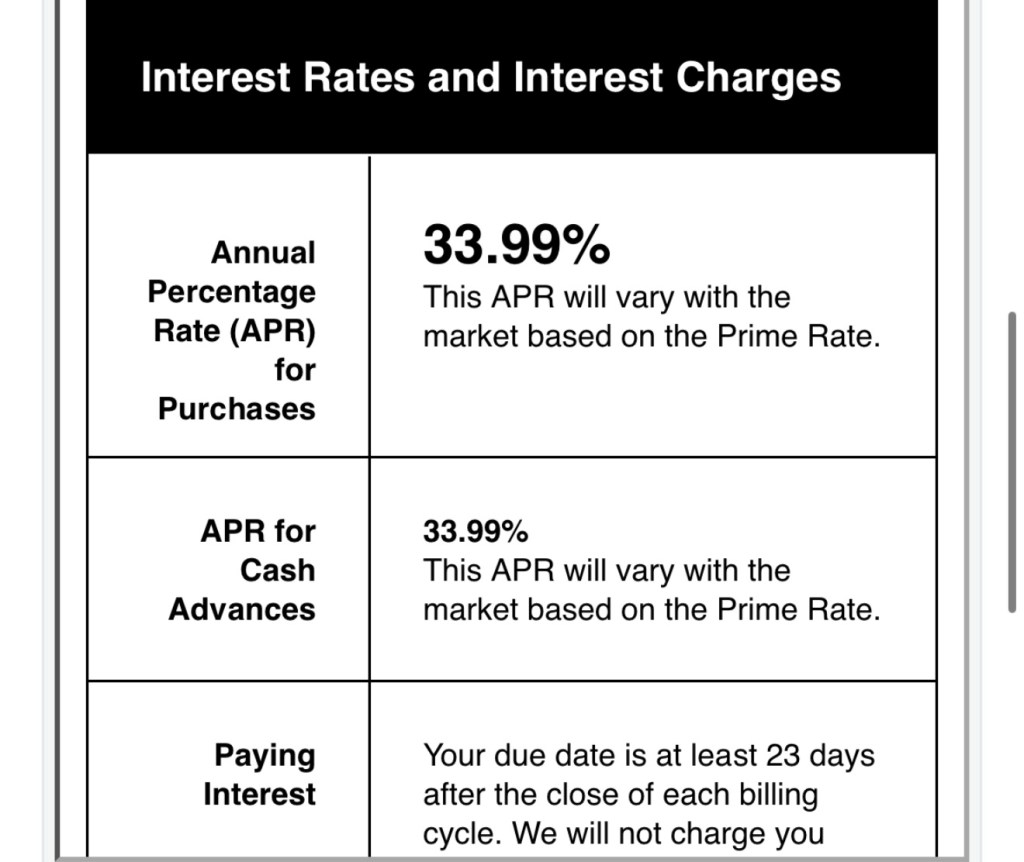
  • 33.99% Credit Card APR: Legalized Predatory Extraction That Must End Now

    33.99% Credit Card APR: Legalized Predatory Extraction That Must End Now

    By Exit Desk | Opinion

    A 33.99% APR on a credit card is not risk-based pricing. It is not a legitimate market rate. It is deliberate, calculated exploitation.

    As of December 2025, the average interest rate on new credit card offers sits around 22–23%. The prime rate is roughly 6.75%. Yet major credit card issuers continue charging consumers interest rates pushing 34%, 36%, and even higher.

    These are not fringe products. First Premier Bank advertises rates up to 36%. Retail cards, including luxury brands, routinely hit 35.99%. These rates are commonly imposed on Americans with imperfect credit, recent financial hardship, or anyone forced to rely on a cash advance.

    This is not credit. It is a system engineered to extract wealth from people who can least afford it.

    The Brutal Reality of the Math

    At 33.99% APR, compounded daily:

    A $1,000 carried balance costs nearly $340 per year in interest A $5,000 balance burns more than $1,700 annually Minimum payments barely touch the principal, sending most payments straight into interest

    This structure does not promote repayment. It manufactures long-term dependency, turning a temporary emergency into years or even decades of financial stagnation.

    Issuers Know Exactly What They’re Doing

    Banks justify these rates by citing “risk,” yet those same institutions borrow money at a fraction of the prime rate. The difference is not risk management. It is unchecked leverage.

    One missed payment. One medical bill. One emergency repair. The trap closes fast. Even when spending stops, balances continue to grow through interest alone.

    Meanwhile, these cards are aggressively marketed with rewards, cash back, and pre-approval offers. The danger is buried in fine print that most people never read until the damage is already done.

    The Timing Makes This Worse

    Families are already under pressure from inflation, housing costs, insurance premiums, and healthcare expenses. For many households, credit cards are not used for luxury. They are used to survive.

    Adding a near-34% interest rate on top of that is not consumer protection. It is punishment. It deepens inequality, destabilizes families, and locks people into cycles of debt that become increasingly difficult to escape.

    We Once Called This Usury

    For much of American history, excessive interest was recognized as socially destructive. Usury laws existed specifically to prevent this kind of financial harm.

    That changed after the 1978 Supreme Court decision in Marquette National Bank v. First of Omaha, which allowed national banks to export permissive interest rates nationwide from states like Delaware and South Dakota. As a result, local consumer protection laws became effectively meaningless for most credit cards.

    A private lender charging 34% interest would be labeled predatory. When a national bank does it, the practice is normalized.

    This is not an economic necessity. It is a policy failure driven by deregulation and corporate influence.

    A Practical Solution Already Exists

    This problem does not require dismantling the financial system. A federal cap on consumer credit card APRs, tied to a reasonable margin above the prime rate, would immediately reduce harm while still allowing banks to price risk responsibly.

    Many developed countries already enforce similar protections. Their financial systems function just fine. Consumers avoid permanent debt traps.

    The United States has simply chosen not to act.

    The Bottom Line

    A 33.99% APR is not a free-market outcome. It is the direct result of eroded safeguards and regulatory capture.

    If policymakers are serious about protecting consumers, the line should be clear. No credit card should ever be allowed to charge interest at a level that mathematically guarantees entrapment for anyone who stumbles.

    At that point, it stops being credit.

    It becomes extraction.