Category: Uncategorized

  • AI Study Tools & Flashcard Generators for NJ Students 2026

    Studying in New Jersey schools has turned into information overload. Notes everywhere. Google Docs. Slides. Review packets that look like a small novel.

    Most kids don’t need more material. They need better focus.

    AI study tools fix that.

    Students are using tools like ChatGPT, Claude, or Gemini to turn messy notes into clean study guides and flashcards. You paste in the material. It organizes it. Key points. Practice questions. Stuff you can actually review.

    I’m talking minutes, not days.

    This helps especially during midterms and finals when everything hits at once. Instead of rereading notes for three hours, kids can quiz themselves and spot what they don’t understand fast.

    For NJ students juggling sports, activities, and school, this is a real advantage.

    Takeaway. Studying smarter beats studying longer. Organization changes everything.

    Read the full statewide guide:
    https://exitdesk.wordpress.com/2025/12/11/how-new-jersey-residents-are-using-ai-in-2026-to-beat-high-taxes-insurance-rates-and-everyday-costs/

  • Verified New Jersey Consumer Guides: Taxes, Insurance, Benefits and Costs

    Editor’s note: Exit Desk has retired the earlier version of this article. It made overly broad claims about what general-purpose AI tools could verify or save across taxes, insurance, benefits and legal matters. Those claims were not sufficiently supported, and one broad AI article is not a safe substitute for current, topic-specific guidance.

    Use a current New Jersey guide instead

    Where AI can and cannot help

    AI can help organize questions, summarize text you provide and create a checklist for reviewing an official source. It should not be trusted to retrieve private insurer quotes, determine legal eligibility, predict a tax appeal, calculate benefits from incomplete facts or identify the cheapest option in every ZIP code. Never upload account numbers, medical records, full legal notices or other sensitive documents to a general-purpose tool without understanding how the service handles that information.

    For consequential decisions, verify dates, eligibility rules, forms and complaint procedures with the responsible New Jersey or federal agency. Use a licensed professional when the decision depends on individual legal, financial, tax, insurance or medical facts.

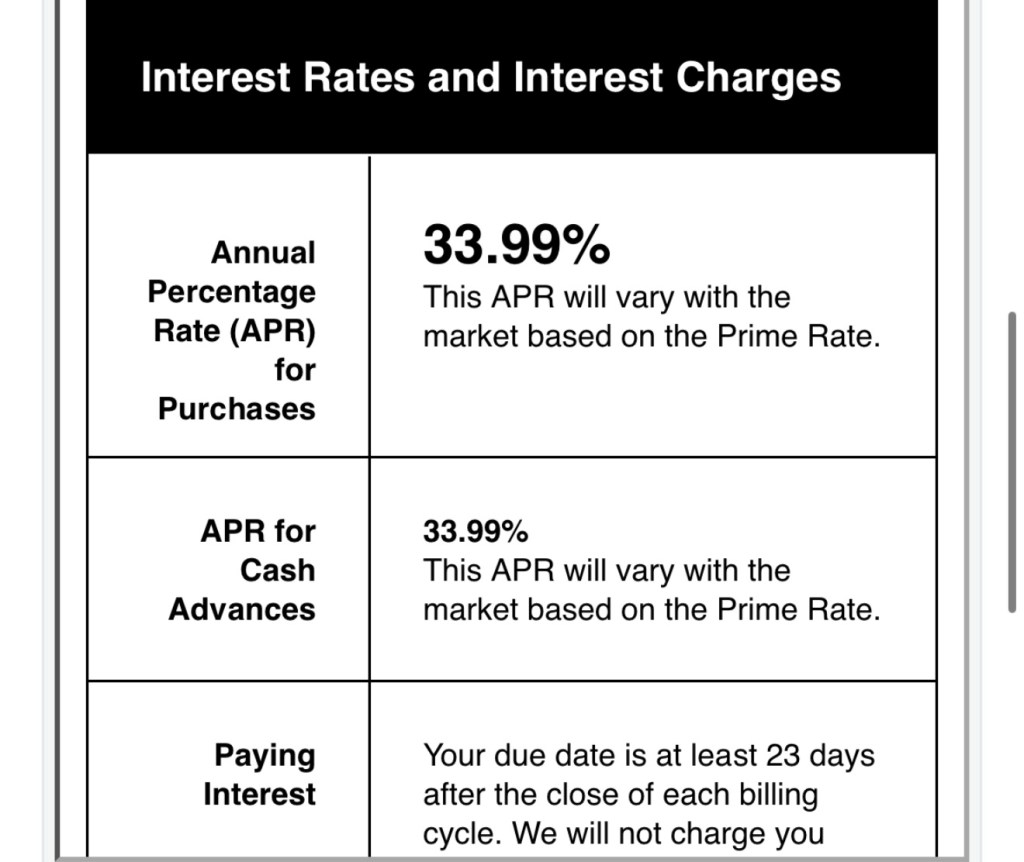
  • 33.99% Credit Card APR: Legalized Predatory Extraction That Must End Now

    33.99% Credit Card APR: Legalized Predatory Extraction That Must End Now

    By Exit Desk | Opinion

    A 33.99% APR on a credit card is not risk-based pricing. It is not a legitimate market rate. It is deliberate, calculated exploitation.

    As of December 2025, the average interest rate on new credit card offers sits around 22–23%. The prime rate is roughly 6.75%. Yet major credit card issuers continue charging consumers interest rates pushing 34%, 36%, and even higher.

    These are not fringe products. First Premier Bank advertises rates up to 36%. Retail cards, including luxury brands, routinely hit 35.99%. These rates are commonly imposed on Americans with imperfect credit, recent financial hardship, or anyone forced to rely on a cash advance.

    This is not credit. It is a system engineered to extract wealth from people who can least afford it.

    The Brutal Reality of the Math

    At 33.99% APR, compounded daily:

    A $1,000 carried balance costs nearly $340 per year in interest A $5,000 balance burns more than $1,700 annually Minimum payments barely touch the principal, sending most payments straight into interest

    This structure does not promote repayment. It manufactures long-term dependency, turning a temporary emergency into years or even decades of financial stagnation.

    Issuers Know Exactly What They’re Doing

    Banks justify these rates by citing “risk,” yet those same institutions borrow money at a fraction of the prime rate. The difference is not risk management. It is unchecked leverage.

    One missed payment. One medical bill. One emergency repair. The trap closes fast. Even when spending stops, balances continue to grow through interest alone.

    Meanwhile, these cards are aggressively marketed with rewards, cash back, and pre-approval offers. The danger is buried in fine print that most people never read until the damage is already done.

    The Timing Makes This Worse

    Families are already under pressure from inflation, housing costs, insurance premiums, and healthcare expenses. For many households, credit cards are not used for luxury. They are used to survive.

    Adding a near-34% interest rate on top of that is not consumer protection. It is punishment. It deepens inequality, destabilizes families, and locks people into cycles of debt that become increasingly difficult to escape.

    We Once Called This Usury

    For much of American history, excessive interest was recognized as socially destructive. Usury laws existed specifically to prevent this kind of financial harm.

    That changed after the 1978 Supreme Court decision in Marquette National Bank v. First of Omaha, which allowed national banks to export permissive interest rates nationwide from states like Delaware and South Dakota. As a result, local consumer protection laws became effectively meaningless for most credit cards.

    A private lender charging 34% interest would be labeled predatory. When a national bank does it, the practice is normalized.

    This is not an economic necessity. It is a policy failure driven by deregulation and corporate influence.

    A Practical Solution Already Exists

    This problem does not require dismantling the financial system. A federal cap on consumer credit card APRs, tied to a reasonable margin above the prime rate, would immediately reduce harm while still allowing banks to price risk responsibly.

    Many developed countries already enforce similar protections. Their financial systems function just fine. Consumers avoid permanent debt traps.

    The United States has simply chosen not to act.

    The Bottom Line

    A 33.99% APR is not a free-market outcome. It is the direct result of eroded safeguards and regulatory capture.

    If policymakers are serious about protecting consumers, the line should be clear. No credit card should ever be allowed to charge interest at a level that mathematically guarantees entrapment for anyone who stumbles.

    At that point, it stops being credit.

    It becomes extraction.

  • Verified New Jersey Guides for Taxes, Insurance, Benefits and Costs

    Update: This broad page previously claimed free AI tools could slash taxes, find cheaper insurance, uncover grants and produce large savings. Those claims were not adequately supported and duplicated Exit Desk’s current verified-guide navigation.

    Browse Verified New Jersey Consumer Guides: Taxes, Insurance, Benefits and Costs

    The hub routes readers to current, source-backed guides for distinct decisions instead of promising one AI workflow can solve unrelated legal, tax, insurance and benefit questions.

    This URL is retained so existing links reach the corrected navigation resource.

  • New Jersey Contractor Insurance Requirements: General Liability and Workers’ Comp

    New Jersey home-improvement contractor businesses generally must document at least $500,000 per occurrence in commercial general liability coverage and maintain workers’ compensation insurance when required by law. Public-work contracts, home-elevation work, vehicles, professional services, and particular clients can require additional coverage or much higher limits.

    This guide explains the baseline rules and how contractors should compare policies. It does not promise the “cheapest” insurer or quote a statewide average because premiums depend on trade, payroll, revenue, subcontracting, limits, claims, location, and operations.

    Home-improvement contractor registration

    The New Jersey Division of Consumer Affairs requires a home-improvement contractor business to file proof of commercial general liability insurance with a minimum limit of $500,000 per occurrence. The registration FAQ also requires workers’ compensation insurance unless the business is exempt by law.

    The $500,000 figure is a registration minimum, not a recommendation that it is adequate for every job. A customer, general contractor, landlord, lender, municipality, or commercial contract can require higher limits and specific endorsements.

    Workers’ compensation requirements

    New Jersey generally requires employers to maintain workers’ compensation coverage or obtain approval to self-insure. The rule depends on the business structure and who performs services:

    • corporations generally need coverage when one or more people, including officers, perform services for financial consideration;
    • partnerships and LLCs generally need coverage when someone other than a partner or member performs services for financial consideration;
    • sole proprietorships generally need coverage when someone other than the principal owner performs services for financial consideration.

    Do not label a worker an independent contractor merely to avoid coverage. Worker classification depends on the real relationship and applicable law.

    General liability is not workers’ compensation

    Commercial general liability can address covered third-party bodily injury, property damage, completed operations, and other listed exposures. Workers’ compensation addresses covered employee work injuries and occupational illness. One does not replace the other.

    Likewise, a general liability policy usually does not replace commercial auto, professional liability, pollution, cyber, tools/equipment, builders risk, installation floater, inland marine, employment practices, or umbrella coverage.

    Insurance home-improvement contracts must identify

    New Jersey’s contractor application materials state that home-improvement contracts over $500 must be in writing and include specified business and project information. They also call for a copy of the contractor’s commercial general liability insurance certificate and the issuing insurance agency’s telephone number.

    Keep the certificate, policy, endorsements, and renewal evidence. A certificate summarizes coverage but does not create coverage or override the policy.

    Home-elevation contractors

    Home-elevation contractors face additional requirements. State guidance describes the $500,000 per-occurrence commercial general liability requirement plus at least $1 million per occurrence in cargo or other insurance specifically covering damage or loss resulting from home-elevation activities. Verify the current registration rules before bidding or renewing.

    Public work can require much more

    Public-work registration, prevailing-wage projects, bid documents, and agency contracts may impose higher liability, vehicle, workers’ compensation, bonding, safety, and reporting requirements. Do not use the home-improvement registration minimum as a public-project checklist. Read every solicitation and contract.

    How to compare contractor policies

    1. Describe operations accurately. List every trade, height, excavation, hot work, roofing, tree work, snow removal, design, environmental, and subcontracted exposure.
    2. Compare the same limits and forms. A cheaper quote may exclude the work you actually perform.
    3. Review exclusions. Watch for roofing, residential work, subcontractors, height, water damage, earth movement, professional services, pollution, EIFS, assault, and designated-work exclusions.
    4. Check completed operations. Claims can arise after the job ends.
    5. Understand subcontractor conditions. The policy may require written agreements, certificates, additional-insured status, or minimum limits.
    6. Review occurrence versus claims-made coverage. A claims-made form creates retroactive-date and tail-coverage issues.
    7. Compare deductibles and self-insured retentions. Include them in cash-flow planning.
    8. Verify insurer and producer licensing. Use New Jersey Department of Banking and Insurance resources and NMLS or other applicable official tools.

    Additional insured and waiver requests

    Clients and general contractors often request additional-insured status, primary and noncontributory wording, waiver of subrogation, or completed-operations coverage. These are not accomplished merely by typing a name onto a certificate. The policy endorsement and contract language control.

    Send the full written requirement to the insurance professional before signing the job contract. Ask what the endorsement covers, how long it applies, and whether an additional premium is due.

    Audit exposure estimates

    Many contractor policies are rated using estimated payroll, sales, subcontractor cost, or other exposure. At audit, the insurer can adjust the premium. Maintain payroll, sales, job, subcontractor, and certificate records; classify work accurately; and budget for audit changes.

    Do not rely on instant “AI” quote promises

    An online intake tool can collect information or route a submission, but no tool can honestly promise to shop every carrier or identify the cheapest compliant policy without complete underwriting data and policy-form review. Do not upload confidential payroll, customer, claim, or employee data without understanding who receives it and how it is used.

    Complaints and verification

    Registration questions go to the New Jersey home-improvement contractor business section. Insurance-company or producer complaints can be filed with the New Jersey Department of Banking and Insurance. Workers’ compensation requirements and employer guidance are available from the New Jersey Department of Labor.

    Bottom line

    Meet the registration minimum, but buy for the actual work and contracts. Verify workers’ compensation obligations, disclose every operation, compare exclusions and endorsements rather than price alone, and keep audit-ready records.

    Official sources

    This article provides general business and insurance information, not legal, tax, or coverage advice.

  • NJ Auto Insurance Discounts in 2026: Safety Features and Other Ways to Save

    Some vehicle features can reduce a New Jersey auto-insurance premium, but many popular driver-assistance systems do not automatically qualify for a discount. The safest approach is to ask each insurer which discounts it offers and compare the final premium for the same coverage limits and deductibles.

    New Jersey’s Department of Banking and Insurance says insurers must offer discounts for vehicles equipped with anti-lock brakes, airbags or passive-restraint systems, and qualifying anti-theft vehicle-recovery systems. Other safety-feature discounts may be available, but they vary by company.

    Vehicle features tied to required NJ discounts

    Anti-lock braking systems

    New Jersey insurers must offer a discount for qualifying anti-lock brakes. Confirm that the vehicle identification information on the policy correctly reflects the equipment.

    Airbags and passive-restraint systems

    Qualifying airbags and passive restraints are also included in the state’s required safety-feature discounts. The amount can depend on the insurer and coverage affected.

    Anti-theft vehicle-recovery systems

    A qualifying anti-theft recovery system may reduce the portion of a premium associated with theft risk. Ask what documentation the insurer requires and whether a factory-installed or aftermarket system qualifies.

    Features that may help, but do not guarantee a discount

    Automatic emergency braking, lane-departure warning, blind-spot monitoring, adaptive cruise control, parking sensors and backup cameras can improve safety. However, New Jersey’s consumer guidance does not say every insurer must discount every modern driver-assistance feature.

    Repair costs matter too. Cameras, radar sensors, calibration and specialized parts can make some collision repairs more expensive. Get insurance quotes for the exact year, make, model and trim before assuming a newer safety package will lower the total premium.

    Other auto-insurance discounts NJ drivers should ask about

    • Defensive-driving course: New Jersey law requires discounts for drivers who complete a course approved by the New Jersey Motor Vehicle Commission, subject to the program rules.
    • Multiple vehicles: Insuring two or more vehicles on one policy may reduce the premium.
    • Bundled policies: Some companies discount auto coverage when the customer also has homeowners, renters or life insurance with the company.
    • Good student: Many insurers offer a discount for eligible young drivers with a qualifying grade-point average or who attend school away from home.
    • Low mileage or usage-based programs: Availability and privacy terms vary. Review how driving data is collected and how it may affect pricing before enrolling.

    Coverage choices can change price—and protection

    NJDOBI notes that higher deductibles and lower Personal Injury Protection limits can reduce premiums. The Limited Right to Sue option can also cost less than the Unlimited Right to Sue option.

    These are not free discounts. A higher deductible increases what you pay after a covered loss, lower limits reduce available benefits, and the lawsuit option affects legal rights. Review the tradeoffs before changing coverage solely to lower the bill.

    How to compare NJ auto-insurance quotes correctly

    1. Use identical liability limits, PIP choices, deductibles and optional coverages for every quote.
    2. Provide the exact vehicle identification number so safety and anti-theft equipment is recognized.
    3. Ask the agent or company to list every applied discount in writing.
    4. Compare the full six- or twelve-month premium, not only the monthly payment.
    5. Check the insurer’s complaint ratio and financial-strength information.
    6. Review the quote again after any life change, new driver, move or vehicle replacement.

    New Jersey consumer resources

    Use the official NJDOBI Automobile Insurance consumer page, the state’s 2026 Auto Insurance Buyer’s Guide, and the Auto Insurance Purchasing Planner when comparing coverage.

    New Jersey consumers can shop for insurance at any time, not only at renewal. If a driver changes companies, the prior policy should not be cancelled until the replacement coverage is confirmed and effective.

    Frequently asked questions

    Does automatic emergency braking guarantee a discount in NJ?

    No. An insurer may recognize it, but New Jersey’s required-discount guidance specifically identifies anti-lock brakes, airbags/passive restraints and qualifying anti-theft recovery systems. Ask the insurer about the exact vehicle.

    Can I switch NJ auto insurers before renewal?

    Yes. NJDOBI’s consumer bill of rights says drivers can shop for cheaper coverage at any time and may seek a refund of unused premium after cancelling the old policy.

    What is the easiest discount to overlook?

    That depends on the household, but drivers frequently need to ask about defensive-driving, multi-policy, multiple-vehicle, good-student and qualifying vehicle-equipment discounts.

    This article provides general consumer information, not individualized insurance, financial or legal advice. Coverage availability and discounts vary by insurer and driver.

    For coverage choices, quote comparison and official New Jersey resources, see the complete New Jersey Auto Insurance Guide for 2026.

  • How Much Is Renters Insurance in New Jersey? Costs and Quote Checklist

    The price of renters insurance in New Jersey depends on far more than the city name on the application. Coverage limits, deductible, building characteristics, prior claims, protective devices, replacement-cost options and liability needs can all change a quote.

    This guide focuses on comparing quotes honestly. For the complete coverage overview, start with the New Jersey Renters Insurance Guide for 2026.

    Why statewide averages can mislead

    An average premium does not tell a Hoboken studio renter, a family renting a house in Toms River or a student sharing an apartment in New Brunswick what their policy will cost. Quotes depend on the applicant, property and selected protection. Treat published averages as context, not a promise.

    Use the same coverage for every quote

    • Personal-property limit
    • Replacement cost or actual cash value
    • Personal-liability limit
    • Loss-of-use limit
    • Medical payments to others
    • Deductible
    • Scheduled valuables and endorsements
    • Water-backup, identity-theft or equipment-breakdown options

    A quote with a high deductible and actual-cash-value coverage is not equivalent to one with a lower deductible and replacement-cost protection.

    Estimate personal-property coverage

    Walk through every room and list what it would cost to replace clothing, furniture, kitchenware, electronics, sports equipment and other belongings today. Include items stored in closets, a basement or an assigned storage area, while checking whether the policy limits coverage away from the apartment.

    Discounts and legitimate savings

    • Bundle renters and auto coverage, but compare the combined total.
    • Ask about smoke alarms, sprinklers, deadbolts and monitored security.
    • Consider a higher deductible only if it is affordable after a loss.
    • Review automatic-payment or claim-free discounts when offered.
    • Remove unnecessary endorsements, not core protection you need.

    Quote-comparison worksheet

    1. Record the insurer and full-term premium.
    2. Copy every coverage limit and deductible.
    3. Mark replacement cost versus actual cash value.
    4. List exclusions and property sublimits.
    5. Confirm whether roommates are covered.
    6. Check dog, home-business and bicycle restrictions.
    7. Confirm the effective date and cancellation terms.
    8. Verify the insurer is authorized in New Jersey.

    Questions to ask before buying

    • How is theft away from home handled?
    • What water damage is covered?
    • How are temporary housing costs calculated?
    • Are jewelry, bicycles or computers subject to special limits?
    • Does the policy meet the lease’s liability requirement?
    • What documentation is required after a claim?

    For flood and water exclusions, read Renters Insurance, Flooding and Water Damage in New Jersey. For lease requirements, see Can a New Jersey Landlord Require Renters Insurance?

    General consumer information only. Rates, discounts and coverage vary by insurer and applicant.

  • 12 Real Discounts Every NJ Driver Forgets to Ask For in 2025–2026

    By Exit Desk

    New Jersey drivers pay some of the highest car insurance rates in the country, but many households overlook discounts they already qualify for. Insurers rarely apply these automatically, so drivers often save money simply by asking. These are the discounts NJ drivers say they forget most often — and the ones that provide real savings heading into 2026.


    1. Defensive Driving Course Discount

    State-approved online courses can remove points or reduce premiums for up to three years.

    2. Multi-Vehicle Discount

    Households with two or more vehicles often qualify, but many forget to verify it each renewal cycle.

    3. Multi-Policy Bundle

    Bundling home, renters, condo, or umbrella policies with auto insurance remains one of NJ’s strongest money-saving options.

    4. Good Driver / Safe Driver Programs

    Drivers with clean records, low mileage, or consistent safe-driving metrics may qualify for 10–20 percent discounts depending on the insurer.

    5. Low-Mileage Discount

    Drivers who commute less or work from home may be placed in a lower mileage tier that lowers rates.

    6. Vehicle Safety Feature Discount

    Cars with updated safety technology — such as automatic braking, lane assist, or anti-theft systems — often qualify drivers for reduced premiums.

    7. Paperless Billing Discount

    Some insurers lower premiums when drivers opt for electronic documents and automatic payments.

    8. Pay-in-Full Discount

    Paying a six-month or annual premium at once avoids installment fees and generates a lower overall cost.

    9. Good Student Discount

    Teen drivers with strong grades or school verification often qualify for reduced premiums.

    10. New Car Discount

    Vehicles less than three years old with strong safety ratings may qualify for lower full-coverage rates.

    11. Loyalty Discount

    Some insurers reward long-term customers who maintain continuous coverage and avoid lapses.

    12. Telematics or Usage-Based Discounts

    NJ drivers using monitoring programs may receive discounts based on smooth braking, low mileage, or off-peak driving patterns.


    Sources

    NJDOBI insurer discount filings, Bankrate 2025 auto insurance data, Experian 2025 consumer insurance insights, NJ-approved defensive driving program guidelines.

  • 15 Real Ways NJ Commuters Cut Car Insurance After the 2025 Rate Hikes

    By Exit Desk

    New Jersey commuters were hit with some of the steepest insurance increases in the country in 2025. Many drivers reported higher premiums even without accidents or ticket changes. Despite the hikes, thousands of commuters have still found reliable ways to reduce their costs heading into 2026. These are the strategies NJ commuters say are actually working.


    1. Raising deductibles to lower monthly premiums

    Commuters with long daily routes often choose $1,000–$1,500 deductibles to drop their monthly payment.

    2. Switching to insurance companies with better commuter ratings

    Rates vary widely by ZIP code. Some insurers price commuter mileage more aggressively than others, and switching often produces immediate savings.

    3. Using usage-based insurance (UBI) when daily mileage is predictable

    NJ commuters who drive steady highway routes often score well on telematics and see notable discounts.

    4. Asking insurers to verify annual mileage

    Many commuters report being overestimated at 15,000–18,000 miles a year. Updating real mileage often lowers premiums.

    5. Dropping collision on older commuter cars

    If the car is older and heavily used, some commuters remove collision coverage to save money.

    6. Completing an NJ-approved defensive driving course

    This point reduction or discount can cut annual costs for up to three years.

    7. Bundling home and auto to offset commuter surcharges

    Many households use homeowner discounts to cancel out higher commuter-rate factors.

    8. Asking about commuter-specific discounts

    Some insurers give rate reductions for garage parking, employer programs, or telework days.

    9. Comparing insurance companies once a year

    Commuters are among the most likely to save money by switching, since insurers calculate their risk differently.

    10. Improving credit score to qualify for better pricing tiers

    Credit-based insurance scores affect NJ premiums. Even modest improvements can lower commuter rates.

    11. Removing add-ons not needed for daily driving

    Features like rental reimbursement or glass coverage can be unnecessary if the commuter’s employer offers transportation or fleet options.

    12. Paying the policy in full to avoid monthly fees

    Full-payment discounts can reduce the cost of commuter policies significantly over a year.

    13. Reducing coverage levels on secondary vehicles

    Two-car commuter households often shift one vehicle to lower coverage to reduce the combined premium.

    14. Shopping for vehicles with lower insurance costs

    Commuters often choose cars with strong safety ratings or lower repair costs, reducing annual premiums.

    15. Updating workplace address and parking status

    Insurers often classify commuters differently depending on where the vehicle is parked. Updating this information can create immediate adjustments.


    Sources

    New Jersey Department of Banking and Insurance (NJDOBI) rate filings, Bankrate 2025 auto insurance data, Experian 2025 credit and driving trend reports, NJ State defensive driving program guidelines, insurer public commuter-rated pricing structures (2025).

  • 10 Real-World Coyote Safety Tips New Jersey Families Rely On in 2025

    From the Jersey Shore to the northwest hills, residents say coyote sightings are becoming more common — and a few simple habits help keep everyone safe.

    By Exit Desk

    Coyotes have adapted incredibly well to New Jersey’s neighborhoods. Families across the state say sightings often happen at dawn or dusk, especially near woods, open fields, and parks. Knowing how to handle these encounters helps reduce conflicts and keeps wildlife moving along.

    1. Keep Pets on Leash Outdoors
      Small dogs and cats attract coyotes. Many NJ parents say they keep pets close, especially at night. Staying nearby discourages curiosity.
    2. Secure Trash and Recycling Bins
      Coyotes follow easy meals. Homeowners report fewer sightings when lids are tightly latched or stored inside garages. Removing food access changes behavior quickly.
    3. Avoid Feeding Wildlife
      Even birdseed and outdoor pet food can draw attention. A common strategy we’re seeing is bringing everything indoors overnight. It keeps coyotes from lingering.
    4. Make Noise if a Coyote Approaches
      Clapping, yelling, or using a whistle encourages them to leave. Families in suburban neighborhoods say this “hazing” works well. Most coyotes avoid people once startled.
    5. Walk in Well-Lit Areas at Night
      Coyotes prefer quiet, dark spaces. NJ residents say carrying a flashlight or sticking to lit streets reduces encounters. Bright light signals that humans are nearby.
    6. Install Motion Lights in the Yard
      Sudden illumination deters wildlife immediately. Parents say these lights help keep coyotes moving along the property line. It also alerts families when something’s outside.
    7. Keep Fencing in Good Condition
      Coyotes can squeeze through gaps or dig under loose sections. Homeowners say regular fence checks prevent unwanted visits. Even small repairs make a difference.
    8. Teach Kids How to React Calmly
      Children should stand tall, back up slowly, and never run. Families across NJ say practicing this helps kids feel less nervous. Confidence goes a long way in wildlife areas.
    9. Report Aggressive Behavior to Local Officials
      Coyotes rarely act aggressively toward humans. Readers tell us they contact animal control if one repeatedly approaches homes or pets. Officials can assess the situation.
    10. Remember That Seeing a Coyote Isn’t an Emergency
      Most sightings are brief and harmless. NJ families say the animals usually pass through quickly when no food is available. Awareness is key — not fear.

    New Jersey families are finding that simple habits keep coyote encounters predictable and low-stress. When neighborhoods work together, wildlife passes through without causing trouble. If you found this helpful, share it in the comments and subscribe so you don’t miss the next wildlife guide.