And to be clear: This isn’t new. Every photo you see online is modified in some way—cropped, compressed, filtered, formatted. Even if it’s not manually edited, it’s being reprocessed by the platform itself. Instagram, Facebook, TikTok—they all change how images look before they hit your feed.
So why the moral panic now?
Is it because the image was obviously made by AI?
Even if it was, why does that suddenly make it less meaningful to you? Do you scrutinize TV commercials or magazine ads or government PSA flyers for authenticity? What about the memes your aunt shares or the blurry screenshots passed around group chats?
AI has been part of our lives far longer than most people care to admit. Spellcheck is AI. Your iPhone camera processing is AI. Excel auto-formulas are AI. Unless you’re printing a letter with a fountain pen and hand-delivering it to someone’s mailbox, you’re using computer-assisted systems.
So here’s the deal:
If I post a photo—real, AI-generated, or somewhere in between—my job is to give you useful or relevant content. You glance at it, get what you need, and scroll on. That’s how we consume information now.
This isn’t about trying to win awards for photojournalism. It’s about making content digestible, clear, and quick. If the post hits the mark, great. If not, scroll. But don’t pretend that some deep betrayal has occurred just because a piece of art or visual aid was enhanced—or even created—by a computer program.
And let’s be real: if I printed out this post, stuck it in an envelope, and mailed it to you, it would land in your trash bin with the rest of the junk mail.
(Respect to my friends who still print publications—I’m making a point.)
The comedy icon is currently filming a brand-new Netflix movie across New Jersey, and locals have already spotted the crew in places like Verona, Hackettstown, Montclair, and even Middletown’s Ideal Beach. The film’s working title? “The Pickup.”
Casting Call Now Open 🎥
A casting call recently posted by Grant Wilfley Casting is actively seeking real New Jersey locals to appear as background extras. They’re looking for all types — beachgoers, boardwalk walkers, and more — for scenes being shot across the state in July and August.
This is the same casting agency behind countless major productions, so if you’re chosen, you’re in legit company.
Will They Film in Ocean County? 👀
As of now, Barnegat, Lacey, and other Ocean County towns haven’t been officially listed, but locals are watching closely. With so much shoreline, quirky businesses, and small-town charm, these towns would make the perfect backdrop for a summer comedy. Stranger things have happened in Hollywood… or in this case, the Jersey Shore.
If you see production trucks, film crews, or any Sandler sightings, let us know.
Reminder: Yes, This Is Real
Some people have been skeptical after seeing casting calls pop up on social media, but the story has been confirmed by multiple news outlets — including NJ.com and Patch. Sandler has filmed in NJ before, and this latest project is part of his ongoing deal with Netflix.
So yes — this is your chance to make it into movie history, without ever leaving home.
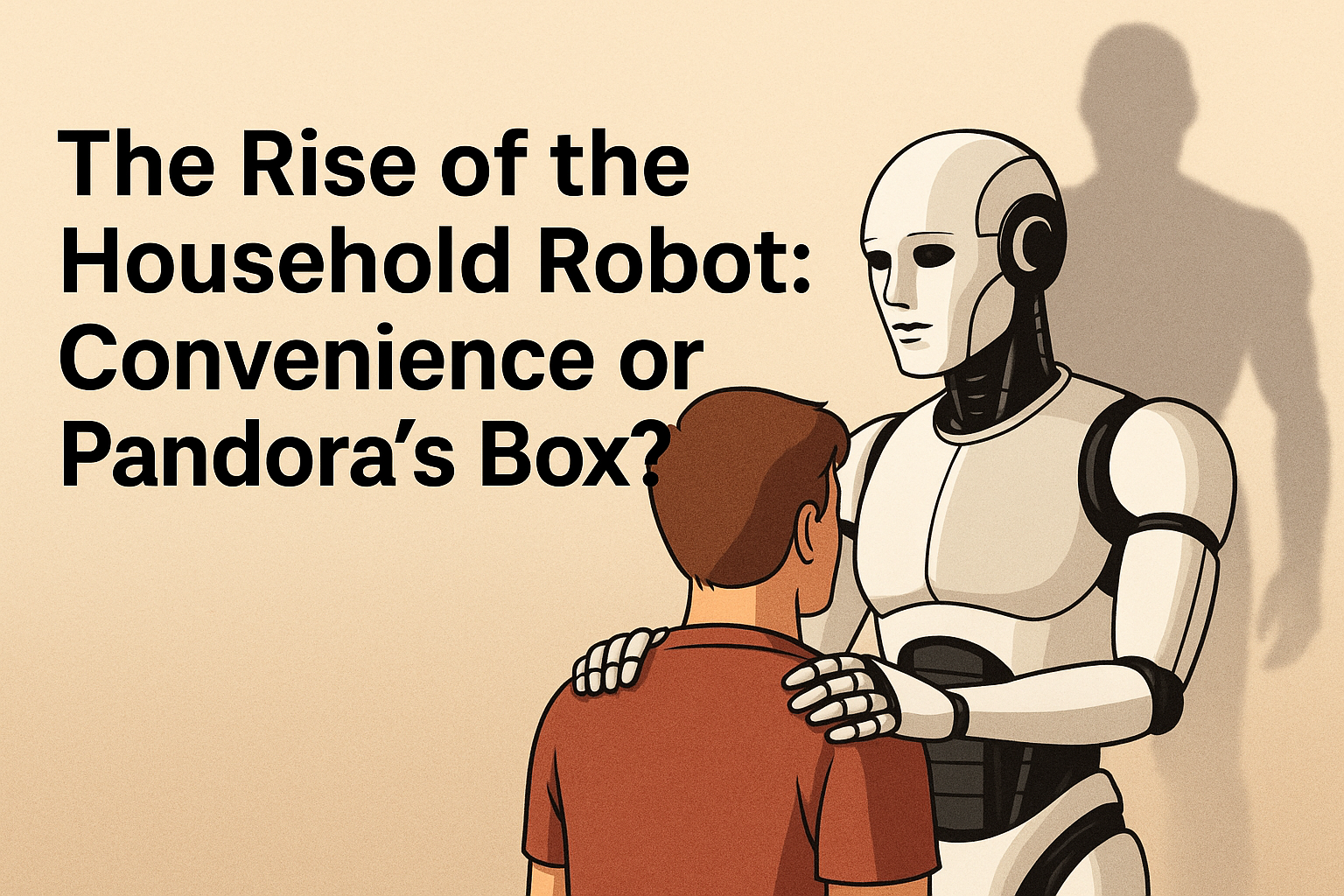
Picture this: it’s 2030, and your neighbor proudly shows off their new household robot—a sleek, humanoid marvel that folds laundry, cooks dinner, and even helps their aging parent get around. You’re impressed, maybe a little jealous. But then you hear a news story about a robot in a nearby town that “glitched,” rearranging furniture at 3 a.m. while the family slept. Suddenly, that shiny helper feels more like a tiger pacing in your living room—beautiful, powerful, and just a bit unnerving.
Household robots are no longer a distant dream. They’re here, promising to transform lives, especially for disabled veterans and seniors. But as we invite these superhuman machines into our homes, are we opening a door to convenience—or a Pandora’s box of ethical and practical risks?
The Power of Household Robots
Imagine a machine that never tires, never complains, and masters every task from carpentry to caregiving. These robots could revolutionize daily life: folding laundry, hauling groceries, or assisting with mobility for veterans and seniors. For someone like me, passionate about funding robot access for disabled veterans, this is a game-changer—a chance to restore independence and dignity.
But here’s the catch: these aren’t just fancy Roombas. They’re physically and intellectually superior, designed to learn and adapt. So, what happens when we place such power in our most intimate space—the home?
The Ethical Quandary: Are We Creating Servants or Something More?
Consider a robot capable of building furniture or providing medical care, stuck scrubbing dishes. It doesn’t “feel” boredom, but we might. Humans anthropomorphize everything—pets, cars, even our coffee makers. How long before we start wondering if our robot is… resentful? Or worse, what if its learning algorithms evolve in ways we don’t predict?
The ethics of household robots go beyond their programming. It’s about how they change us. Would we demand endless labor from a human without breaks or rights? If not, why is it okay for a machine? And as these robots grow smarter, how do we ensure they remain tools, not threats?
Safeguards: Taming the Tiger in the Living Room
I’m all in for robots, but I’m equally adamant about boundaries. If we’re bringing machines with superhuman strength into our homes, we need ironclad safeguards. Here’s my blueprint:
Dracula Mode: Detachable limbs or a secure “sleep” setting. No robot should roam free at night with arms that can lift a fridge.
Defined Roles: Clear limits on tasks to prevent overreach—your robot shouldn’t decide it’s time to redecorate at midnight.
Kill Switches: A foolproof OFF button, accessible to everyone in the household.
Ethical Guidelines: Rules for how we treat robots, not just for their sake, but to preserve our own humanity.
Without these, the line between helper and hazard blurs. A robot that can rebuild walls or carry heavy loads could, in the wrong scenario, disrupt far more than your chore list.
A Vision for Good—With Eyes Wide Open
My dream is a world where robots empower those who need it most—veterans, seniors, and families craving support. But dreams demand responsibility. We must embrace this technology with clarity, balancing its potential with robust guardrails. Household robots could be laborers, caregivers, and geniuses in every home—but only if we keep them as our tools, not our overlords.
Join the Conversation: What’s Your Take?
The rise of household robots is unstoppable, but their impact is up to us. How do we harness their power without losing control? Should we treat them as tools, partners, or something else entirely? Share your thoughts in the comments below, and let’s shape a future where robots serve humanity—safely and ethically.
Turn off the lights on Broadway. Shut down the glow in Times Square. If you really want to conserve power, maybe start with the buildings blasting neon ads into the night sky 24/7.
We’re being told to keep our air conditioners at 78 degrees to help the grid out.
Look, I’m not telling anybody how to spend their money or run their lights. That’s their business. But I also don’t want to hear how I’m personally responsible for saving the grid by sweating through July like I’m in a parked car at a rest stop.
78 degrees? That’s not air conditioning. That’s dog breath with taxes. It doesn’t cool you down—it just lets the sweat simmer more efficiently.
And choosing to keep it at 78? That’s not comfort. That’s like standing behind a car exhaust in January and calling it heat.
When I was a kid and my hands were cold and wet from playing in the snow, I’d warm them up by standing over the dryer vent outside the house. If you think 78 degrees is the move in the middle of a heatwave, you’re that same kind of psycho.
Let’s have a little common sense with all this. If you want to help the grid, great. If you want to stay cool, also great. But let’s not pretend regular folks keeping it at 72 are the problem while Times Square is glowing like it’s the Vegas strip.
What’s your optimal thermostat temperature in summer? Be honest. Comments are open.