
By Exit Desk | Opinion
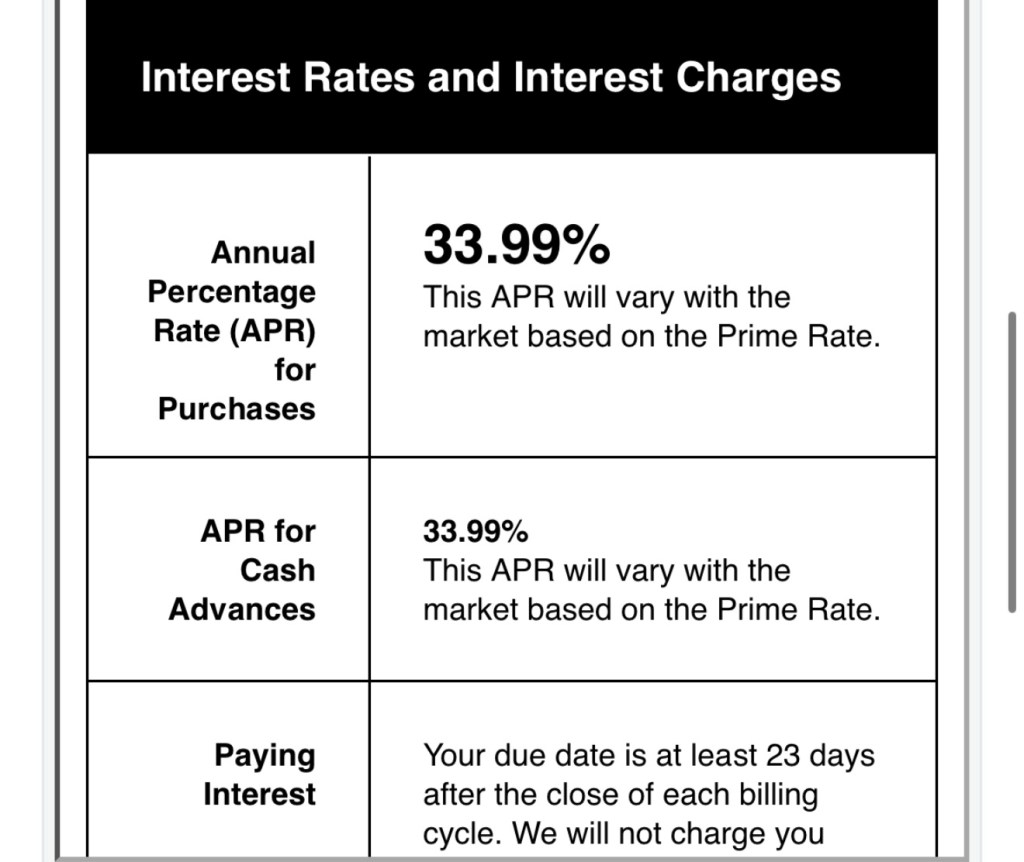
A 33.99% APR on a credit card is not risk-based pricing. It is not a legitimate market rate. It is deliberate, calculated exploitation.
As of December 2025, the average interest rate on new credit card offers sits around 22–23%. The prime rate is roughly 6.75%. Yet major credit card issuers continue charging consumers interest rates pushing 34%, 36%, and even higher.
These are not fringe products. First Premier Bank advertises rates up to 36%. Retail cards, including luxury brands, routinely hit 35.99%. These rates are commonly imposed on Americans with imperfect credit, recent financial hardship, or anyone forced to rely on a cash advance.
This is not credit. It is a system engineered to extract wealth from people who can least afford it.
The Brutal Reality of the Math
At 33.99% APR, compounded daily:
A $1,000 carried balance costs nearly $340 per year in interest A $5,000 balance burns more than $1,700 annually Minimum payments barely touch the principal, sending most payments straight into interest
This structure does not promote repayment. It manufactures long-term dependency, turning a temporary emergency into years or even decades of financial stagnation.
Issuers Know Exactly What They’re Doing
Banks justify these rates by citing “risk,” yet those same institutions borrow money at a fraction of the prime rate. The difference is not risk management. It is unchecked leverage.
One missed payment. One medical bill. One emergency repair. The trap closes fast. Even when spending stops, balances continue to grow through interest alone.
Meanwhile, these cards are aggressively marketed with rewards, cash back, and pre-approval offers. The danger is buried in fine print that most people never read until the damage is already done.
The Timing Makes This Worse
Families are already under pressure from inflation, housing costs, insurance premiums, and healthcare expenses. For many households, credit cards are not used for luxury. They are used to survive.
Adding a near-34% interest rate on top of that is not consumer protection. It is punishment. It deepens inequality, destabilizes families, and locks people into cycles of debt that become increasingly difficult to escape.
We Once Called This Usury
For much of American history, excessive interest was recognized as socially destructive. Usury laws existed specifically to prevent this kind of financial harm.
That changed after the 1978 Supreme Court decision in Marquette National Bank v. First of Omaha, which allowed national banks to export permissive interest rates nationwide from states like Delaware and South Dakota. As a result, local consumer protection laws became effectively meaningless for most credit cards.
A private lender charging 34% interest would be labeled predatory. When a national bank does it, the practice is normalized.
This is not an economic necessity. It is a policy failure driven by deregulation and corporate influence.
A Practical Solution Already Exists
This problem does not require dismantling the financial system. A federal cap on consumer credit card APRs, tied to a reasonable margin above the prime rate, would immediately reduce harm while still allowing banks to price risk responsibly.
Many developed countries already enforce similar protections. Their financial systems function just fine. Consumers avoid permanent debt traps.
The United States has simply chosen not to act.
The Bottom Line
A 33.99% APR is not a free-market outcome. It is the direct result of eroded safeguards and regulatory capture.
If policymakers are serious about protecting consumers, the line should be clear. No credit card should ever be allowed to charge interest at a level that mathematically guarantees entrapment for anyone who stumbles.
At that point, it stops being credit.
It becomes extraction.

