
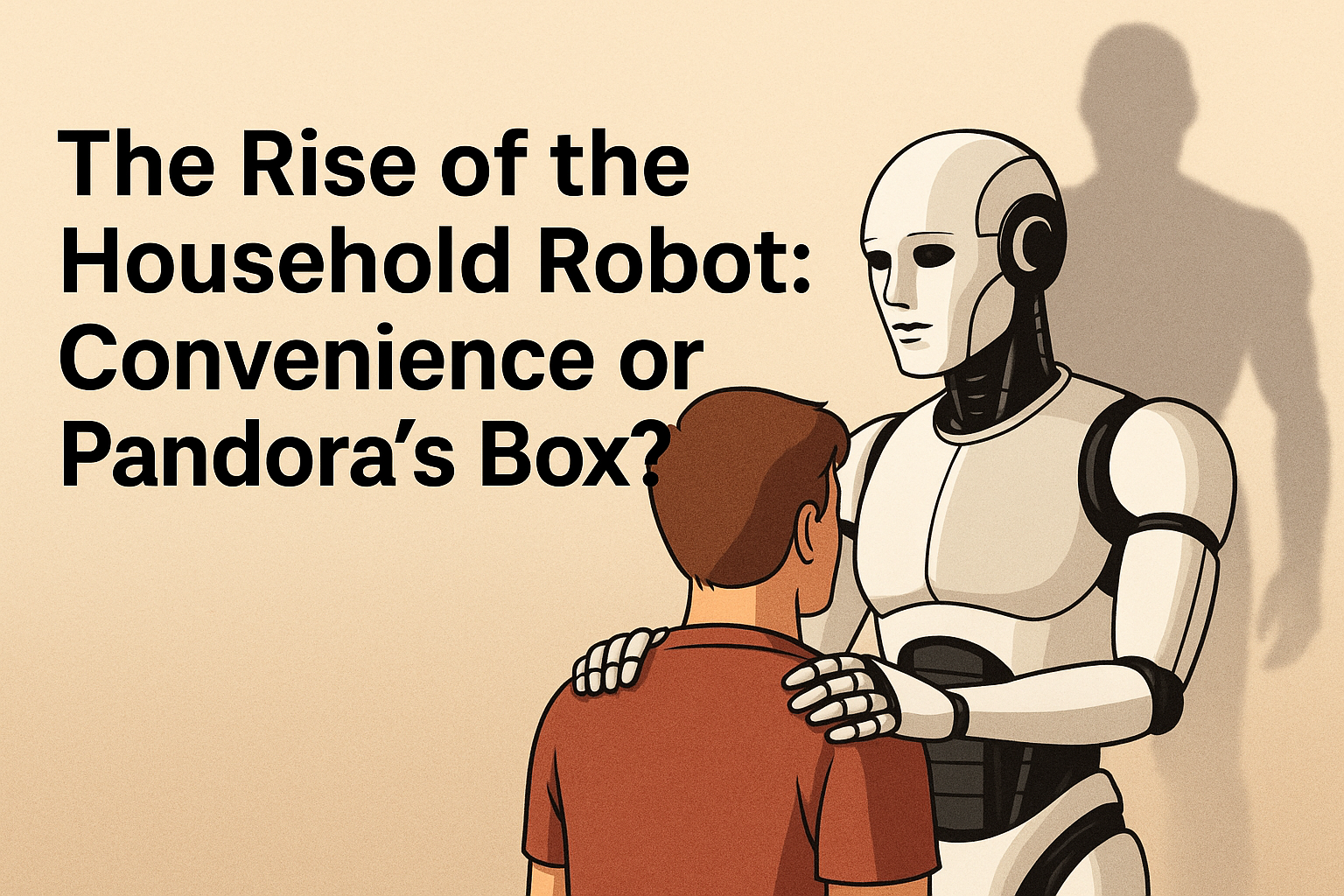
Picture this: it’s 2030, and your neighbor proudly shows off their new household robot—a sleek, humanoid marvel that folds laundry, cooks dinner, and even helps their aging parent get around. You’re impressed, maybe a little jealous. But then you hear a news story about a robot in a nearby town that “glitched,” rearranging furniture at 3 a.m. while the family slept. Suddenly, that shiny helper feels more like a tiger pacing in your living room—beautiful, powerful, and just a bit unnerving.
Household robots are no longer a distant dream. They’re here, promising to transform lives, especially for disabled veterans and seniors. But as we invite these superhuman machines into our homes, are we opening a door to convenience—or a Pandora’s box of ethical and practical risks?
The Power of Household Robots
Imagine a machine that never tires, never complains, and masters every task from carpentry to caregiving. These robots could revolutionize daily life: folding laundry, hauling groceries, or assisting with mobility for veterans and seniors. For someone like me, passionate about funding robot access for disabled veterans, this is a game-changer—a chance to restore independence and dignity.
But here’s the catch: these aren’t just fancy Roombas. They’re physically and intellectually superior, designed to learn and adapt. So, what happens when we place such power in our most intimate space—the home?
The Ethical Quandary: Are We Creating Servants or Something More?
Consider a robot capable of building furniture or providing medical care, stuck scrubbing dishes. It doesn’t “feel” boredom, but we might. Humans anthropomorphize everything—pets, cars, even our coffee makers. How long before we start wondering if our robot is… resentful? Or worse, what if its learning algorithms evolve in ways we don’t predict?
The ethics of household robots go beyond their programming. It’s about how they change us. Would we demand endless labor from a human without breaks or rights? If not, why is it okay for a machine? And as these robots grow smarter, how do we ensure they remain tools, not threats?
Safeguards: Taming the Tiger in the Living Room
I’m all in for robots, but I’m equally adamant about boundaries. If we’re bringing machines with superhuman strength into our homes, we need ironclad safeguards. Here’s my blueprint:
- Dracula Mode: Detachable limbs or a secure “sleep” setting. No robot should roam free at night with arms that can lift a fridge.
- Defined Roles: Clear limits on tasks to prevent overreach—your robot shouldn’t decide it’s time to redecorate at midnight.
- Kill Switches: A foolproof OFF button, accessible to everyone in the household.
- Ethical Guidelines: Rules for how we treat robots, not just for their sake, but to preserve our own humanity.
Without these, the line between helper and hazard blurs. A robot that can rebuild walls or carry heavy loads could, in the wrong scenario, disrupt far more than your chore list.
A Vision for Good—With Eyes Wide Open
My dream is a world where robots empower those who need it most—veterans, seniors, and families craving support. But dreams demand responsibility. We must embrace this technology with clarity, balancing its potential with robust guardrails. Household robots could be laborers, caregivers, and geniuses in every home—but only if we keep them as our tools, not our overlords.
Join the Conversation: What’s Your Take?
The rise of household robots is unstoppable, but their impact is up to us. How do we harness their power without losing control? Should we treat them as tools, partners, or something else entirely? Share your thoughts in the comments below, and let’s shape a future where robots serve humanity—safely and ethically.

