
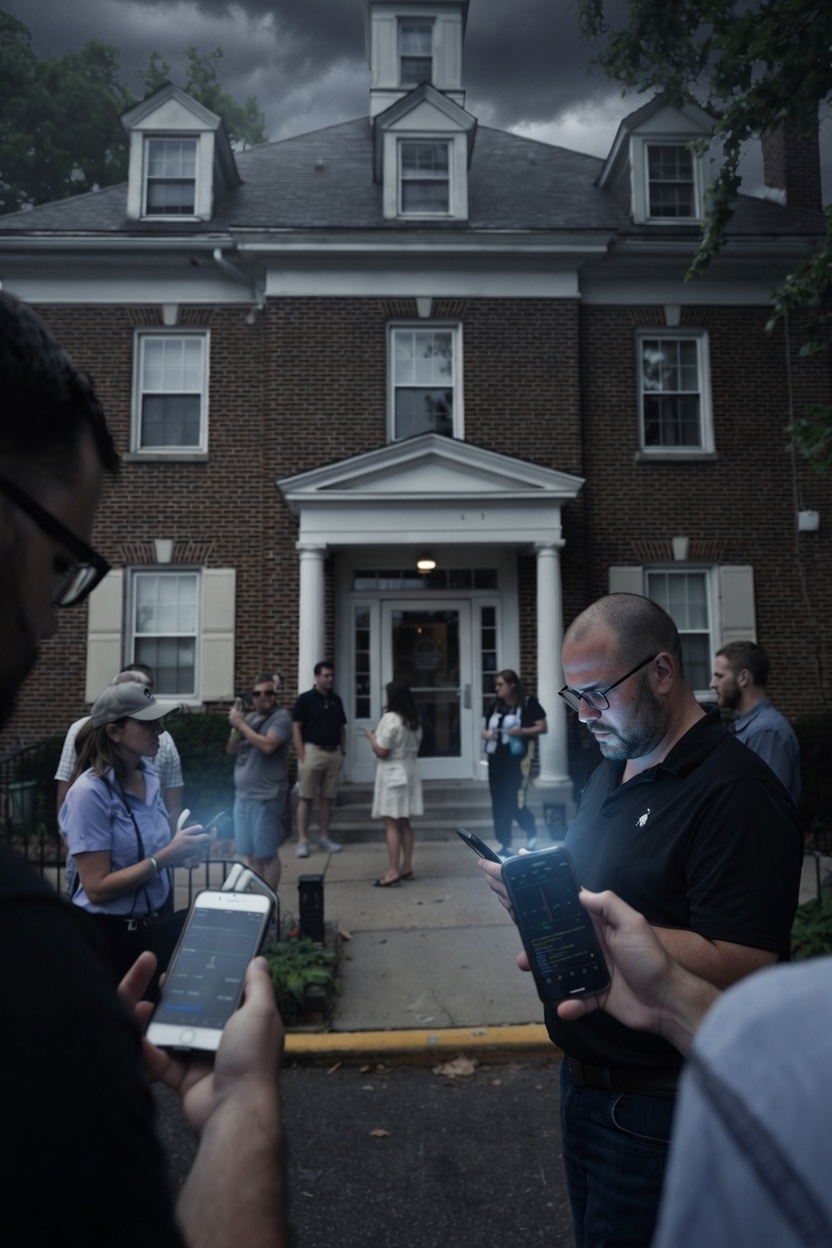
Across the country, police departments are increasingly encrypting their radio communications. This move blocks public access through scanners and popular monitoring apps. Departments often argue encryption improves officer safety and protects sensitive information. Critics say the costs to the public are far greater.
Journalists, civil rights advocates, and press freedom organizations warn that widespread encryption undermines transparency, weakens accountability, and can even reduce public safety.
This is not a technical debate. It is a public trust issue.
1. The Erosion of Transparency and Public Oversight
For decades, open police radio traffic has allowed citizens and reporters to observe government activity in real time. That access has served as an informal but powerful layer of oversight. When radios go dark, routine police activity becomes invisible to the public.
The NAACP has warned that full encryption can shield law enforcement activity from scrutiny, particularly in communities that already struggle with trust in policing. Without independent access, residents must rely entirely on official statements. Those statements may be delayed, incomplete, or framed to protect the agency rather than inform the public.
Transparency does not require interference. It requires visibility.
2. Harm to Independent Journalism and Press Freedom
Police scanners are one of the primary ways local journalists learn about breaking news. Fires, crashes, active threats, and major incidents are often first detected through radio traffic, not press releases.
The RTDNA has called police encryption one of the most serious challenges facing modern newsrooms. When reporters are forced to wait for a public information officer, coverage becomes slower and more controlled.
In cities like Denver and Chicago, encryption has delayed reporting on active shooters, wildfires, and other emergencies. When information is delayed, communities are left in the dark at moments when awareness matters most.
3. Reduced Public Safety and Community Awareness
Scanner access is not just about curiosity. Many residents use it to avoid danger, understand unfolding emergencies, or stay informed during rapidly changing situations.
During pursuits, hazardous material incidents, or large police operations, real-time awareness can help people make safer decisions. Encryption removes that independent source of situational awareness. In some cases, communities have learned about threats only after incidents escalated.
Open radio traffic has also helped citizens provide tips or context that assist police. Cutting off that channel reduces two-way awareness between the public and law enforcement.
4. Weak Evidence for the Claimed Benefits
Departments often justify encryption by citing officer safety or privacy concerns. The evidence supporting those claims is thin.
There are few documented cases where public scanner access directly caused harm to officers. Most examples are hypothetical or extremely rare. Privacy concerns can be addressed without full encryption by using alternative approaches.
Those alternatives include:
- Encrypting only tactical or sensitive channels
- Using delayed public feeds
- Redacting sensitive personal information
- Providing credentialed media access
Full encryption is the most extreme option. It is also the least transparent.
Civil rights advocates have noted that the rapid expansion of encryption accelerated after 2020, during a period of intense public scrutiny following high-profile police killings. That timing has raised concerns that encryption is being used not just for safety, but to limit accountability.
A Balance Is Possible
This is not an argument against officer safety or victim privacy. Both matter. The issue is proportionality.
A balanced approach protects sensitive operations while preserving public oversight. When police radios go completely dark, the public loses an essential tool for understanding how power is exercised in their communities.
Transparency builds trust. Silence erodes it.
Why This Matters
Police departments operate with public authority. That authority depends on public confidence. When routine communications are hidden, confidence is replaced with uncertainty and suspicion.
Encryption may solve narrow internal concerns, but it creates broader external risks. A less informed public. Weaker watchdog journalism. Reduced accountability.
When radios go dark, citizens lose visibility into the systems that govern them. That loss affects everyone, whether they listen to a scanner or not.

