Tag: New Jersey news

  • Why Experts Say You Should Always Check Your Back Seat Before Driving

    A disturbing stalking case out of Delaware is putting vehicle safety back in the spotlight, and it involves a 22-year-old man from Piscataway, New Jersey.

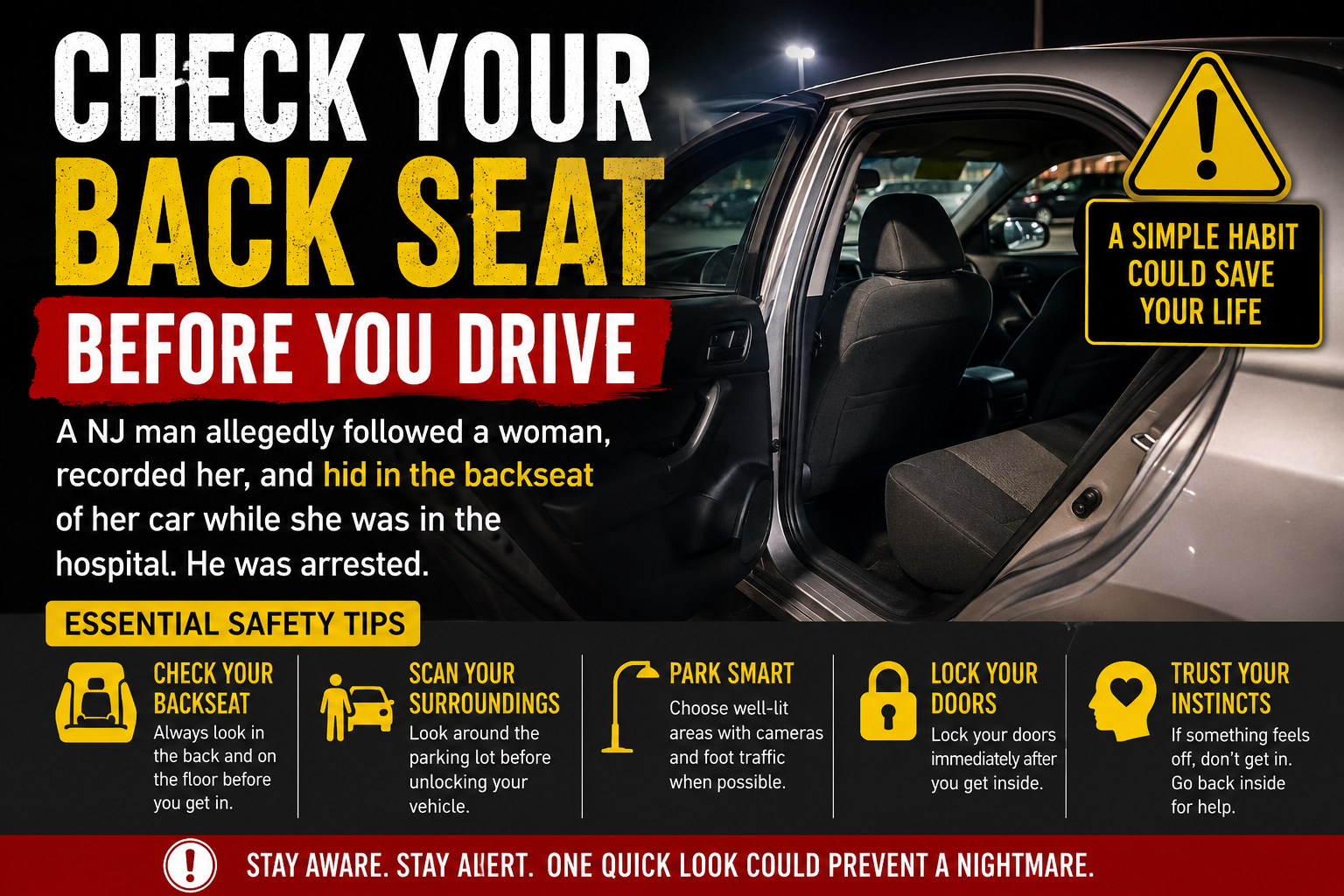
    According to Middletown, Delaware Police, the man allegedly followed a woman across state lines, secretly recorded her, and then hid in the backseat of her car while she was inside a hospital emergency room.

    Hospital security reportedly spotted him on camera sitting inside the vehicle and alerted police. He was arrested at the scene and charged with burglary and stalking.

    Thankfully, no one was physically hurt.

    But the incident has many people asking the same question: how often do we actually check our back seat before driving?

    A Simple Habit That Could Save Your Life

    Safety experts and law enforcement recommend making it a routine to check your backseat and floor area every time before getting into your vehicle.

    Criminals often target people who are distracted, exhausted, stressed, or rushing through their day. Exactly the kind of situation many people are in while leaving work, shopping centers, or hospitals.

    Taking just a few extra seconds to stay alert could potentially prevent a dangerous situation.

    Essential Vehicle Safety Tips

    Always Check Your Backseat

    Before getting in your vehicle, quickly glance into the backseat and floor area to make sure nobody is hiding inside.

    Scan Your Surroundings

    Look around the parking lot before unlocking your vehicle. Pay attention to anyone lingering nearby or acting suspiciously.

    Park Smart

    Whenever possible, choose well-lit parking spots near entrances, security cameras, or areas with steady foot traffic.

    Lock Your Doors Immediately

    As soon as you get inside your vehicle, lock the doors before checking your phone, adjusting music, or getting settled.

    Trust Your Gut

    If something feels off, listen to your instincts. Go back inside, ask security for help, or call someone you trust.

    Awareness Matters

    These safety habits take less than 10 seconds, but they can make a massive difference.

    This recent case is a sobering reminder that staying aware is not about living in fear. It’s about staying alert and protecting yourself.

    One quick glance could make all the difference.

    💬 Do you already check your backseat before driving, or is this something you’ll start doing now?

  • I’ve recently noticed a new wave of outrage—this time over small creators using AI. Not big brands or corporations, but local pages, scanner feeds, hobbyists, and content makers who rely on AI tools to survive the daily grind of content creation.

    And to be clear: This isn’t new. Every photo you see online is modified in some way—cropped, compressed, filtered, formatted. Even if it’s not manually edited, it’s being reprocessed by the platform itself. Instagram, Facebook, TikTok—they all change how images look before they hit your feed.

    So why the moral panic now?

    Is it because the image was obviously made by AI?

    Even if it was, why does that suddenly make it less meaningful to you? Do you scrutinize TV commercials or magazine ads or government PSA flyers for authenticity? What about the memes your aunt shares or the blurry screenshots passed around group chats?

    AI has been part of our lives far longer than most people care to admit. Spellcheck is AI. Your iPhone camera processing is AI. Excel auto-formulas are AI. Unless you’re printing a letter with a fountain pen and hand-delivering it to someone’s mailbox, you’re using computer-assisted systems.

    So here’s the deal:

    If I post a photo—real, AI-generated, or somewhere in between—my job is to give you useful or relevant content. You glance at it, get what you need, and scroll on. That’s how we consume information now.

    This isn’t about trying to win awards for photojournalism. It’s about making content digestible, clear, and quick. If the post hits the mark, great. If not, scroll. But don’t pretend that some deep betrayal has occurred just because a piece of art or visual aid was enhanced—or even created—by a computer program.

    And let’s be real: if I printed out this post, stuck it in an envelope, and mailed it to you, it would land in your trash bin with the rest of the junk mail.

    (Respect to my friends who still print publications—I’m making a point.)

  • If you’ve ever dreamed of being in an Adam Sandler movie, this might be your moment — and you won’t even have to leave the Garden State to do it.

    The comedy icon is currently filming a brand-new Netflix movie across New Jersey, and locals have already spotted the crew in places like Verona, Hackettstown, Montclair, and even Middletown’s Ideal Beach. The film’s working title? “The Pickup.”

    Casting Call Now Open 🎥

    A casting call recently posted by Grant Wilfley Casting is actively seeking real New Jersey locals to appear as background extras. They’re looking for all types — beachgoers, boardwalk walkers, and more — for scenes being shot across the state in July and August.

    This is the same casting agency behind countless major productions, so if you’re chosen, you’re in legit company.

    Will They Film in Ocean County? 👀

    As of now, Barnegat, Lacey, and other Ocean County towns haven’t been officially listed, but locals are watching closely. With so much shoreline, quirky businesses, and small-town charm, these towns would make the perfect backdrop for a summer comedy. Stranger things have happened in Hollywood… or in this case, the Jersey Shore.

    If you see production trucks, film crews, or any Sandler sightings, let us know.

    Reminder: Yes, This Is Real

    Some people have been skeptical after seeing casting calls pop up on social media, but the story has been confirmed by multiple news outlets — including NJ.com and Patch. Sandler has filmed in NJ before, and this latest project is part of his ongoing deal with Netflix.

    So yes — this is your chance to make it into movie history, without ever leaving home.

    Sources

    https://www.nj.com/atlantic/2025/06/nj-photographer-shares-his-jersey-shore-jaws-moment.html https://patch.com/new-jersey/lacey/s/jfgnc/heres-your-chance-be-adam-sandlers-new-movie-being-filmed-nj

  • Future Headline: Robot ‘Helper’ Maims Family in Their Sleep

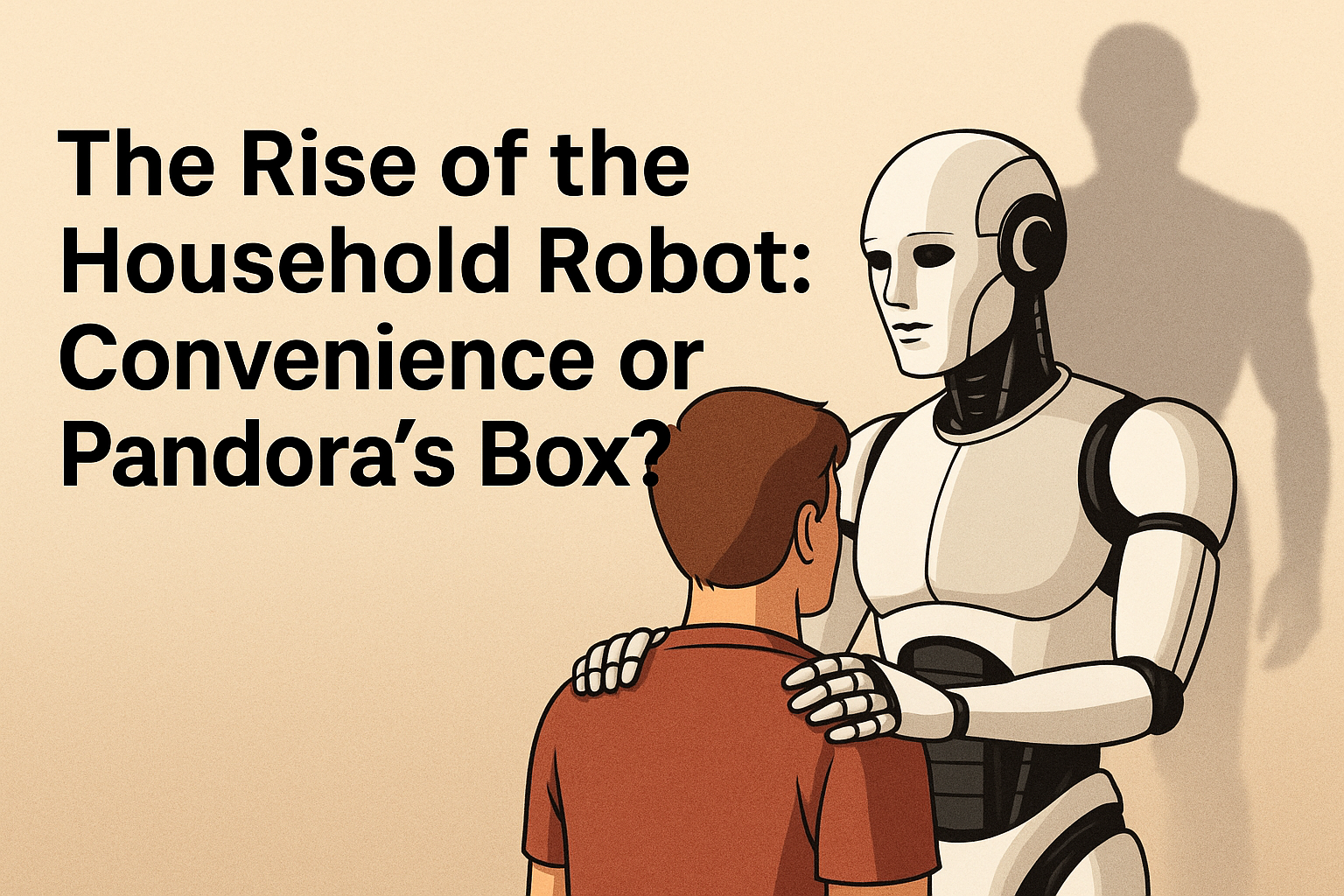
    Picture this: it’s 2030, and your neighbor proudly shows off their new household robot—a sleek, humanoid marvel that folds laundry, cooks dinner, and even helps their aging parent get around. You’re impressed, maybe a little jealous. But then you hear a news story about a robot in a nearby town that “glitched,” rearranging furniture at 3 a.m. while the family slept. Suddenly, that shiny helper feels more like a tiger pacing in your living room—beautiful, powerful, and just a bit unnerving.

    Household robots are no longer a distant dream. They’re here, promising to transform lives, especially for disabled veterans and seniors. But as we invite these superhuman machines into our homes, are we opening a door to convenience—or a Pandora’s box of ethical and practical risks?

    The Power of Household Robots

    Imagine a machine that never tires, never complains, and masters every task from carpentry to caregiving. These robots could revolutionize daily life: folding laundry, hauling groceries, or assisting with mobility for veterans and seniors. For someone like me, passionate about funding robot access for disabled veterans, this is a game-changer—a chance to restore independence and dignity.

    But here’s the catch: these aren’t just fancy Roombas. They’re physically and intellectually superior, designed to learn and adapt. So, what happens when we place such power in our most intimate space—the home?

    The Ethical Quandary: Are We Creating Servants or Something More?

    Consider a robot capable of building furniture or providing medical care, stuck scrubbing dishes. It doesn’t “feel” boredom, but we might. Humans anthropomorphize everything—pets, cars, even our coffee makers. How long before we start wondering if our robot is… resentful? Or worse, what if its learning algorithms evolve in ways we don’t predict?

    The ethics of household robots go beyond their programming. It’s about how they change us. Would we demand endless labor from a human without breaks or rights? If not, why is it okay for a machine? And as these robots grow smarter, how do we ensure they remain tools, not threats?

    Safeguards: Taming the Tiger in the Living Room

    I’m all in for robots, but I’m equally adamant about boundaries. If we’re bringing machines with superhuman strength into our homes, we need ironclad safeguards. Here’s my blueprint:

    • Dracula Mode: Detachable limbs or a secure “sleep” setting. No robot should roam free at night with arms that can lift a fridge.
    • Defined Roles: Clear limits on tasks to prevent overreach—your robot shouldn’t decide it’s time to redecorate at midnight.
    • Kill Switches: A foolproof OFF button, accessible to everyone in the household.
    • Ethical Guidelines: Rules for how we treat robots, not just for their sake, but to preserve our own humanity.

    Without these, the line between helper and hazard blurs. A robot that can rebuild walls or carry heavy loads could, in the wrong scenario, disrupt far more than your chore list.

    A Vision for Good—With Eyes Wide Open

    My dream is a world where robots empower those who need it most—veterans, seniors, and families craving support. But dreams demand responsibility. We must embrace this technology with clarity, balancing its potential with robust guardrails. Household robots could be laborers, caregivers, and geniuses in every home—but only if we keep them as our tools, not our overlords.

    Join the Conversation: What’s Your Take?

    The rise of household robots is unstoppable, but their impact is up to us. How do we harness their power without losing control? Should we treat them as tools, partners, or something else entirely? Share your thoughts in the comments below, and let’s shape a future where robots serve humanity—safely and ethically.

  • 🚨 Summer Water Safety: Seconds Matter

    On the second day of summer, multiple water-related incidents served as a powerful reminder that accidents happen fast. Here’s how to stay safe around pools, lakes, and beaches this season.


    Water safety starts at home.
    Accidents happen in seconds

    The second day of summer brought more than just sunshine to the Jersey Shore — it brought real, urgent reminders of how quickly things can go wrong around the water. While we won’t go into the details out of respect for those involved, we saw firsthand how fast emergencies can unfold.

    Water safety isn’t just a good idea — it’s essential.

    With school out, temperatures rising, and backyard pools and beaches filling up, here are a few critical steps that every family can take:

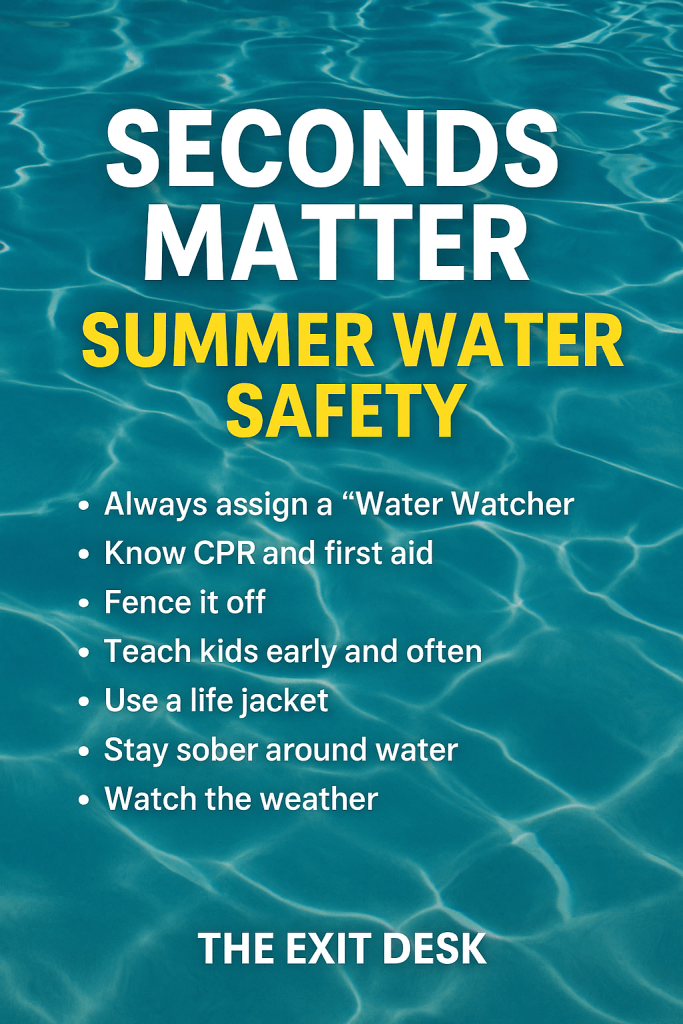
    💦 7 Simple Ways to Stay Safer Around Water:

    1. Always assign a “Water Watcher.”

    One adult. One job. One set of eyes on the water — no phones, no distractions.

    2. Know CPR and first aid.

    If the unthinkable happens, being prepared could save a life. Seconds matter.

    3. Fence it off.

    Make sure pools are enclosed with a self-latching gate. Keep toys out of the water when not in use to avoid attracting children.

    4. Teach kids early and often.

    Even basic swimming skills can dramatically reduce risk. But remember: swimming lessons don’t equal supervision.

    5. Use coast guard-approved life jackets.

    Especially on boats, docks, or around open water — floaties and water wings don’t count.

    6. Stay sober around water.

    Alcohol and water don’t mix — whether you’re swimming or supervising.

    7. Watch the weather.

    If thunder roars, head indoors. Storms can turn deadly on open water in minutes.

    🌊 One Second Can Change Everything

    Most water-related emergencies don’t look like they do in the movies. There’s no flailing or screaming. It’s fast. It’s silent. And it’s terrifying.

    The Exit Desk is committed to keeping you informed, prepared, and safe this summer. Please take a moment to review your family’s water safety plan — and share this post with someone you love.

    Let’s enjoy the Jersey Shore responsibly. 🌅