Tag: Ocean County

  • I’ve recently noticed a new wave of outrage—this time over small creators using AI. Not big brands or corporations, but local pages, scanner feeds, hobbyists, and content makers who rely on AI tools to survive the daily grind of content creation.

    And to be clear: This isn’t new. Every photo you see online is modified in some way—cropped, compressed, filtered, formatted. Even if it’s not manually edited, it’s being reprocessed by the platform itself. Instagram, Facebook, TikTok—they all change how images look before they hit your feed.

    So why the moral panic now?

    Is it because the image was obviously made by AI?

    Even if it was, why does that suddenly make it less meaningful to you? Do you scrutinize TV commercials or magazine ads or government PSA flyers for authenticity? What about the memes your aunt shares or the blurry screenshots passed around group chats?

    AI has been part of our lives far longer than most people care to admit. Spellcheck is AI. Your iPhone camera processing is AI. Excel auto-formulas are AI. Unless you’re printing a letter with a fountain pen and hand-delivering it to someone’s mailbox, you’re using computer-assisted systems.

    So here’s the deal:

    If I post a photo—real, AI-generated, or somewhere in between—my job is to give you useful or relevant content. You glance at it, get what you need, and scroll on. That’s how we consume information now.

    This isn’t about trying to win awards for photojournalism. It’s about making content digestible, clear, and quick. If the post hits the mark, great. If not, scroll. But don’t pretend that some deep betrayal has occurred just because a piece of art or visual aid was enhanced—or even created—by a computer program.

    And let’s be real: if I printed out this post, stuck it in an envelope, and mailed it to you, it would land in your trash bin with the rest of the junk mail.

    (Respect to my friends who still print publications—I’m making a point.)

  • If you’ve ever dreamed of being in an Adam Sandler movie, this might be your moment — and you won’t even have to leave the Garden State to do it.

    The comedy icon is currently filming a brand-new Netflix movie across New Jersey, and locals have already spotted the crew in places like Verona, Hackettstown, Montclair, and even Middletown’s Ideal Beach. The film’s working title? “The Pickup.”

    Casting Call Now Open 🎥

    A casting call recently posted by Grant Wilfley Casting is actively seeking real New Jersey locals to appear as background extras. They’re looking for all types — beachgoers, boardwalk walkers, and more — for scenes being shot across the state in July and August.

    This is the same casting agency behind countless major productions, so if you’re chosen, you’re in legit company.

    Will They Film in Ocean County? 👀

    As of now, Barnegat, Lacey, and other Ocean County towns haven’t been officially listed, but locals are watching closely. With so much shoreline, quirky businesses, and small-town charm, these towns would make the perfect backdrop for a summer comedy. Stranger things have happened in Hollywood… or in this case, the Jersey Shore.

    If you see production trucks, film crews, or any Sandler sightings, let us know.

    Reminder: Yes, This Is Real

    Some people have been skeptical after seeing casting calls pop up on social media, but the story has been confirmed by multiple news outlets — including NJ.com and Patch. Sandler has filmed in NJ before, and this latest project is part of his ongoing deal with Netflix.

    So yes — this is your chance to make it into movie history, without ever leaving home.

    Sources

    https://www.nj.com/atlantic/2025/06/nj-photographer-shares-his-jersey-shore-jaws-moment.html https://patch.com/new-jersey/lacey/s/jfgnc/heres-your-chance-be-adam-sandlers-new-movie-being-filmed-nj

  • He Was 99, But Felt Like 106

    The Forgotten Man Behind the Heat Index

    Who created the heat index? Discover the forgotten story of Robert G. Steadman, the scientist behind summer’s most miserable measurement.


    He made summers feel worse—and somehow disappeared from history doing it.

    It All Started With a Joke…

    Someone sent me this meme:
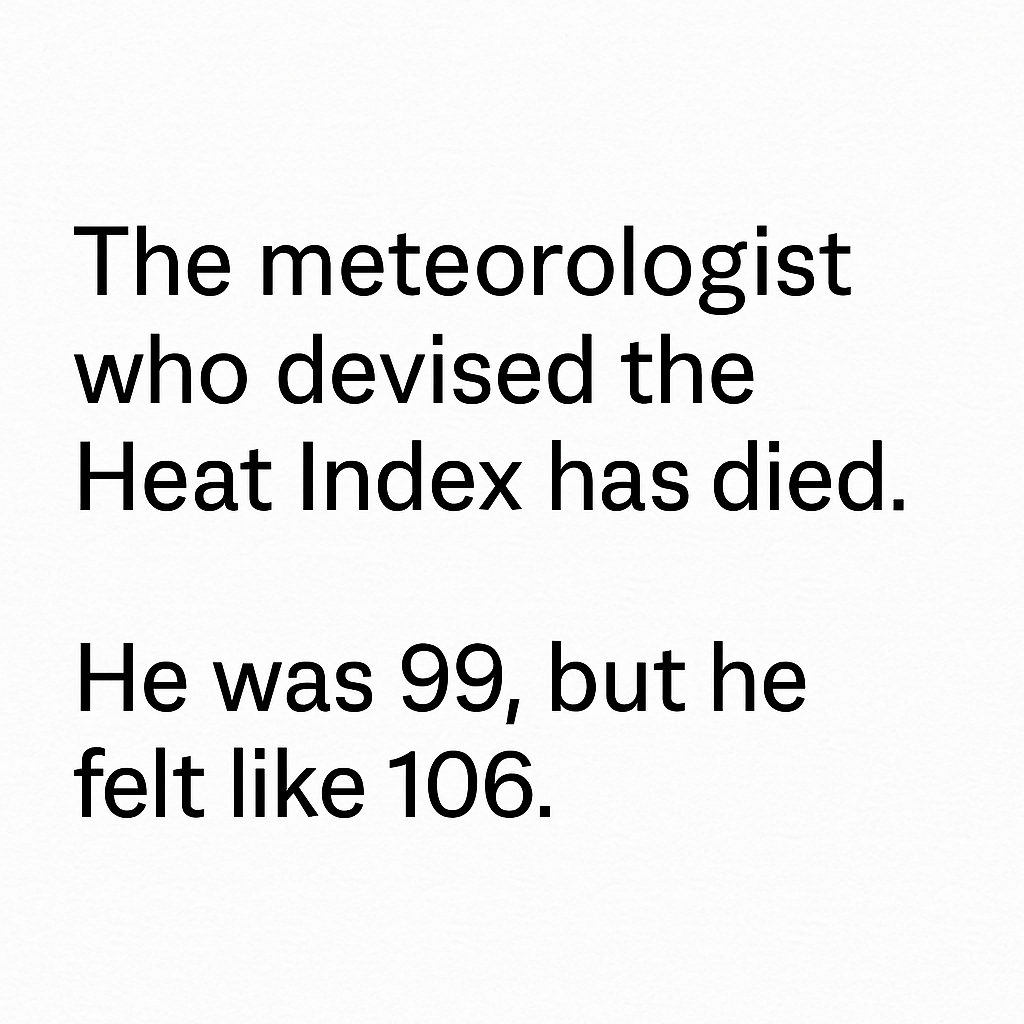
    “The meteorologist who devised the Heat Index has died. He was 99, but he felt like 106.”

    It got a laugh — but then I got curious.
    Wait… who invented the heat index?

    And just like that, I fell into a rabbit hole deeper than a summer sweat stain.


    Meet Robert G. Steadman (If You Can Find Him)

    Turns out, the guy behind one of the most quoted weather stats of all time is Robert G. Steadman, a biometeorologist from Texas Tech University.

    In 1979, Steadman asked a simple but brilliant question:

    Why does 90°F feel like death one day and manageable the next?

    He created a formula that combined temperature and humidity into what we now call the heat index — or “apparent temperature.” The National Weather Service adopted it officially in the 1990s, and the rest of us have been grumbling about it ever since.

    📎 Learn more about how the Heat Index works.


    Then… He Vanished?

    This is where things get weird.

    Steadman’s work impacted how we talk about weather, emergency heat warnings, even health alerts — yet there’s no clear record of what happened to him.

    No obituary. No well-known biography. Not even a confirmed date of death. Some say he passed sometime after the 1980s. Others just don’t know. It’s like the guy who made summer make sense just disappeared.


    Why This Matters

    Today’s heat index in Ocean County?
    93° but feels like 103°.
    That’s Steadman’s legacy.

    Every time your phone pings with “feels like” alerts, that’s his formula.
    Every time a city opens a cooling center or issues a heat advisory, that’s his work in action.

    And almost no one knows his name.


    A Quick Thank You to a Quiet Genius

    Steadman didn’t just work on heat. He also contributed to research on wind chill, textile drying, and human environmental stress. His colleague Jayne E. Geissler helped publish much of this work, but his later life remains a mystery.

    He was 99.
    But yeah — he probably felt like 106.


    What Do You Think?

    Had you ever heard of Robert Steadman before this?
    Do you think the heat index helps people stay safe — or just adds to the panic?
    What weather myths do you want busted next?

    Drop a comment below. Let’s talk heat, science, or whatever you’ve got.


  • 🚨 Summer Water Safety: Seconds Matter

    On the second day of summer, multiple water-related incidents served as a powerful reminder that accidents happen fast. Here’s how to stay safe around pools, lakes, and beaches this season.


    Water safety starts at home.
    Accidents happen in seconds

    The second day of summer brought more than just sunshine to the Jersey Shore — it brought real, urgent reminders of how quickly things can go wrong around the water. While we won’t go into the details out of respect for those involved, we saw firsthand how fast emergencies can unfold.

    Water safety isn’t just a good idea — it’s essential.

    With school out, temperatures rising, and backyard pools and beaches filling up, here are a few critical steps that every family can take:

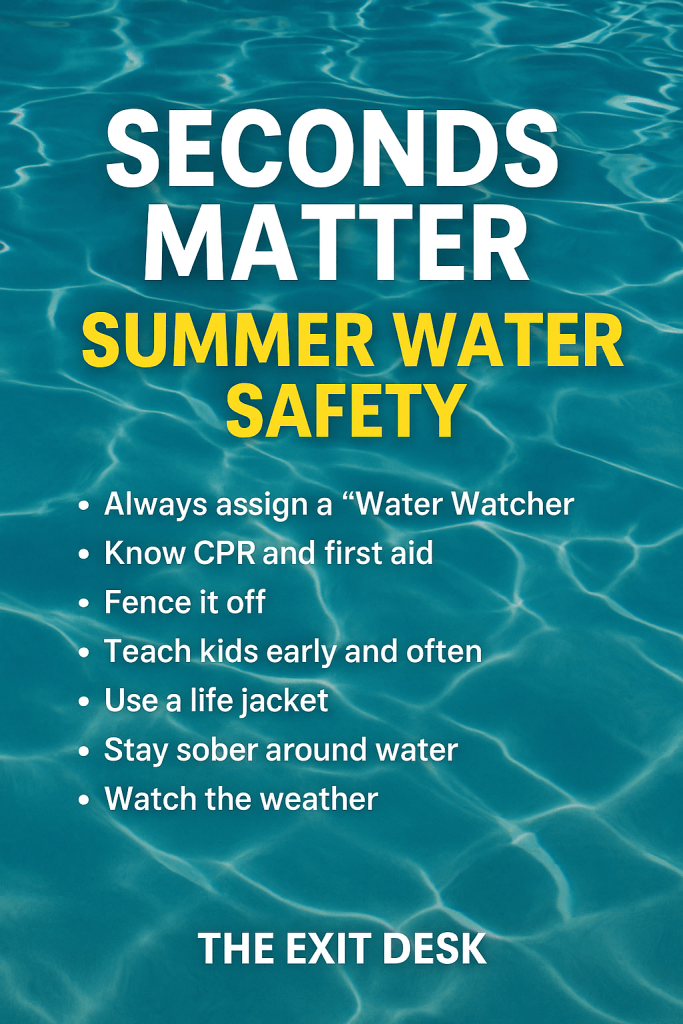
    💦 7 Simple Ways to Stay Safer Around Water:

    1. Always assign a “Water Watcher.”

    One adult. One job. One set of eyes on the water — no phones, no distractions.

    2. Know CPR and first aid.

    If the unthinkable happens, being prepared could save a life. Seconds matter.

    3. Fence it off.

    Make sure pools are enclosed with a self-latching gate. Keep toys out of the water when not in use to avoid attracting children.

    4. Teach kids early and often.

    Even basic swimming skills can dramatically reduce risk. But remember: swimming lessons don’t equal supervision.

    5. Use coast guard-approved life jackets.

    Especially on boats, docks, or around open water — floaties and water wings don’t count.

    6. Stay sober around water.

    Alcohol and water don’t mix — whether you’re swimming or supervising.

    7. Watch the weather.

    If thunder roars, head indoors. Storms can turn deadly on open water in minutes.

    🌊 One Second Can Change Everything

    Most water-related emergencies don’t look like they do in the movies. There’s no flailing or screaming. It’s fast. It’s silent. And it’s terrifying.

    The Exit Desk is committed to keeping you informed, prepared, and safe this summer. Please take a moment to review your family’s water safety plan — and share this post with someone you love.

    Let’s enjoy the Jersey Shore responsibly. 🌅