
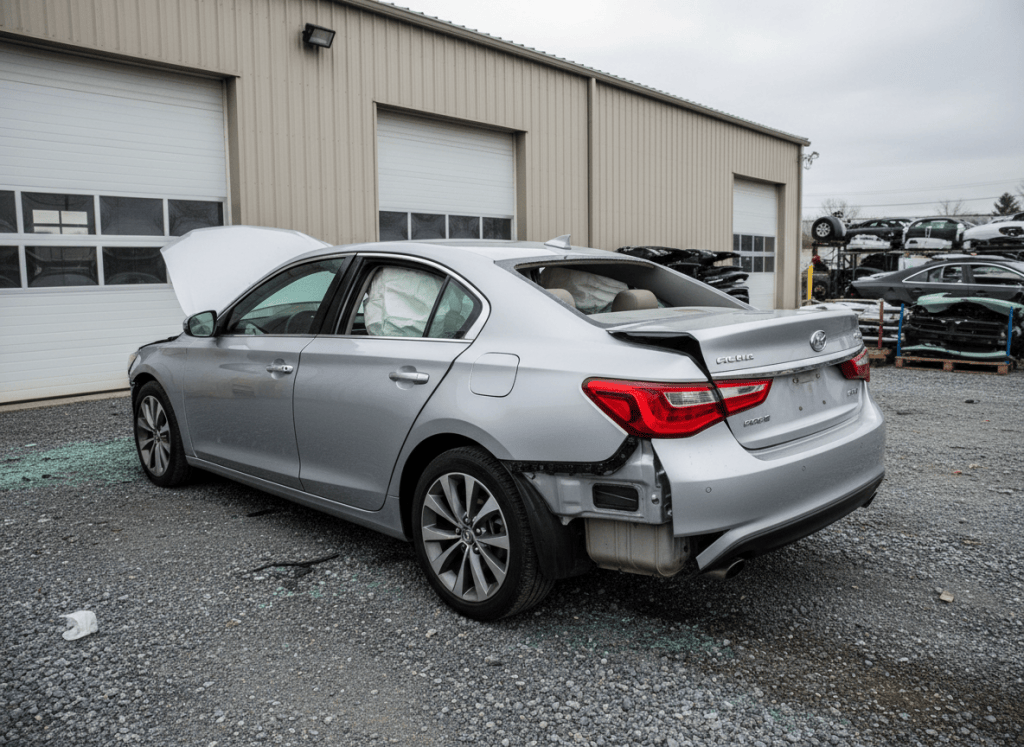
When an insurer declares your car a total loss in New Jersey, the settlement is based on the vehicle’s actual cash value immediately before the loss—not the amount you paid, the replacement vehicle you prefer, or the remaining loan balance. You can still review the valuation, correct errors, supply better comparable vehicles, and use the policy’s appraisal process when appropriate.
This guide explains New Jersey’s total-loss rules, sales tax, prior-damage deductions, salvage retention, storage fees, loans, and complaints.
When is a vehicle a total loss?
New Jersey describes a vehicle as economically impractical to repair when repair cost equals or exceeds its actual cash value on the loss date. Insurers sometimes total vehicles at a lower repair percentage—often around 80%—because teardown may reveal additional damage that would push repairs over the value.
The insurer generally has the option to repair, replace, or pay actual cash value under the applicable coverage.
What is actual cash value?
Actual cash value is essentially what a substantially similar vehicle would have sold for immediately before the accident or loss, subject to the policy and New Jersey rules. It is not automatically a dealer’s asking price, a national average, or the balance on your financing.
NJDOBI says insurers use an approved valuation method, such as prescribed guide values, a quote for a substantially similar vehicle available within 25 miles of where the car is normally garaged, or an approved computerized valuation source.
Audit the valuation report
Request the complete report and check:
- VIN, trim, drivetrain, engine, model year, mileage, and options;
- condition ratings and any unsupported deductions;
- prior damage, rust, or missing-equipment adjustments;
- whether comparable vehicles are genuinely similar and geographically relevant;
- whether listed vehicles were actually available near the valuation date;
- applicable sales tax and every addition or deduction;
- your deductible, if the claim is under your own collision or comprehensive coverage.
Send corrections in writing with the window sticker, service records, option lists, photographs, dealer listings, and other objective evidence.
Can the insurer deduct for old damage?
Yes, but the deduction should reflect the amount by which repairing the pre-existing damage would increase the vehicle’s resale value—not necessarily the full retail cost of the unrelated repair. Ask for the factual and mathematical basis of any condition or prior-damage adjustment.
What if comparable cars cost more?
Provide several substantially similar local listings with VINs, mileage, trim, equipment, seller, date, and asking price. Explain each mismatch in the insurer’s comparables. Asking prices are not guaranteed sale prices, but accurate local evidence can expose an incorrect trim, mileage adjustment, or unavailable comparable.
If negotiation fails, review the appraisal clause in your policy. NJDOBI describes a process in which you and the insurer each hire an appraiser; the appraisers select an umpire if needed, and an agreement by two of the three is binding. Consider the likely increase before paying appraisal and possible umpire costs.
Does the settlement include sales tax?
New Jersey’s auto physical-damage rules define actual cash value to include applicable sales taxes on the vehicle repaired or replaced. Review the written breakdown rather than assuming tax was included. Registration, title, or other fees can involve separate policy or regulatory questions, so ask the insurer to identify every included and excluded item.
What happens to the car loan?
The insurer does not have to pay the entire loan merely because the car is totaled. It generally owes the covered actual cash value less applicable deductions. If the loan balance is higher, the borrower remains responsible for the difference unless guaranteed asset protection (GAP) or another product covers it.
Because the lender is usually a loss payee, the settlement draft may name both you and the lender. Ask the lender for an exact payoff and instructions. Do not assume a dealership add-on labeled “GAP” covers every shortfall, deductible, late payment, or rolled-in balance.
Can you keep the totaled vehicle?
The insurer may allow owner retention and deduct salvage value from the settlement. NJDOBI advises that a vehicle manufactured eight or fewer years from the current model year generally requires a New Jersey salvage certificate and special inspection after repair before it can return to public roads.
Get the salvage deduction and title consequences in writing. Storage, towing, repair feasibility, parts availability, and future insurance or resale restrictions can make retaining the car uneconomic.
Watch storage deadlines
A damaged vehicle can accumulate daily storage charges. NJDOBI says an insurer must generally give three working days’ notice before it stops paying storage, allowing time to move the vehicle. Read every message and authorize a reasonable move when needed; ignoring storage notices can create avoidable costs.
Own-insurer versus other-driver claim
A claim under your own collision coverage follows your policy, including its deductible and appraisal provision. A claim against another driver’s insurer is a third-party claim and can involve liability disputes and different recourse. If the other insurer delays or disputes fault, using your own collision coverage may be faster if you have it, though the deductible may apply while recovery is pursued.
How to challenge an unresolved settlement
- Request the complete valuation and written calculation.
- Send a concise written correction with documentary evidence.
- Use the insurer’s internal appeal or escalation process.
- For a first-party claim, evaluate the policy’s appraisal clause.
- File an insurance complaint with the New Jersey Department of Banking and Insurance.
- Seek legal advice when the amount, liability dispute, lien, injury claim, or deadline justifies it.
A complaint can review whether the insurer followed New Jersey rules and the policy, but only a court can ultimately decide disputed legal liability.
Bottom line
Treat the first valuation as a calculation to audit, not a number to accept blindly or reject emotionally. Correct vehicle details, document local comparables, challenge unsupported deductions, confirm tax, understand the loan shortfall, and weigh appraisal costs against the amount genuinely in dispute.
Related New Jersey automotive guides
- Review policy choices and claim basics in the New Jersey auto-insurance guide.
- If the vehicle will be repaired rather than totaled, see how to choose a New Jersey repair shop and document authorization.
Official sources
- NJDOBI: Filing an Auto Damage Claim With Your Own Insurer
- NJDOBI: Filing an Auto Damage Claim With Another Insurer
- NJDOBI insurance complaints and consumer assistance
This article provides general insurance information, not legal or financial advice.

