By EXIT DESK
Published: September 22, 2026 at 6:57 p.m. ET
Updated: September 22, 2026
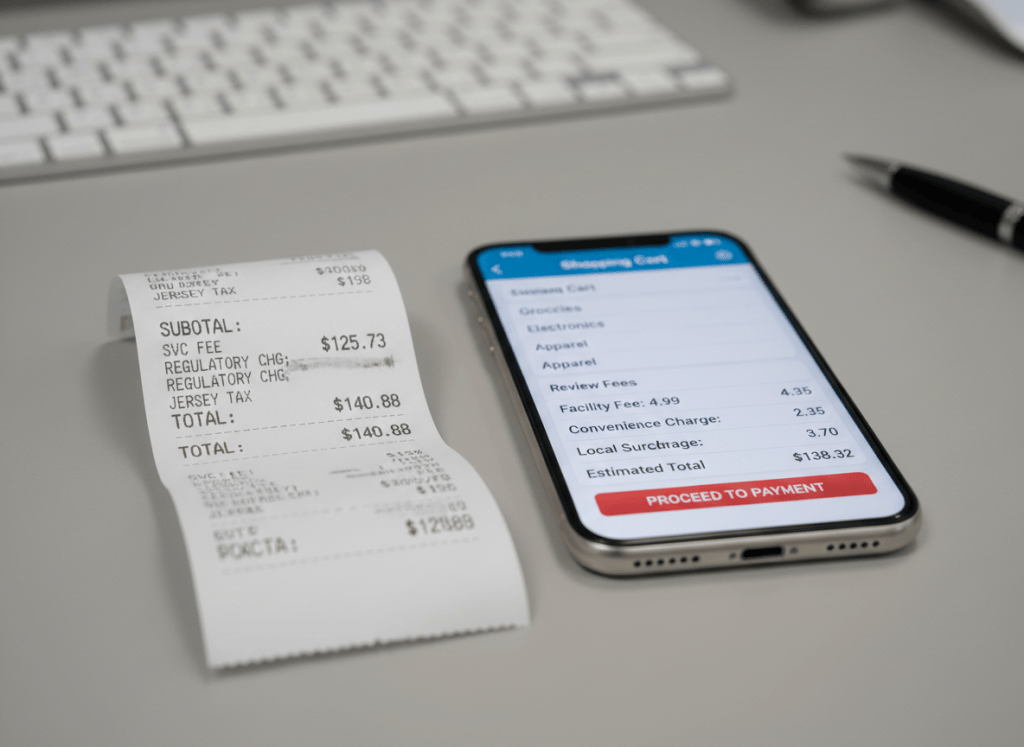
A price that grows at checkout because of hidden, mandatory or misleading add-on charges may violate New Jersey consumer-protection law. In June 2026, the New Jersey Attorney General and Division of Consumer Affairs issued an enforcement statement explaining how the Consumer Fraud Act can apply to junk fees and encouraged consumers to report them.
Not every separate fee is illegal. The key questions include whether a charge was mandatory, how and when it was disclosed, whether its purpose was accurately described and whether the advertised price gave consumers a misleading impression of the amount they would actually have to pay.
Practices New Jersey regulators specifically flagged
- Advertising a price that excludes mandatory fees and adding them later in the purchase process.
- Hiding costs in fine print or using websites and apps designed to make charges difficult to spot.
- Misrepresenting the purpose of a fee or whether it is mandatory.
- Using vague or obscure labels for overpriced or unnecessary fees that provide little or no benefit.
Save the entire pricing trail
If you believe a fee was deceptive, save screenshots showing the original advertised price and each checkout step, along with receipts, contracts, invoices, confirmation emails and correspondence with the business. The timing of the disclosure can be as important as the amount of the charge.
How to report a junk fee
New Jersey’s Division of Consumer Affairs has created a “Fight the Fees” resource for consumers to report junk-fee experiences. A useful complaint should identify the business, advertised price, disputed fee, when the fee appeared, whether it was mandatory and what happened when you asked the business to correct it.
A government complaint does not guarantee an individual refund. Consumers who paid by credit card can separately ask their issuer about applicable billing-dispute procedures and deadlines. Larger losses or disputes involving legal deadlines may warrant advice from a qualified attorney.
New Jersey’s broader 2026 crackdown
On June 15, Gov. Mikie Sherrill signed Executive Order 19 directing executive-branch agencies to assess junk fees in the industries they regulate and recommend possible rules, all-in pricing requirements or other measures. The order required agency reports to the Governor’s Office by Sept. 14.
The Attorney General’s enforcement statement is separate from that review and puts businesses on notice that existing provisions of the New Jersey Consumer Fraud Act may already apply to deceptive fee practices.
Sources
- State of New Jersey, junk-fee initiative and Executive Order 19 announcement, June 15, 2026
- New Jersey Division of Consumer Affairs, Fight the Fees
- New Jersey Division of Consumer Affairs, consumer complaint information
This article provides general consumer information, not legal advice.

