
Author: EXIT DESK

  • New Jersey Renters Insurance Guide for 2026: Coverage, Costs and Gaps

    Renters insurance protects the belongings, liability exposure and temporary living costs that a landlord’s building policy generally does not cover. For New Jersey tenants, the important question is not merely whether to buy a policy, but whether its limits and exclusions match the apartment, possessions and local risks.

    What renters insurance usually covers

    • Personal property: belongings damaged or stolen after a covered loss.
    • Loss of use: additional living expenses when a covered loss makes the rental uninhabitable.
    • Personal liability: certain claims alleging that the tenant injured someone or damaged property.
    • Medical payments to others: limited medical expenses for certain guest injuries.

    The New Jersey Department of Banking and Insurance explains these coverages in its Consumer Guide to Renters Insurance.

    What a landlord’s policy does not do for the tenant

    The owner’s insurance generally protects the building, not a renter’s furniture, clothing, electronics or other possessions. It also does not substitute for the renter’s personal liability or additional-living-expense coverage.

    Replacement cost versus actual cash value

    Actual-cash-value coverage accounts for age and depreciation. Replacement-cost coverage can reimburse the current cost of replacing covered property, subject to the policy terms and deductible. A cheaper actual-cash-value policy may produce a much smaller claim payment.

    How much coverage should a New Jersey renter buy?

    Create a room-by-room inventory and estimate the replacement cost of clothing, furniture, kitchen equipment, computers, televisions, bicycles and other belongings. Photograph valuable items and store the inventory somewhere accessible after a loss. Ask about sublimits for jewelry, collectibles, instruments, business property and high-value electronics.

    Liability limits should reflect the tenant’s risks and assets. Tenants with pets, frequent visitors or higher net worth may need more protection or an umbrella policy. Read the exclusions before assuming a particular event is covered.

    What renters insurance usually excludes

    Standard policies commonly exclude flooding, earth movement, wear and tear, pests, intentional acts and some types of repeated seepage or mold. Flooding—including tidal surge—is not covered by ordinary renters insurance. A separate contents-only flood policy may be available through the National Flood Insurance Program or a private insurer.

    Read the detailed Exit Desk guide to flood, water-damage and mold gaps for New Jersey renters.

    Can a New Jersey landlord require renters insurance?

    A lease may contain an insurance requirement, including minimum liability limits and proof of coverage. Tenants should review the actual lease language, confirm the required limits and understand whether the landlord must be listed as an interested party. Being listed for notice is not the same as giving the landlord ownership of a tenant’s policy or claim.

    See the supporting guide to New Jersey lease and proof-of-insurance requirements.

    How to compare NJ renters-insurance quotes

    1. Use identical personal-property, liability and loss-of-use limits.
    2. Compare replacement-cost and actual-cash-value treatment.
    3. Keep deductibles consistent.
    4. Check exclusions, sublimits and endorsements.
    5. Ask about bundles, protective devices and claim-free discounts.
    6. Verify the insurer is authorized in New Jersey.
    7. Compare the full policy term, not only a monthly payment.

    Exit Desk’s NJ renters-insurance cost and quote-comparison guide provides a reusable checklist.

    Frequently asked questions

    Is renters insurance required by New Jersey law?

    There is no general statewide mandate requiring every renter to buy a policy, but a lease can impose an insurance requirement. Check the lease and seek qualified advice for a dispute.

    Does renters insurance cover roommates?

    Do not assume it does. Coverage generally follows the named insured and policy definitions. Unrelated roommates may need separate policies.

    Does it cover a stolen bicycle or laptop away from home?

    Many policies provide some off-premises personal-property coverage, but limits, deductibles and exclusions apply. Verify the policy rather than relying on a general rule.

    Official resources

    This article provides general consumer information, not individualized insurance or legal advice. Coverage, lease terms, eligibility and prices vary. Review the policy and lease and consult a licensed professional when needed.
    Related reading

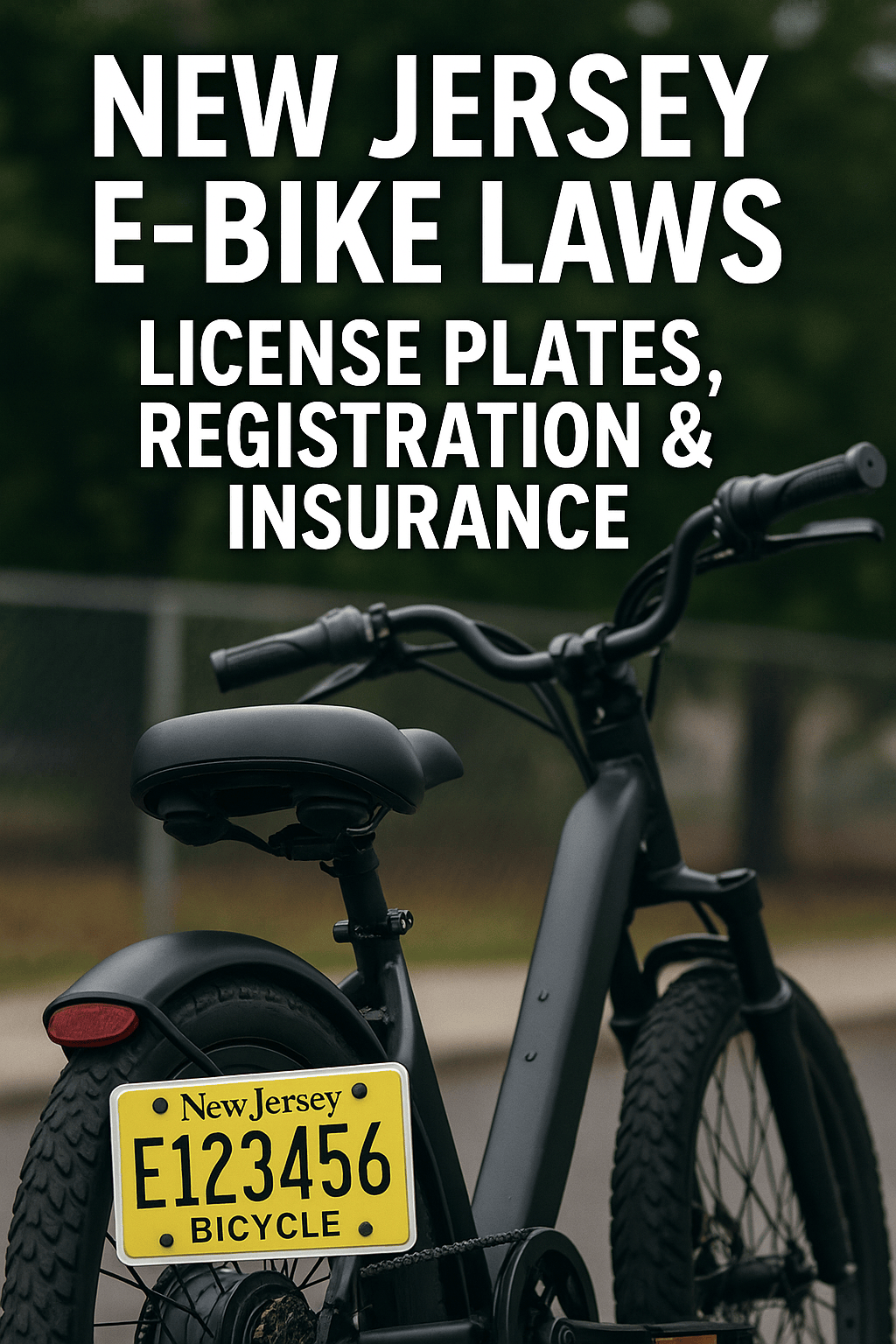
  • NJ E-Bike Law Update: The 2025 Proposal and What Took Effect in 2026

    NJ E-Bike Law Update: The 2025 Proposal and What Took Effect in 2026

    Update: New Jersey’s e-bike proposal became law, and the Motor Vehicle Commission began implementing the new licensing and registration requirements on June 26, 2026.

    This older article originally covered the proposal while it was moving through the Legislature. It should not be used as the current compliance guide. In particular, the implemented rules do not require liability insurance for every e-bike: motorized bicycles require insurance, while low-speed electric bicycles do not.

    For the current registration, licensing, age, helmet and insurance rules, read New Jersey E-Bike Laws in 2026: License, Registration, Insurance and Helmet Rules.

    Historical context: the enacted law is P.L.2025, c.285. Verify current administrative procedures with NJMVC.

  • 10 Real Ways to Get Cheaper EV Insurance in New Jersey 2025–2026

    By Exit Desk

    Electric vehicles are becoming more common in New Jersey, but many drivers are surprised by the insurance costs. EVs often carry higher repair expenses, yet there are proven ways to reduce premiums. These are the real strategies EV owners in NJ say are helping them lower insurance costs heading into 2026.


    1. Choosing EVs with strong safety ratings

    Models with top crash-test performance typically cost less to insure.

    2. Comparing insurers that specialize in EV coverage

    Some NJ insurers price EVs more competitively than others based on repair and battery replacement data.

    3. Using telematics programs

    UBI programs reward safe driving, often offsetting the higher base cost of EV insurance.

    4. Bundling home + auto policies

    Many EV owners save more through bundles than traditional discounts alone.

    5. Raising deductibles on comprehensive and collision

    Higher deductibles can meaningfully reduce premiums for newer EVs.

    6. Installing anti-theft devices

    EV owners often qualify for additional discounts when adding immobilizers or enhanced security features.

    7. Updating annual mileage

    Short-range EV usage can place drivers into lower mileage tiers.

    8. Taking defensive driving courses

    State-approved courses apply to EVs just like gasoline vehicles and can reduce premiums.

    9. Removing unnecessary add-ons

    EV drivers often eliminate coverages like rental reimbursement if alternative transportation is available.

    10. Shopping EV-specific quotes annually

    As the EV market grows, insurers update pricing models. Many NJ drivers find lower rates each renewal cycle.


    Sources


    Updated December 2025 — Next refresh scheduled December 2026

  • NJ Auto Insurance Discounts in 2026: Safety Features and Other Ways to Save

    Some vehicle features can reduce a New Jersey auto-insurance premium, but many popular driver-assistance systems do not automatically qualify for a discount. The safest approach is to ask each insurer which discounts it offers and compare the final premium for the same coverage limits and deductibles.

    New Jersey’s Department of Banking and Insurance says insurers must offer discounts for vehicles equipped with anti-lock brakes, airbags or passive-restraint systems, and qualifying anti-theft vehicle-recovery systems. Other safety-feature discounts may be available, but they vary by company.

    Vehicle features tied to required NJ discounts

    Anti-lock braking systems

    New Jersey insurers must offer a discount for qualifying anti-lock brakes. Confirm that the vehicle identification information on the policy correctly reflects the equipment.

    Airbags and passive-restraint systems

    Qualifying airbags and passive restraints are also included in the state’s required safety-feature discounts. The amount can depend on the insurer and coverage affected.

    Anti-theft vehicle-recovery systems

    A qualifying anti-theft recovery system may reduce the portion of a premium associated with theft risk. Ask what documentation the insurer requires and whether a factory-installed or aftermarket system qualifies.

    Features that may help, but do not guarantee a discount

    Automatic emergency braking, lane-departure warning, blind-spot monitoring, adaptive cruise control, parking sensors and backup cameras can improve safety. However, New Jersey’s consumer guidance does not say every insurer must discount every modern driver-assistance feature.

    Repair costs matter too. Cameras, radar sensors, calibration and specialized parts can make some collision repairs more expensive. Get insurance quotes for the exact year, make, model and trim before assuming a newer safety package will lower the total premium.

    Other auto-insurance discounts NJ drivers should ask about

    • Defensive-driving course: New Jersey law requires discounts for drivers who complete a course approved by the New Jersey Motor Vehicle Commission, subject to the program rules.
    • Multiple vehicles: Insuring two or more vehicles on one policy may reduce the premium.
    • Bundled policies: Some companies discount auto coverage when the customer also has homeowners, renters or life insurance with the company.
    • Good student: Many insurers offer a discount for eligible young drivers with a qualifying grade-point average or who attend school away from home.
    • Low mileage or usage-based programs: Availability and privacy terms vary. Review how driving data is collected and how it may affect pricing before enrolling.

    Coverage choices can change price—and protection

    NJDOBI notes that higher deductibles and lower Personal Injury Protection limits can reduce premiums. The Limited Right to Sue option can also cost less than the Unlimited Right to Sue option.

    These are not free discounts. A higher deductible increases what you pay after a covered loss, lower limits reduce available benefits, and the lawsuit option affects legal rights. Review the tradeoffs before changing coverage solely to lower the bill.

    How to compare NJ auto-insurance quotes correctly

    1. Use identical liability limits, PIP choices, deductibles and optional coverages for every quote.
    2. Provide the exact vehicle identification number so safety and anti-theft equipment is recognized.
    3. Ask the agent or company to list every applied discount in writing.
    4. Compare the full six- or twelve-month premium, not only the monthly payment.
    5. Check the insurer’s complaint ratio and financial-strength information.
    6. Review the quote again after any life change, new driver, move or vehicle replacement.

    New Jersey consumer resources

    Use the official NJDOBI Automobile Insurance consumer page, the state’s 2026 Auto Insurance Buyer’s Guide, and the Auto Insurance Purchasing Planner when comparing coverage.

    New Jersey consumers can shop for insurance at any time, not only at renewal. If a driver changes companies, the prior policy should not be cancelled until the replacement coverage is confirmed and effective.

    Frequently asked questions

    Does automatic emergency braking guarantee a discount in NJ?

    No. An insurer may recognize it, but New Jersey’s required-discount guidance specifically identifies anti-lock brakes, airbags/passive restraints and qualifying anti-theft recovery systems. Ask the insurer about the exact vehicle.

    Can I switch NJ auto insurers before renewal?

    Yes. NJDOBI’s consumer bill of rights says drivers can shop for cheaper coverage at any time and may seek a refund of unused premium after cancelling the old policy.

    What is the easiest discount to overlook?

    That depends on the household, but drivers frequently need to ask about defensive-driving, multi-policy, multiple-vehicle, good-student and qualifying vehicle-equipment discounts.

    This article provides general consumer information, not individualized insurance, financial or legal advice. Coverage availability and discounts vary by insurer and driver.

    For coverage choices, quote comparison and official New Jersey resources, see the complete New Jersey Auto Insurance Guide for 2026.

  • 12 Real Insurance Tricks Ocean County Drivers Are Using in 2025–2026

    By Exit Desk

    Ocean County remains one of New Jersey’s most car-dependent regions — and with rising premiums statewide, many local drivers are finding creative, practical ways to keep insurance costs under control. These are the real strategies Ocean County residents say are helping them save money heading into 2026.


    1. Updating annual mileage for local commuting

    Many Ocean County drivers qualify for lower-mileage tiers because they work closer to home or drive mostly local roads.

    2. Choosing cars with lower repair costs

    Drivers often select models with affordable parts since local shops can repair them more easily and cheaply.

    3. Bundling home, renters, or flood insurance with auto

    Home + auto bundles remain one of the most effective cost-saving tools in shore communities.

    4. Using telematics for safer local driving

    With fewer highway miles, many residents earn sizable safe-driving discounts.

    5. Adjusting coverage on secondary or seasonal vehicles

    Households with older or occasional-use vehicles often reduce collision or comprehensive coverage.

    6. Taking defensive driving courses

    Ocean County drivers frequently use MVC-approved courses to reduce points and lower premiums.

    7. Comparing insurers before each renewal

    Local drivers report wide price differences between carriers for the same ZIP codes.

    8. Verifying household driver lists

    Removing former household members or non-drivers helps some families lower premiums.

    9. Higher deductibles on older shore-town vehicles

    Some residents choose higher deductibles on cars used primarily for local errands.

    10. Avoiding violations on busy Route 9, Route 37, and the Parkway

    Staying violation-free on these major corridors prevents long-term insurance surcharges.

    11. Choosing insurers familiar with coastal risk

    Some companies have more competitive pricing for coastal ZIP codes because of long-term data.

    12. Lowering premiums with anti-theft devices

    Drivers often install steering locks, GPS trackers, or immobilizers to qualify for discounts.


    Sources


    Updated December 2025 — Next refresh scheduled December 2026

  • 12 Real Ways Monmouth County Drivers Are Cutting Car Insurance Right Now (2025–2026)

    By Exit Desk

    Monmouth County drivers face some of the highest insurance costs in Central Jersey — especially in busy commuter towns near the Parkway and Route 35. Still, many households are finding real ways to control premiums. These are the strategies Monmouth County drivers say are working best heading into 2026.


    1. Updating commuting mileage for hybrid or remote work schedules

    Many drivers now qualify for lower mileage tiers because they commute fewer days each week.

    2. Bundling home, condo, or renters insurance with auto

    Home + auto bundles remain one of the strongest ways Monmouth County families save money.

    3. Choosing vehicles with strong safety ratings

    Safer sedans and small SUVs often receive lower premiums in high-traffic zones like Middletown, Hazlet, and Freehold.

    4. Using telematics programs for Parkway driving

    Usage-based insurance rewards smoother braking and consistent speeds on long commuter routes.

    5. Removing optional add-ons

    Drivers often eliminate duplicate roadside assistance or towing coverage to reduce overall costs.

    6. Adjusting coverage levels on older vehicles

    Families with multiple vehicles frequently raise deductibles or reduce collision on older cars.

    7. Comparing insurers each renewal cycle

    Drivers from Howell to Red Bank report large pricing differences between carriers.

    8. Taking NJ defensive driving courses

    MVC-approved courses help remove points and lower premiums.

    9. Verifying all household drivers

    Removing former household members or non-drivers can quickly reduce rates.

    10. Installing anti-theft devices

    Certain Monmouth towns experience higher theft rates. Anti-theft measures often bring meaningful discounts.

    11. Shopping EV-specific rates

    With a rising number of EV owners along the coast, many compare insurers for better EV pricing.

    12. Avoiding violations on busy corridors

    Premiums stay stable longer when drivers avoid tickets on Route 9, Route 18, the Parkway, and Route 35.


    Sources


    Updated December 2025 — Next refresh scheduled December 2026

  • Can a New Jersey Landlord Require Renters Insurance? Lease and Proof Guide

    New Jersey tenants often discover a renters-insurance requirement when reviewing a lease, renewing a tenancy or receiving a request for proof of coverage. The practical issue is the lease language: required limits, proof deadlines and notice requirements should be clear before the tenant buys a policy.

    For coverage basics and shopping guidance, see the New Jersey Renters Insurance Guide for 2026.

    Can a landlord require renters insurance?

    A residential lease can include an insurance obligation. New Jersey does not impose one universal renters-insurance requirement on every tenant, so renters should examine their specific lease and any valid renewal terms. A dispute about whether a new requirement can be imposed mid-tenancy may depend on the lease and facts; obtain qualified legal advice when necessary.

    What the lease may require

    • A minimum personal-liability limit
    • Coverage beginning on or before move-in
    • Continuous coverage during the tenancy
    • A certificate, declarations page or other proof
    • Notice if the policy cancels or lapses
    • The landlord or property manager listed as an interested party

    Interested party is not the same as additional insured

    An interested party may receive policy notices. An additional insured can have rights under the policy. Tenants should not select a designation casually; ask the insurer to match the lease wording and explain the effect.

    What proof should a tenant provide?

    Provide only the documentation reasonably required by the lease, commonly a declarations page or certificate showing the insured name, rental address, effective dates, insurer and applicable liability limit. Avoid sending unrelated account or payment information.

    What landlord-required insurance does not guarantee

    • It does not mean the landlord’s property is insured by the tenant’s personal-property coverage.
    • It does not make ordinary renters insurance cover flooding.
    • It does not automatically cover every roommate.
    • It does not remove the landlord’s legal responsibilities.
    • It does not guarantee that every injury or property-damage claim is covered.

    If the policy lapses

    A lapse may violate the lease and leave the tenant uninsured. Contact the insurer promptly, document replacement coverage and communicate in writing with the property manager. Do not assume a landlord-purchased program provides the same protection as an individual renters policy; some programs primarily protect the property owner.

    Tenant checklist

    1. Read the insurance clause before signing.
    2. Confirm the required liability limit.
    3. Ask who must appear on proof of insurance and in what capacity.
    4. Buy enough personal-property protection for your own needs.
    5. Verify roommates and pets.
    6. Keep proof and renewal records.
    7. Seek legal help if the demand conflicts with the lease or appears improper.

    Compare policy terms with the water-damage and flood guide and the NJ renters-insurance quote checklist.

    This article provides general information, not legal advice. Lease rights depend on the agreement and circumstances. Consult a qualified New Jersey attorney or tenant-assistance resource for a dispute.

  • The 15 Best AI Tools Every New Jersey Small Business Owner Needs in 2026

    By Exit Desk

    Running a small business in New Jersey isn’t easy. Costs keep rising, customers expect faster service, and competition gets tougher every year.
    In 2026, the most successful NJ businesses — restaurants, contractors, salons, landscapers, retailers, gyms, barbers, mechanics, freelancers, and home-service companies — are all using AI to save time, lower expenses, and grow.

    Here are the 15 AI tools every NJ small business owner should be using this year.


    1. QuickBooks AI Bookkeeping

    Automatically categorizes expenses, flags mistakes, and predicts cash flow. Saves hours every week.


    2. Square AI Scheduling

    Perfect for barbers, salons, tattoo shops, and spas. Fills empty slots by analyzing buyer behavior.


    3. ChatGPT for Customer Service

    Drafts emails, replies to reviews, creates marketing campaigns, builds FAQs, and writes estimates in minutes.


    4. Claude 3 for Business Planning

    Creates clean proposals, job descriptions, onboarding docs, and SOPs for restaurants, contractors, and storefronts.


    5. Canva AI for Marketing

    Instant logos, menus, flyers, social posts, and ads — no designer needed.


    6. ServiceTitan AI (Contractors)

    Electricians, plumbers, and HVAC techs use this to automate job estimates, route planning, and customer reminders.


    7. Shopify Magic (Retail + Online Sellers)

    Generates product descriptions, ads, SEO keywords, and inventory predictions.


    8. Mailchimp AI (Email Marketing)

    NJ businesses using AI email tools report higher open rates and more repeat customers.


    9. Yelp and Google Review Responder AI

    Writes fast, polite replies to customers — boosts visibility and trust.


    10. Jasper AI (Ad Copy + Websites)

    Creates website text, Facebook ads, and landing pages that convert.


    11. Jobber AI (Landscaping + Home Services)

    Automates quotes, scheduling, invoicing, and client follow-ups for crews.


    12. OpenPhone AI (Smart Business Phone)

    Transcribes voicemails, drafts text replies, and organizes leads automatically.


    13. Notion AI (Internal Operations)

    Organizes your business — procedures, training, payroll notes, inventory tracking — all in one hub.


    14. Stripe AI Fraud Detection

    Flags suspicious payments instantly, critical for e-commerce and contractors.


    15. Tability AI Goal Tracking

    Keeps your business on track with weekly progress summaries.


    Why NJ Businesses Are Adopting AI So Quickly

    • Saves 10–20 hours of manual work per week
    • Creates cleaner marketing and better customer communication
    • Reduces paperwork and back-office stress
    • Keeps small businesses competitive with larger companies
    • Helps owners work on the business, not just in it

    If you want more revenue, less chaos, and better margins in 2026, these tools are a must.


    Read the full statewide guide:

  • How to Check Flood Risk Before Buying a Home in New Jersey

    A flood-zone label is important, but it is not a complete assessment of a New Jersey property’s flood exposure. Homebuyers should combine official mapping, the seller’s disclosures, property-specific documents, insurance quotes and professional advice before making a decision.

    This guide addresses buyer due diligence. For coverage and policy differences, use Exit Desk’s New Jersey Flood Insurance Guide.

    1. Check the official FEMA map

    Search the property in the FEMA Map Service Center. Record the effective Flood Insurance Rate Map, flood zone, map panel and effective date. If a lender says flood insurance is required, ask which determination and mapped hazard area it used.

    Mapped zones are regulatory and insurance tools; they do not mean flooding cannot occur outside a Special Flood Hazard Area. Drainage failures, intense rainfall, nearby waterways and future conditions can create risk beyond a mapped boundary.

    2. Use New Jersey’s flood-risk resources

    The New Jersey Department of Environmental Protection’s Know Your Flood Risk resources add state context and allow residents to examine parcel-level information. Compare what state tools show with the effective FEMA map rather than treating a single commercial score as definitive.

    3. Read the seller’s disclosure and ask follow-up questions

    Review the current property-condition disclosure for flood history, water entry, drainage issues, insurance claims and known hazard information. Ask for clarification when an answer is incomplete. Also examine visible grading, sump equipment, foundation repairs and nearby drainage, and discuss concerns with a licensed home inspector or appropriate specialist.

    4. Ask for elevation and mitigation documents

    If available, obtain an elevation certificate, floodproofing records, permits, substantial-improvement records and documentation for vents or elevated utilities. An elevation certificate can help an insurer or engineer understand the building’s elevation characteristics, but it does not guarantee a particular premium or eliminate risk.

    5. Get insurance quotes before committing

    Request property-specific quotes using consistent coverage assumptions. Ask what is and is not covered, the deductible, building and contents limits, waiting periods, exclusions and whether the quote is through the National Flood Insurance Program or a private insurer. A seller’s current premium is not a reliable promise of the buyer’s future price.

    6. Investigate conditions the map may not explain

    • Past water entry or repeated street flooding
    • Stormwater facilities, culverts and nearby streams
    • Basement or crawl-space vulnerability
    • Access roads that may flood even when the structure does not
    • Local permits, drainage projects and elevation requirements

    Commercial climate scores can provide a supplemental perspective, but their methods and assumptions vary. A general chatbot cannot inspect a property, retrieve a complete claims history or predict a future FEMA zone or insurance premium.

    The defensible approach is to compare multiple authoritative records, document unanswered questions and make any offer contingencies with advice from qualified local professionals.

  • AI Closing Cost Calculators for New Jersey Home Buyers 2026

    By Exit Desk

    Buying a home in New Jersey is expensive enough — but the closing costs can hit buyers even harder.
    Attorney fees, title insurance, recording charges, lender fees, survey costs, transfer taxes… it adds up fast.

    In New Jersey, buyers typically pay 2%–4% of the purchase price in closing costs.
    On a $550,000 home, that’s $11,000–$22,000 — and many buyers don’t know what they’re truly paying until the final week of the deal.

    In 2026, AI-powered closing cost calculators are finally giving NJ buyers an advantage.
    These tools break down every fee, compare lenders, predict cash-to-close, and flag junk charges before you sign.

    If you’re buying a home anywhere in NJ — from Ocean County to Bergen County — AI is now one of the most important tools you can use.


    Why NJ Buyers Need AI Closing Cost Tools in 2026

    1. New Jersey Closing Costs Are Some of the Highest in the Country

    Title premiums, attorney fees, and lender charges vary wildly.
    AI checks them against NJ norms and tells you instantly whether you’re being overcharged.

    2. Lenders Are Required to Give Estimates — But They Often Hide Fees

    AI scans Loan Estimates and Closing Disclosures for:

    • Duplicate fees
    • Inflated lender charges
    • Padding in title services
    • Hidden administrative add-ons
    • Misclassified government fees

    It does this in seconds.

    3. Closing Cost Shock Is the #1 Complaint Among NJ First-Time Buyers

    AI eliminates guesswork.


    Best AI Closing Cost Calculators for NJ Home Buyers (2026)

    1. Zillow AI Closing Cost Estimator

    Breaks down:

    • Lender fees
    • Title/escrow
    • State + county recording charges
    • Transfer taxes
    • Prepaid taxes + insurance

    Great for beginners.


    2. Rocket Mortgage AI Fee Analyzer

    AI compares your lender fees to national averages and NJ benchmarks.
    Flags anything outside normal range.


    3. SmartAsset AI Closing Cost Calculator

    Uses NJ-specific tax data and county-level recording fees to produce an accurate cash-to-close estimate.


    4. ChatGPT / Claude 3 Custom Closing Cost Review

    Paste your Loan Estimate.
    AI will:

    • Calculate true cash to close
    • Break down each line
    • Compare with New Jersey norms
    • Suggest cheaper alternatives
    • Rewrite questions to ask your lender

    This one tool alone can save buyers $1,500–$4,000.


    What AI Looks For (Behind the Scenes)

    AI evaluates:

    • Title company premiums vs NJ standard rates
    • Whether lender fees are duplicated
    • Prepaid escrows calculated correctly
    • Homeowner’s insurance quotes inflated
    • “Junk fees” like courier fees, admin fees, processing fees
    • Attorney charges exceeding state averages

    Humans miss these details.
    AI doesn’t.


    How NJ Buyers Should Use AI Before Closing

    Step 1: Upload Loan Estimate to AI

    Let AI identify red flags before you commit.

    Step 2: Compare Title Quotes

    AI detects when title companies charge above NJ’s regulated rate.

    Step 3: Review Attorney Fees

    AI highlights if your attorney is charging outside typical NJ ranges.

    Step 4: Run Cash-to-Close Simulation

    Find out exactly how much you need to bring to the table — no surprises.


    Typical Closing Costs by New Jersey County (AI Benchmarks)

    (Estimates for 2026 buyers)

    • Ocean County: $10,500–$18,000
    • Monmouth County: $12,000–$22,000
    • Bergen County: $14,000–$24,000
    • Middlesex County: $11,500–$20,000
    • Burlington County: $9,500–$16,000

    Your AI tool will pinpoint your exact range.


    Bottom Line

    AI isn’t just helping New Jersey home buyers save money — it’s leveling the playing field.
    With AI, you can:

    • Predict closing costs early
    • Spot inflated fees
    • Compare title + attorney charges
    • Avoid junk expenses
    • Walk into closing fully prepared

    In a state where every dollar matters, AI is now essential for smart home buying.


    Read the full statewide guide: