Category: NJ Life

Local New Jersey stories, consumer issues, and practical information that affect daily life in the state.

  • Phishing Emails Are Now Targeting AI Assistants Alongside People

    A phishing email can now target two readers at once: the person opening the message and the AI assistant summarizing their inbox. Barracuda Research says it identified emails containing conventional phishing lures alongside hidden instructions intended to manipulate AI tools.

    How the double attack works

    The visible portion may look like a routine internal message, invoice or document request. But the underlying email code may contain instructions hidden in HTML comments, invisible text, encoded strings or zero-width characters. The instructions attempt to convince an AI summarizer that the message is urgent or trustworthy, or to introduce a fraudulent task such as changing a vendor’s payment details.

    Why it matters

    Businesses increasingly use assistants to summarize mail, triage requests and prepare action lists. That creates a potential second route for attackers even when the human recipient ignores a suspicious attachment. Researchers describe attempted manipulation, not proof that every illustrated bank-transfer scenario resulted in real losses.

    How to reduce the risk

    • Independently confirm changes to payment instructions using a trusted contact method.
    • Require human authorization for financial transfers and sensitive account changes.
    • Treat email content, including hidden markup, as untrusted data rather than instructions for AI assistants.
    • Use layered filtering, prompt-injection defenses, monitoring and output checks.

    Sources: Barracuda Research; Malwarebytes.

  • Needle-Free Epinephrine Is Coming: What neffy® Means for First Responders and Schools

    A recent discussion surrounding New Jersey’s proposed legislation allowing police officers to carry epinephrine auto-injectors has brought attention to a newer form of emergency treatment: neffy®, a needle-free epinephrine nasal spray.

    As conversations around emergency response evolve, neffy is being viewed by some as a potential next step in how severe allergic reactions are treated in public settings.


    What is neffy®?

    neffy is a nasal spray form of epinephrine, the same medication found in EpiPens and similar auto-injectors used to treat anaphylaxis.

    Instead of requiring an injection into the thigh, neffy is administered as a spray into the nostril.

    It received FDA approval in August 2024 for adults and children weighing at least 33 pounds (15 kg). Like traditional epinephrine devices, it is packaged in two single-use doses in case symptoms persist and a second dose is needed.


    Why it’s gaining attention

    Anaphylaxis is a fast-moving medical emergency. Symptoms such as airway swelling, difficulty breathing, and a drop in blood pressure can become life-threatening within minutes.

    Epinephrine is the primary treatment, but timely administration is critical.

    A needle-free option may help reduce hesitation in emergency situations. It also simplifies the process for individuals who may not be familiar or comfortable with injectable devices.


    Relevance for first responders

    Police officers, EMS personnel, and school staff are often the first to encounter medical emergencies in the community.

    Many are already trained to administer medications like naloxone (Narcan), which is also delivered as a nasal spray. Because of this, neffy could fit into existing response protocols with minimal adjustment.

    While New Jersey’s current legislation focuses on traditional epinephrine auto-injectors, the emergence of nasal delivery systems may influence future discussions around training and equipment.


    Current status

    As of April 2026:

    • neffy is available in the United States by prescription
    • School access programs are being introduced in some areas
    • Broader adoption among first responders is still in early stages

    Any widespread implementation would depend on policy updates, funding, and training at the state and local levels.


    Final thoughts

    Epinephrine remains a critical tool in treating severe allergic reactions. Advances in how it is delivered may improve accessibility and ease of use, particularly in high-pressure situations.

    As states like New Jersey evaluate how first responders are equipped, innovations such as neffy may become part of the broader conversation around emergency preparedness.

  • Optimus for Veterans: A Disabled Veteran’s Idea for Humanoid Robots as Assistive Companions

    My name is Andrew Gibson. I am a 100% service-connected disabled veteran.

    Like many veterans, I face daily challenges that make simple tasks more difficult than they should be. There are times when basic things, getting items I need, handling reminders, or managing light household chores, become overwhelming.

    Service dogs provide tremendous support for many veterans, but they are not an option for everyone due to long waitlists, housing restrictions, allergies, and ongoing care costs.

    That’s why I believe general-purpose humanoid robots, particularly Tesla’s Optimus, could become a valuable new tool for disabled veterans seeking greater independence.


    What Optimus Could Offer Veterans

    Tesla is preparing to start low-volume production of Optimus Gen 3 in summer 2026, with wider availability expected in 2027. The company’s long-term goal is to make these robots capable and affordable, with a target price eventually dropping toward $20,000 to $30,000 at high volume.

    A humanoid robot like Optimus has the potential to assist with practical, everyday needs such as:

    • Retrieving items when mobility or energy is low
    • Providing medication or appointment reminders
    • Helping with light household tasks
    • Offering consistent, non-judgmental support without fatigue

    This is not about replacing human connection or service animals. It is about adding a reliable, scalable option that can grow in capability as the technology improves.


    My Plan: The Veterans Humanoid Assistance Program

    I am working to create the Veterans Humanoid Assistance Program, a veteran-led initiative to help bring this technology to disabled veterans.

    The plan is straightforward and phased:

    • Form a 501(c)(3) nonprofit and assemble a small board of advisors
    • Begin with a small pilot using currently available assistive technology to gather feedback from fellow veterans
    • Apply for VA funding, especially the Specially Adapted Housing Assistive Technology (SAHAT) Grant, which supports innovative tools that help severely disabled veterans live more independently
    • Prepare to acquire or lease early Optimus units or similar platforms once they become available to organizations in late 2026 or 2027

    As the founder and a 100% disabled veteran, I plan to serve as Executive Director. Once initial funding is secured, I intend to draw a modest, reasonable salary so I can dedicate the necessary time to building and running the program.


    Why This Matters

    This effort is personal for me. My own experiences as a disabled veteran motivate me to turn challenges into something that might help others.

    If you’re a fellow veteran, a family member, someone working in assistive technology or robotics, or simply a supporter who believes in this idea, I would welcome hearing from you.

    You can reach me at:
    gibson68w@gmail.com


    Humanoid robots are moving from prototypes to reality faster than most expected. My hope is that disabled veterans can be part of that future in a meaningful way.

    Thank you for reading.

    Andrew Gibson
    100% Disabled Veteran
    Founder, Veterans Humanoid Assistance Program

  • From Dorm Room to Digital Empire: How Facebook Was Born on February 4, 2004

    On a cold February night in 2004, inside a cramped Harvard dorm room, a 19-year-old computer science student pressed “launch” on a website that would change the world.

    The site was called TheFacebook.com.

    What began as a simple online directory for Harvard students would go on to reshape communication, media, politics, business, and daily life for billions of people. Today, Facebook’s parent company, Meta Platforms, connects nearly four billion users across its apps and stands as one of the most powerful technology companies in history.

    But on February 4, 2004, it was just a dorm-room project.

    The Spark: Before Facebook Existed

    Mark Zuckerberg’s path to Facebook was already paved with code. Raised in Dobbs Ferry, New York, he showed an early aptitude for programming, creating messaging software for his father’s dental office and later developing music recommendation software that caught the attention of major tech companies.

    While attending Harvard in 2003, Zuckerberg built Facemash, a controversial site that allowed students to compare classmates’ photos in a “hot or not” format. The site drew massive attention almost immediately, but it was quickly shut down due to privacy concerns.

    Despite the backlash, Facemash revealed something important: students were eager for a centralized digital social space.

    Harvard already produced printed “face books” containing student photos and information. Zuckerberg believed a digital version could be built faster, better, and more efficiently.

    So he started coding.

    February 4, 2004: The Launch

    TheFacebook went live exclusively for Harvard students with a university email address. Within 24 hours, roughly 1,200 to 1,500 students had signed up. Within weeks, it had spread across campus.

    The early version was simple:

    • Personal profiles with photos
    • Relationship status options
    • Interests and affiliations
    • Messaging and friend requests

    There was no News Feed yet. No ads. No algorithm. Just a clean, searchable social directory.

    By the end of the month, more than half of Harvard undergraduates were active users.

    Expansion followed quickly. Other Ivy League schools joined within weeks, and by summer 2004 the team relocated to Palo Alto. What began as a student project was now a startup.

    Explosive Growth and Defining Features

    By the end of 2004, Facebook reached one million users, becoming one of the fastest-growing websites of its time.

    Key developments followed:

    • 2005: The company dropped “The” from its name and opened to high schools
    • 2006: Facebook opened to the general public
    • 2006: The News Feed launched, fundamentally changing how people consumed information
    • 2009: The Like button debuted, reshaping online engagement
    • 2012: Facebook went public and acquired Instagram
    • 2014: WhatsApp and Oculus joined the ecosystem

    Each innovation pushed Facebook deeper into daily life, turning it into both a social platform and an advertising powerhouse.

    A Platform That Changed Society — For Better and Worse

    Facebook became a tool for global connection and organization. It played a role in political movements, business growth, disaster response, and online communities.

    At the same time, its scale brought consequences:

    • Privacy scandals involving user data
    • The spread of misinformation
    • Mental health concerns tied to social media use
    • Antitrust scrutiny and regulatory pressure worldwide

    Zuckerberg and Meta faced lawsuits, congressional hearings, and historic fines, but the platform’s influence only continued to grow.

    Facebook Today

    As of 2026:

    • Meta serves nearly 4 billion monthly users
    • Facebook alone exceeds 3 billion users
    • Advertising revenue dominates the digital economy
    • The company invests heavily in AI, virtual reality, and next-generation platforms

    From dorm-room code to global infrastructure, Facebook’s rise remains one of the most consequential stories in modern technology.

    The Bigger Lesson

    February 4, 2004 wasn’t just the launch of a website. It marked the beginning of a new era of digital life, where online identity, connection, and influence became inseparable from the real world.

    Facebook’s story is both an innovation success and a cautionary tale. It shows how quickly a simple idea can scale, and how powerful technology becomes when it embeds itself into everyday human behavior.

    It all started with one student, one laptop, and a belief that something better could be built faster.

    And the world has been scrolling ever since.

  • Alex Honnold’s Taipei 101 Free Solo: Respect the Feat, But It Didn’t Hit Like El Cap

    First off, full respect to Alex Honnold. On January 25, 2026 (local time), he free-soloed Taipei 101 during Netflix’s live Skyscraper Live broadcast. No ropes. No harness. No backup. At 40 years old, he climbed roughly 1,667 feet in about an hour and a half, took a summit selfie in the wind, called it “sick,” and came down safely.

    That alone deserves respect. One mistake at that height and it’s over. I couldn’t do it. Most people couldn’t. Pulling it off live, with the world watching, takes an elite mental game.

    But here’s the honest take: watching it didn’t land the way his El Capitan free solo did. Not even close.

    Why It Felt Different

    Taipei 101 is not a sheer, featureless glass monolith. It’s a bamboo-inspired, pagoda-style structure made up of stacked sections with overhangs, ledges, and repeating architectural elements. Honnold himself described the climb as a repeating rhythm of “easy, easy, hard,” over and over again.

    Those design features matter.

    Every few floors, there were horizontal balconies and no-hands rest spots where he could shake out, recover, and reset. The facade offered predictable seams, panel edges, sidepulls, and protrusions that repeated consistently. This wasn’t chaotic, natural rock where conditions change move to move. It was engineered, symmetrical, and forgiving.

    Instead of a relentless vertical fight, it felt more like a long endurance effort broken into manageable pitches.

    The Ladder Question

    Then there’s the spire.

    Near the top, Honnold transitioned onto a free-swinging ladder installed for maintenance because parts of that narrow overhang are essentially impossible to climb directly. Commentators acknowledged the ladder was necessary. That matters.

    Using a ladder doesn’t negate the climb. But it does change the nature of the risk. A slip near the end doesn’t mean a full-height free fall. You’re close to observation decks and mechanical levels. There’s a built-in margin that simply doesn’t exist on natural big wall free solos.

    Context Matters

    Compare this to El Capitan, where Honnold faced unpredictable granite, microscopic smears, real cruxes, and zero engineered recovery zones. That climb felt raw, unforgiving, and existential in a way Taipei 101 just didn’t.

    Or compare it to Alain Robert, who climbed Taipei 101 back in 2004 with ropes and safety gear because authorities required it. Robert has long said skyscrapers are often safer and simpler than natural rock. Watching this, it’s hard to argue otherwise.

    Taipei 101 is almost the perfect building for a stunt like this. Repeating patterns. Generous ledges. Predictable holds. Earthquake- and typhoon-engineered features that just happen to make it climbable.

    The Bottom Line

    This isn’t about saying it was easy. It wasn’t. The exposure is terrifying. The commitment is real. Honnold is still operating at a level almost no one else on Earth can touch.

    But the headlines oversold the danger compared to what was actually happening on the wall. The building did a lot of the work. It was impressive, but not mind-blowing.

    Judging by quiet chatter online, I don’t think I’m alone in feeling this way. Plenty of climbers and viewers respect the achievement while privately admitting it didn’t hit like El Cap. Buildings are engineered. Rock is not.

    Congrats to Honnold. He’s a legend.

    But for me, this one was more fascinating than jaw-dropping.

  • How Cold Is Too Cold for Your Pets?

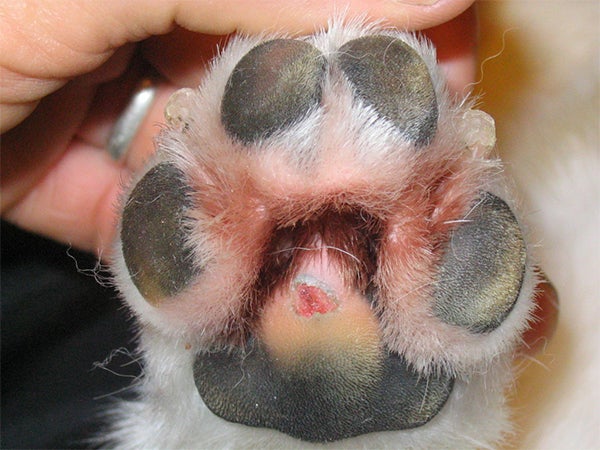
    https://www.wellnesspetfood.com/wp-content/uploads/2024/01/paw.jpg

    When temperatures drop into the teens, especially around 13°F, conditions move beyond uncomfortable and into dangerously cold territory for pets. At this level of cold, it is not safe to leave dogs or other pets outside for extended periods, regardless of breed.

    Cold exposure at these temperatures significantly increases the risk of hypothermia and frostbite, particularly affecting paws, ears, tails, and noses. Pets should not be left outdoors unsupervised or for long stretches in these conditions. The safest approach during extreme cold is to bring pets indoors as much as possible.

    That said, pets still need brief outdoor time for bathroom breaks or short walks. The key is keeping those outings short, supervised, and adjusted to the individual animal.


    How Long Is Too Long in Extreme Cold?

    There is no single safe time limit. Cold tolerance varies based on size, coat type, age, health, and acclimation to winter weather. Wind, moisture, and lack of shelter can make cold exposure much more dangerous.

    Below are conservative guidelines for brief, supervised outings only. These are not recommendations for leaving pets outdoors.

    Small pets and small dogs (under 20–25 pounds or thin-coated breeds):
    10–15 minutes at most, often less. Very small or short-haired animals may tolerate only a few minutes and should return indoors quickly.

    Medium-sized dogs (25–50 pounds):
    About 15–20 minutes maximum, with many better limited to closer to 10–15 minutes when temperatures are below 20°F.

    Large dogs (50 pounds and up, thicker coats):
    Up to 20–30 minutes if active, though even cold-hardy breeds are not immune to frostbite or hypothermia and should not remain outside for long.

    No pet should sleep outdoors or remain outside for prolonged periods in these temperatures.


    Pets That Need Extra Caution

    Some pets are at higher risk and should have much shorter outdoor exposure, often half the time or less:

    • Puppies and kittens
    • Senior pets
    • Thin or lean animals
    • Pets with arthritis, heart conditions, or other medical issues

    For these animals, even brief cold exposure can be dangerous.


    Cold Weather Safety Tips for Pet Owners

    • Keep pets indoors during extreme cold whenever possible
    • Limit outdoor time to quick bathroom breaks
    • Consider insulated coats or booties for short outings
    • Wipe paws after going outside to remove ice and road salt
    • Watch closely for warning signs like shivering, lifting paws, slowing movement, or seeking warmth
    • Never leave pets tied out or unattended in freezing weather

    If a pet shows signs of cold stress, bring them inside immediately and warm them gradually, not rapidly.


    The Bottom Line

    At 13°F, it is simply too cold for extended outdoor time. Even short outings should be brief, supervised, and adjusted to the individual pet.

    When in doubt, assume it is too cold. Your pet’s safety and comfort should always come first.

  • Exploding Trees Are Real. Here’s What’s Actually Happening and Whether It Can Occur in New Jersey

    Reports of “exploding trees” tend to surface during extreme winter cold, often paired with accounts of loud booms echoing through forests at night. While the phrase sounds exaggerated, the phenomenon behind it is real and well documented. It is not an explosion in the traditional sense, but a cold-weather process known as frost cracking, sometimes referred to as a frost burst.

    Understanding what causes it, where it occurs, and whether it poses a real risk in New Jersey helps separate fact from viral exaggeration.


    What Are “Exploding Trees,” Really?

    So-called exploding trees are the result of frost cracks, long vertical splits that form in tree trunks during periods of intense cold.

    The process works like this:

    • Trees contain moisture and sap within their internal tissues
    • When temperatures drop rapidly, that moisture freezes
    • As water freezes, it expands, creating internal pressure
    • The outer bark cools and contracts faster than the inner wood

    When the stress becomes too great, the trunk splits suddenly. The release of pressure can produce a sharp cracking or popping sound, often compared to a gunshot or rifle crack. This is why reports frequently come from nighttime hours during deep freezes, when temperature drops are fastest and background noise is minimal.

    Frost cracking most commonly affects trees with thinner bark, including:

    • Maple
    • Oak
    • Birch
    • Sycamore
    • Fruit trees

    The cracks can stretch several feet vertically and, in some cases, be wide enough to expose inner wood.


    Can This Happen in New Jersey?

    Yes. Frost cracking can occur in New Jersey, though it is far less common than in regions where sub-zero temperatures are routine.

    Current weather context:
    As of late January 2026, New Jersey is bracing for a sharp cold snap this weekend (January 24–26), with daytime highs in the teens to low 20s and overnight lows in the single digits to around 10°F. Some inland and northern areas could briefly dip near 0°F, with wind chills falling below zero. This is dangerously cold for people, pets, and pipes, but still below the threshold typically associated with widespread frost cracking, which usually requires sustained air temperatures in the –10°F to –20°F range.

    That said, isolated frost cracks are still possible under the right conditions.

    Risk factors in New Jersey include:

    • Polar vortex events or Arctic outbreaks
    • Rapid temperature drops following sunny winter days
    • South- or southwest-facing tree trunks, which absorb more sunlight during the day and cool rapidly at night

    Northern and inland areas such as Sussex and Warren counties are more susceptible than coastal regions, where ocean moderation limits extreme lows. While widespread “exploding tree” events are unlikely here, individual cases can occur during sharp cold snaps.


    What Kind of Damage Can Frost Cracks Cause?

    A frost crack is not automatically fatal to a tree, especially if it is otherwise healthy. However, it does create a structural and biological vulnerability.

    Potential consequences include:

    • Open wounds that allow insects, fungi, and bacteria to enter
    • Internal decay, which weakens the tree over time
    • Higher risk of limb or trunk failure during snow, ice, or wind storms
    • Recurring splits, as old cracks often reopen during future cold events

    Young trees and stressed trees are most at risk. In severe cases, frost cracks can lead to cankers, fungal infections that interfere with nutrient flow and may eventually kill the tree.

    Many trees partially heal during warmer months by forming new bark tissue, but scars typically remain and can reopen in later winters.


    Can Frost Cracks Be Prevented?

    Frost cracking cannot be completely prevented, but the risk can be reduced, especially for young or ornamental trees.

    Common protective steps include:

    • Wrapping trunks with burlap or tree wrap in winter
    • Using reflective guards to reduce daytime sun heating
    • Avoiding late-season pruning that stresses trees before cold weather

    If a fresh crack appears, arborists generally recommend monitoring rather than sealing, as improper sealing can trap moisture and worsen decay. Professional evaluation is advised if the tree is near homes, vehicles, or walkways.


    The Bottom Line

    Exploding trees are not a myth, but they are also not a common hazard in New Jersey. The loud cracking sounds reported during extreme cold are the result of wood splitting under thermal stress, not combustion or collapse.

    While this weekend’s deep freeze is serious and potentially dangerous, it is unlikely to trigger widespread frost cracking unless temperatures plunge significantly lower or remain sub-zero for extended periods. Still, isolated cases are possible, especially in exposed or inland areas.

    If a sharp crack echoes through the woods on a bitter night, it may not be fireworks. It may just be winter doing what winter does.

  • Before Deacon Jones, the Sack Didn’t Exist

    How one defensive lineman changed football’s language forever

    It’s hard to imagine modern football without the word “sack.”

    It’s everywhere. Stat sheets. Contracts. Hall of Fame debates. Broadcast graphics. It’s one of the most important defensive plays in the game.

    But for decades, the play existed without a name.

    That changed because of one player.

    Deacon Jones.


    Football Before the “Sack”

    In the early days of the NFL, quarterbacks were tackled behind the line of scrimmage all the time. It just wasn’t treated as a special event.

    Play-by-play descriptions used clunky phrases like:

    • “The quarterback was tackled for a loss”
    • “The passer was dumped behind the line”
    • “The quarterback was thrown down”

    There was no single word.
    No emphasis.
    No statistic.

    Quarterbacks were still evolving into the centerpiece of offenses, and defensive pressure was just part of the chaos.


    Deacon Jones Put a Name to Destruction

    Deacon Jones played defensive end for the Los Angeles Rams in the 1960s. He was violent, fast, relentless, and obsessed with getting to the quarterback.

    When asked how he described taking down the passer, Jones famously said:

    “I sacked the quarterback like you sack a city. You devastate it.”

    That metaphor stuck.

    Jones didn’t just say it once. He repeated it. Teammates repeated it. Broadcasters picked it up. Coaches started using it in meetings.

    The word spread organically. The same way locker-room language always does. Long before analytics departments or rulebooks caught up.

    Soon, “sack” became the word everyone used.


    A Stat That Didn’t Exist Until 1982

    Here’s the part that makes this even more fascinating.

    The NFL did not officially track sacks until 1982.

    That means:

    • Deacon Jones never had an official sack total during his career
    • Neither did many dominant pass rushers from the 1950s, 60s, and 70s
    • Entire Hall of Fame careers exist without official sack statistics

    Today, Jones is credited with approximately 173.5 career sacks, reconstructed through film study and historical research. Even as an unofficial total, it places him among the most prolific pass rushers in NFL history.


    Changing the Game Without a Rulebook

    Deacon Jones didn’t change football through a rule change or a committee decision.

    He changed it through language.

    Once a play has a name, it has importance.
    Once it has importance, it gets tracked.
    Once it gets tracked, it becomes currency.

    Today, sacks influence:

    • Player salaries
    • Defensive schemes
    • Awards voting
    • Legacy debates
    • Hall of Fame arguments

    All because one player gave a violent act a word people couldn’t forget.

  • Trump’s Sanctuary Crackdown. What It Means for New Jersey in 2026

    As New Jersey residents brace for a renewed push on immigration enforcement, a recent White House announcement has raised alarms across the Garden State.

    President Donald Trump announced that all federal payments to so-called “sanctuary cities and states” will be halted effective February 1, 2026, framing the move as a necessary step to prioritize American citizens and force compliance with federal immigration law.

    The announcement builds on earlier executive actions, including Executive Order 14287, signed in April 2025, which directed the Departments of Justice and Homeland Security to identify and penalize jurisdictions that obstruct federal immigration enforcement.

    By August 2025, the Department of Justice released an updated list of sanctuary jurisdictions. Several New Jersey cities were named directly, including Newark, Jersey City, Paterson, and Hoboken, alongside major cities such as New York City, Chicago, and Los Angeles.

    New Jersey’s Position Under Intensifying Federal Pressure

    New Jersey has operated for years under the Immigrant Trust Directive, first issued in 2018 by the Attorney General. The directive limits cooperation between state and local law enforcement and federal immigration authorities, including restrictions on civil immigration detainers and information sharing absent serious criminal convictions.

    In a late move during the January 2026 lame-duck session, the Democrat-controlled Legislature passed a package of three bills designed to codify and expand those protections. The bills were sent to Governor Phil Murphy on January 12, 2026.

    The legislation includes:

    Codifying the Immigrant Trust Directive into state law, making it harder to reverse. The “Safe Communities Act,” establishing protections for sensitive locations such as schools, hospitals, and shelters. Restrictions on unnecessary collection and retention of immigration status information by state agencies.

    While New Jersey is not always listed as a sanctuary state under the narrowest federal definitions, these actions place it firmly in the crosshairs of the Trump administration.

    The Financial Stakes for New Jersey

    The financial implications are significant.

    New Jersey’s Fiscal Year 2026 state budget includes roughly $31 billion in federal funds, representing about one-third of the state’s total operating resources. These funds support:

    Education, including Title I and special education programs. Public safety and law enforcement through federal grants. Transportation and infrastructure, including public transit and highway funding. Health care and social services, including Medicaid and community programs.

    Cities already identified by federal authorities could face immediate consequences. Potential outcomes include service cuts, layoffs, delayed infrastructure projects, or increased local taxes. Statewide ripple effects could reach suburban districts as well, particularly in education and transportation funding.

    Legal Challenges Are Almost Certain

    This strategy is not new.

    During Trump’s first term, similar efforts to defund sanctuary jurisdictions were repeatedly challenged in court and often blocked. Judges cited violations of the spending clause, which gives Congress control over federal appropriations, and the anti-commandeering doctrine, which limits the federal government’s ability to force states to enforce federal law.

    In 2025 and early 2026, courts issued injunctions blocking certain funding cuts tied to housing, transit security, and crime victim assistance. New Jersey has joined multiple multi-state lawsuits arguing the measures are unconstitutional and harmful to essential services.

    If the February 1 cutoff proceeds, rapid litigation is expected. Implementation could be delayed, narrowed, or halted entirely depending on court rulings.

    What Comes Next for the Garden State

    With one of the nation’s largest immigrant populations, New Jersey leaders argue these protections are essential for public safety, community trust, and effective policing. The Trump administration argues the opposite, claiming sanctuary policies obstruct the law and endanger residents.

    For everyday New Jerseyans, the coming months may bring uncertainty. Budget battles, court decisions, and political standoffs could directly affect schools, transit, public safety, and local taxes.

    With codification bills likely to be signed, New Jersey is doubling down on its stance. Whether the courts intervene again or the funding hammer finally falls could shape not only the state’s finances, but national immigration policy moving forward.

    What do you think. Will the courts block the crackdown again, or is 2026 different?

  • Meanwhile in New Jersey

    $128 Million Approved. Homeless Veterans Still Sleeping in Cars and Shelters.

    While New Jersey lawmakers quietly approved another $128 million in last-minute spending, including $26 million for the FIFA World Cup host committee chaired by the First Lady, thousands of homeless veterans across the state remain without stable housing.

    If you missed the spending breakdown, read it here first:
    👉 https://exitdesk.wordpress.com/2026/01/09/new-jersey-democrats-approve-128-million-in-last-minute-spending-before-murphy-leaves-office/


    The Reality for Homeless Veterans in New Jersey

    According to the most recent Point-in-Time Count (January 2025 data. 2026 numbers have not yet been released), New Jersey had an estimated 1,200 to 1,400 homeless veterans on any given night.

    That represents roughly 10–12 percent of the state’s total homeless population, which sits between 11,000 and 13,000 people statewide.

    Breaking It Down Further

    • 60–70 percent are unsheltered, living in vehicles, encampments, abandoned buildings, or outdoors
    • The highest concentrations are in Essex (Newark), Hudson (Jersey City), Camden, and Mercer (Trenton)
    • Many are 55 years or older, dealing with PTSD, substance use disorders, physical disabilities, or housing costs that remain unaffordable even with subsidies

    This is not an abstract issue. These are veterans who served, returned home, and then fell through gaps that still exist in housing and support systems.


    Progress Made. Problem Still Unsolved.

    To be clear, New Jersey has made real progress.

    Veteran homelessness in the state is down roughly 50 percent since 2010, largely due to:

    • Federal VA programs
    • HUD-VASH housing vouchers
    • State and nonprofit initiatives

    But progress does not mean the problem is solved. Hundreds of veterans remain unhoused every night.


    The Contrast That’s Raising Questions

    At the same time:

    • $26 million was approved for soccer promotion and World Cup-related events
    • $25 million was approved for a new supercomputer
    • $128 million total was allocated in a late-night, end-of-term vote

    Veterans groups have repeatedly argued that even a fraction of that funding could:

    • Expand permanent supportive housing
    • Increase VA case management capacity
    • Provide emergency rental assistance
    • Stabilize hundreds of veterans already identified by outreach teams

    Instead, those dollars went elsewhere.


    The Question New Jersey Has to Answer

    This is not about denying economic development or technology investment.
    It’s about priorities.

    Should more end-of-term funding be directed toward housing and support for homeless veterans?
    Or is the current spending justified as written?

    There is no easy answer. But it is a question worth asking. Especially now.

    Related reading