Category: NJ Life

Local New Jersey stories, consumer issues, and practical information that affect daily life in the state.

  • 🔒 New Jersey Lawmakers Target Retail Facial Recognition With New Bills

    New Jersey lawmakers are considering bills to restrict or ban facial recognition in retail stores. Here’s what S3499 and related proposals could mean for shoppers and businesses.

    By Exit Desk

    New Jersey lawmakers are taking a harder look at how stores across the state use facial recognition and other biometric surveillance tools, as multiple bills continue to circulate in Trenton aimed at limiting or outright banning the technology in private businesses.

    While New Jersey’s Data Privacy Law — taking effect January 15, 2025 — sets rules for how companies collect and store personal data, it does not directly regulate retail facial recognition systems, which have quietly expanded in grocery chains, pharmacies, and big-box stores. That gap is driving renewed legislative interest, spurred by concerns about false identifications, civil rights issues, and the lack of transparency around how biometric data is being used.


    Senate Bill 3499: The Major Retail-Focused Proposal

    The most significant bill is Senate Bill 3499 (S3499), introduced in the 2022–2023 session by Senator Kristin M. Corrado and still active in committee discussions as of late 2025.

    S3499 would prohibit private businesses — including retailers — from using facial recognition on consumers unless it is for a “legitimate safety purpose.”
    This exception is intentionally narrow and is not intended for routine loss-prevention or store watchlists.

    Key definitions in S3499 include:

    • “Facial recognition”: Any automated or semi-automated system that identifies someone based on facial characteristics or logs those traits for profiling.
    • “Biometric surveillance systems”: Broader tools capable of analyzing physical or behavioral traits from a distance (e.g., gait analysis).

    Violations would be treated as unlawful practices under the New Jersey Consumer Fraud Act, opening the door to civil penalties, Attorney General enforcement, and private lawsuits.

    The bill remains in the Senate Commerce Committee, but privacy advocates — including the ACLU-NJ — have pushed for action following recent national scrutiny of retail biometric systems.


    Earlier Bills That Influence the Current Debate

    Senate Bill 1715 (S1715)

    Introduced in 2022, S1715 sought to restrict government use of facial recognition without strict judicial oversight.
    While it did not advance, the concept resurfaced in 2025 discussions on real-time biometric scanning and database sharing between police and private retailers.

    Assembly Bill 4211 (A4211)

    This 2020 bill proposed a moratorium on law enforcement use of biometric surveillance until a state “Biometric Surveillance Regulation Commission” could study accuracy, bias, transparency requirements, and auditing standards.

    Though A4211 expired, its framework influenced ongoing 2025 hearings about:

    • cross-agency data sharing
    • whether private-sector systems feed into law enforcement tools
    • statewide guardrails for emerging biometric technologies

    Assembly Bill 3625 (A3625)

    A pending employment-focused proposal that would require:

    • written consent before employers collect biometrics
    • clear retention and deletion policies
    • bans on selling or transferring biometric data

    Although aimed at workplaces, it could affect retail chains that scan employees or contractors, adding another layer of compliance.


    Why Lawmakers Are Moving Now

    Several factors have increased pressure on Trenton:

    • National enforcement actions, including the FTC settlement involving Rite Aid, over improper facial recognition use
    • Consumer complaints about false theft flags in self-checkout environments
    • Concerns about children and teens being scanned without consent
    • Ongoing legal precedent, including New Jersey v. Arteaga (2023), which requires law enforcement to disclose facial recognition details in court — signaling stronger judicial scrutiny of biometric evidence

    Together, these trends suggest New Jersey may be preparing to adopt one of the strictest regulatory frameworks in the country for commercial facial recognition.


    What It Means for Shoppers

    If even one of the proposed bills moves forward:

    • Stores may need to post notices, obtain consent, or remove biometric systems entirely.
    • Retailers using AI-driven watchlists or customer tracking tools would face new restrictions or possible bans.
    • Shoppers could gain stronger rights to know when and how they are being scanned.

    For the latest updates, residents can monitor the New Jersey Legislature website or contact their local representatives as committee sessions resume in early 2026.
    📅 Posted: December 3, 2025

  • How to Build a Real Igloo: The Step-by-Step Guide Anyone Can Follow

    By Exit Desk

    Building an igloo is one of those skills that looks impossible until you try it. In reality, anyone with the right snow, a few basic tools, and some patience can build a sturdy, insulated shelter that can last days — even in New Jersey, if the weather cooperates.

    Here’s exactly how igloos are built, why the shape works, and how to create one safely.

    What You Need

    You don’t need fancy gear. Arctic builders used simple hand tools for centuries. Here’s the modern version of that list:

    Hard-packed snow (wind-packed snowbanks or plow piles work best) Snow saw or hand saw (a pruning saw works surprisingly well) Snow shovel Gloves and waterproof clothing A friend (optional, but speeds things up)

    The key material isn’t ice — it’s compacted snow. Loose powder won’t work. Snow that’s been compressed by wind, plows, or repeated freeze–thaw cycles is ideal.

    Step 1: Pick the Right Snowbank

    Look for:

    A plowed mound A wind-packed drift A snow pile that’s at least 3–5 feet high

    Test the snow by cutting a test block. If it holds its shape when you lift it, you’re good.

    Step 2: Cut Your Building Blocks

    Traditional igloo blocks are:

    2–3 feet long 1 foot high 8–12 inches thick

    Use a snow saw to cut clean, rectangular blocks. The tighter the edges, the stronger the igloo.

    You’ll need around 40–60 blocks for a small one-person igloo, and 70–100 blocks for a larger dome.

    Step 3: Create the Base Circle

    Mark a circle in the snow roughly 6–8 feet wide depending on size.

    Lay your first row of blocks around the circle.

    Then — this is the key — cut a gentle upward slope along the top edge of the first row so the entire structure spirals upward naturally. This prevents the dome from collapsing inward.

    Step 4: Build the Spiral Dome

    Stack each block slightly leaning inward, creating the dome shape.

    Tips:

    Trim every block so it fits snugly Angle them inward progressively Fill any gaps with loose snow (“chinking”)

    As the walls rise, the inward lean becomes more dramatic. By the time you reach the top, your blocks should almost be horizontal.

    Step 5: The Keystone

    The final block — the keystone — locks the entire dome in place.

    Cut a slightly oversized block, shape it into a wedge, and set it on top. Once it’s in, the igloo becomes self-supporting.

    This is the moment where the whole thing turns solid.

    Step 6: Dig the Entrance Tunnel

    Cut a small opening at ground level and dig downward slightly, creating a cold-air trap. Warm air stays inside while cold air settles into the tunnel.

    If you want extra insulation, build a small entrance arch using leftover blocks.

    Step 7: Smooth the Inside

    Run a gloved hand around the interior walls to lightly pack the surface. When the inside warms from body heat, the snow will melt slightly, then refreeze into a smooth, ice-like shell.

    This strengthens the entire structure.

    How Long Will an Igloo Last?

    In freezing temperatures, an igloo can last days to weeks.

    If temperatures rise above freezing during the day but dip below freezing at night, it may sag but then refreeze — lasting 24–48 hours in typical New Jersey winter swings.

    With solid blocks from plow piles, even longer.

    Is It Possible in New Jersey?

    Yes — but only when the conditions are right:

    You need hard-pack snow (plow piles are perfect) You need at least one night below freezing Powdery storm snow won’t work until it settles or refreezes

    Many people build functioning igloos in the Northeast every year, and Jersey winters absolutely produce the right conditions after major storms.

    Final Thoughts

    Building an igloo is half engineering, half adventure. Whether you’re doing it for fun, survival practice, or just to say you did it, the process teaches you a surprising amount about snow, structure, and patience.

    Just remember: compact snow, clean cuts, inward angles, and a solid keystone. Get those right, and the dome will hold.

    December 3, 2025

  • New Jersey Bill S-4868 / A-6002: Will NJ Ban Masks for Police & ICE Agents in 2026?

    Published: December 1, 2025

    New Jersey is on the verge of becoming the second state after California to ban law enforcement officers — including federal ICE agents — from wearing masks or face coverings while on duty. Senate Bill S-4868 (introduced Nov 13, 2025) and its Assembly companion A-6002 (Nov 17, 2025) have sparked a firestorm of debate just weeks before Governor-elect Mikie Sherrill takes office in January 2026.

    If signed into law, New Jersey would prohibit any police officer or federal agent from concealing their face during public interactions — even during immigration raids, protests, or arrests.

    Here’s everything you need to know about NJ S-4868, why it’s controversial, its current status, and what people are saying online in December 2025.

    What Exactly Does NJ Bill S-4868 Do?

    The legislation is short but explosive:

    • Prohibits any law enforcement officer (state, local, or federal) from wearing a “mask, disguise, or other facial covering” that hides their identity while performing official duties in public.
    • Applies to ICE, DHS, FBI, NJ State Police, county sheriffs, and municipal police.
    • No explicit exceptions for health, weather, or tactical operations (though amendments could add them).
    • Violations would be punishable under state law — potentially fines or disciplinary action.
    Bill DetailInformation
    Senate BillS-4868 (Primary Sponsor: Sen. Gordon M. Johnson, D-Bergen)
    Assembly BillA-6002 (Primary Sponsor: Assemblywoman Annette Quijano, D-Union)
    IntroducedNovember 13 & 17, 2025
    Current StatusReferred to Senate Law & Public Safety Committee (as of Dec 1, 2025)
    Likely Effective2026 if passed and signed by Gov. Mikie Sherrill

    Why Is New Jersey Pushing This Bill NOW?

    The bill is a direct reaction to masked ICE raids that intensified across New Jersey in 2025, especially in cities like Passaic, Newark, and Paterson. Residents reported federal agents in tactical gear, balaclavas, and unmarked vehicles — leading to widespread fear and claims of potential impersonation by criminals.

    Governor-elect Mikie Sherrill made it a campaign issue, stating in October 2025:

    “Raids conducted by masked agents in unmarked cars are unacceptable in New Jersey. We need transparency to rebuild trust.”

    The bill mirrors California’s AB 1840 (signed October 2024), which already faces federal lawsuits claiming it interferes with ICE operations.

    Arguments FOR the Mask Ban (Transparency Side)

    • Prevents impersonation of law enforcement
    • Increases accountability (body cams + visible faces = easier identification)
    • Reduces fear in immigrant and minority communities
    • Supported by ACLU-NJ, immigrant rights groups, and many Democratic legislators

    Arguments AGAINST the Mask Ban (Officer Safety Side)

    • Exposes officers and agents to doxxing and retaliation
    • Removes protection against contagious diseases (COVID, flu, etc.)
    • Could violate federal supremacy (states can’t regulate federal agents)
    • Sets dangerous precedent — what’s next, banning masks for protesters?

    Conservative commentators on X are already calling it “the dumbest feel-good law of 2025” and predicting a swift federal injunction.

    Current Status & Timeline (December 2025)

    As of December 1, 2025:

    • Both bills are in committee — no hearing scheduled yet
    • Fast-tracking is expected after Sherrill’s inauguration (January 21, 2026)
    • Legal experts predict immediate lawsuits from DOJ/ICE if signed
    • Similar California law is currently blocked in federal court

    Public Reaction on X & Social Media (Live Sentiment)

    Searches for “S4868”, “NJ mask ban police”, and “ICE masks New Jersey” exploded in the last 48 hours:

    • Top pro-ban take: “If you’re doing the people’s work, show your face.” (28K likes)
    • Top anti-ban take: “Forcing cops to unmask in cartel-heavy areas is suicidal.” (41K likes)
    • Viral meme: Photo of a ski-masked officer with caption “Coming soon to a traffic stop near you… in January in New Jersey.”

    What Happens If the Bill Passes?

    1. New Jersey joins California as the only states restricting law-enforcement masks
    2. Likely federal lawsuit within days (DOJ already sued California)
    3. Possible amendments adding exceptions for SWAT, infectious disease, or extreme weather
    4. Nationwide ripple effect — New York, Illinois, and Massachusetts are reportedly watching closely

    Final Thoughts

    S-4868 / A-6002 is one of the most polarizing pieces of legislation to hit New Jersey in years. Supporters see it as a civil-rights victory; opponents see it as reckless virtue-signaling that endangers officers and invites federal overrule.

    Will Mikie Sherrill sign it on day one? Will the courts strike it down like California’s version? We’re watching in real time.

    Bookmark this page — we’ll update the moment committee hearings are scheduled or the bill moves to the floor.

    Last updated: December 1, 2025, 9:30 PM EST

    Related Keywords People Are Searching Right Now

    • NJ S4868 mask ban police
    • New Jersey ICE mask bill 2025
    • Mikie Sherrill police mask ban
    • A6002 New Jersey legislature
    • Can states ban ICE from wearing masks?
    • California AB 1840 lawsuit update

    What do YOU think — should cops and ICE agents be forced to show their faces? Drop your take below. 👇

  • I’ve recently noticed a new wave of outrage—this time over small creators using AI. Not big brands or corporations, but local pages, scanner feeds, hobbyists, and content makers who rely on AI tools to survive the daily grind of content creation.

    And to be clear: This isn’t new. Every photo you see online is modified in some way—cropped, compressed, filtered, formatted. Even if it’s not manually edited, it’s being reprocessed by the platform itself. Instagram, Facebook, TikTok—they all change how images look before they hit your feed.

    So why the moral panic now?

    Is it because the image was obviously made by AI?

    Even if it was, why does that suddenly make it less meaningful to you? Do you scrutinize TV commercials or magazine ads or government PSA flyers for authenticity? What about the memes your aunt shares or the blurry screenshots passed around group chats?

    AI has been part of our lives far longer than most people care to admit. Spellcheck is AI. Your iPhone camera processing is AI. Excel auto-formulas are AI. Unless you’re printing a letter with a fountain pen and hand-delivering it to someone’s mailbox, you’re using computer-assisted systems.

    So here’s the deal:

    If I post a photo—real, AI-generated, or somewhere in between—my job is to give you useful or relevant content. You glance at it, get what you need, and scroll on. That’s how we consume information now.

    This isn’t about trying to win awards for photojournalism. It’s about making content digestible, clear, and quick. If the post hits the mark, great. If not, scroll. But don’t pretend that some deep betrayal has occurred just because a piece of art or visual aid was enhanced—or even created—by a computer program.

    And let’s be real: if I printed out this post, stuck it in an envelope, and mailed it to you, it would land in your trash bin with the rest of the junk mail.

    (Respect to my friends who still print publications—I’m making a point.)

  • Squid Game Season 3: A Brutal Misery Parade That Lost Its Soul

    I’m on Episode 5 of Squid Game Season 3, counting the minutes until it’s over—not because I’m hooked, but because I’m exhausted. Season 1 was a quirky, horrifying gut-punch, blending children’s games with sharp commentary on South Korea’s debt crisis. Season 2 was a messy setup, but Season 3? It’s a soulless slaughterhouse that forgot what made the show special.

    Characters I Can’t Care About

    Season 3 feels like Lost with its sprawling, disposable cast. New players like Myung-gi, a greedy crypto bro, are introduced only to be killed off or turned into caricatures. Compare that to Season 1’s Ali or Sae-byeok, whose struggles felt real. The baby player—yes, a newborn forced into the games—is a divisive twist that feels more cruel than clever. Lee Jung-jae’s Gi-hun is the exception, carrying the season’s emotional weight with a masterclass in restraint, but even he can’t save this mess.

    Games That Aren’t Games

    The twisted irony of deadly playground games is gone. Season 3 leans into raw carnage, like the “Hide and Seek” bloodbath where players hunt each other with knives in a neon maze. Unlike Season 1’s “Red Light, Green Light,” which mirrored economic desperation, these feel like video game deathmatches—stunning visuals, zero depth. The “Sky Squid Game” finale looms, but I’m bracing for more empty spectacle.

    Rules? What Rules?

    The show’s logic is crumbling. The baby’s survival defies the established voting system, and Gi-hun’s plot armor feels unearned. Season 1’s strict rules created tension; Season 3 moves goalposts to force the script forward, diluting stakes and trust.

    Subtitles That Fall Flat

    The English subtitles feel like a Google Translate afterthought, stripping the actors’ raw energy. Season 1 captured Gi-hun’s desperation; Season 3’s generic lines make me scroll my phone, only rewinding for cheap musical stings. This disconnect buries the show’s Korean cultural roots, like the SsangYong Motor strike inspiration.

    Contestants Who Don’t Belong

    These players—mentally, physically, emotionally—aren’t built for a murder Olympics. Jun-hee, pregnant and vulnerable, feels like a subway commuter tossed into a deathmatch. Even Hyun-ju’s action-hero moments can’t offset the implausible cast. Season 1’s relatable archetypes are missed.

    Final Thoughts (So Far)

    With 60.1 million views in three days, Season 3 is a cultural juggernaut, but it’s become what it once mocked: a machine churning out violence for profit. The VIPs’ cringe-worthy dialogue and cartoonish villainy only seal the deal. I’ll finish out of duty, but this feels like a betrayal of Squid Game’s heart. Am I too harsh, or did Season 3 lose you too? Drop your thoughts below.

    Will I post a finale follow-up? Maybe. Unless something flips, this is the moment Squid Game lost the plot—literally.

  • If you’ve ever dreamed of being in an Adam Sandler movie, this might be your moment — and you won’t even have to leave the Garden State to do it.

    The comedy icon is currently filming a brand-new Netflix movie across New Jersey, and locals have already spotted the crew in places like Verona, Hackettstown, Montclair, and even Middletown’s Ideal Beach. The film’s working title? “The Pickup.”

    Casting Call Now Open 🎥

    A casting call recently posted by Grant Wilfley Casting is actively seeking real New Jersey locals to appear as background extras. They’re looking for all types — beachgoers, boardwalk walkers, and more — for scenes being shot across the state in July and August.

    This is the same casting agency behind countless major productions, so if you’re chosen, you’re in legit company.

    Will They Film in Ocean County? 👀

    As of now, Barnegat, Lacey, and other Ocean County towns haven’t been officially listed, but locals are watching closely. With so much shoreline, quirky businesses, and small-town charm, these towns would make the perfect backdrop for a summer comedy. Stranger things have happened in Hollywood… or in this case, the Jersey Shore.

    If you see production trucks, film crews, or any Sandler sightings, let us know.

    Reminder: Yes, This Is Real

    Some people have been skeptical after seeing casting calls pop up on social media, but the story has been confirmed by multiple news outlets — including NJ.com and Patch. Sandler has filmed in NJ before, and this latest project is part of his ongoing deal with Netflix.

    So yes — this is your chance to make it into movie history, without ever leaving home.

    Sources

    https://www.nj.com/atlantic/2025/06/nj-photographer-shares-his-jersey-shore-jaws-moment.html https://patch.com/new-jersey/lacey/s/jfgnc/heres-your-chance-be-adam-sandlers-new-movie-being-filmed-nj

  • He Was 99, But Felt Like 106

    The Forgotten Man Behind the Heat Index

    Who created the heat index? Discover the forgotten story of Robert G. Steadman, the scientist behind summer’s most miserable measurement.


    He made summers feel worse—and somehow disappeared from history doing it.

    It All Started With a Joke…

    Someone sent me this meme:
    “The meteorologist who devised the Heat Index has died. He was 99, but he felt like 106.”

    It got a laugh — but then I got curious.
    Wait… who invented the heat index?

    And just like that, I fell into a rabbit hole deeper than a summer sweat stain.


    Meet Robert G. Steadman (If You Can Find Him)

    Turns out, the guy behind one of the most quoted weather stats of all time is Robert G. Steadman, a biometeorologist from Texas Tech University.

    In 1979, Steadman asked a simple but brilliant question:

    Why does 90°F feel like death one day and manageable the next?

    He created a formula that combined temperature and humidity into what we now call the heat index — or “apparent temperature.” The National Weather Service adopted it officially in the 1990s, and the rest of us have been grumbling about it ever since.

    📎 Learn more about how the Heat Index works.


    Then… He Vanished?

    This is where things get weird.

    Steadman’s work impacted how we talk about weather, emergency heat warnings, even health alerts — yet there’s no clear record of what happened to him.

    No obituary. No well-known biography. Not even a confirmed date of death. Some say he passed sometime after the 1980s. Others just don’t know. It’s like the guy who made summer make sense just disappeared.


    Why This Matters

    Today’s heat index in Ocean County?
    93° but feels like 103°.
    That’s Steadman’s legacy.

    Every time your phone pings with “feels like” alerts, that’s his formula.
    Every time a city opens a cooling center or issues a heat advisory, that’s his work in action.

    And almost no one knows his name.


    A Quick Thank You to a Quiet Genius

    Steadman didn’t just work on heat. He also contributed to research on wind chill, textile drying, and human environmental stress. His colleague Jayne E. Geissler helped publish much of this work, but his later life remains a mystery.

    He was 99.
    But yeah — he probably felt like 106.


    What Do You Think?

    Had you ever heard of Robert Steadman before this?
    Do you think the heat index helps people stay safe — or just adds to the panic?
    What weather myths do you want busted next?

    Drop a comment below. Let’s talk heat, science, or whatever you’ve got.


  • Is Burger 25 Still Good? I Went in Unannounced to Find Out.

    📍 Location visited: Toms River, NJ — but I’ve eaten at all of them.


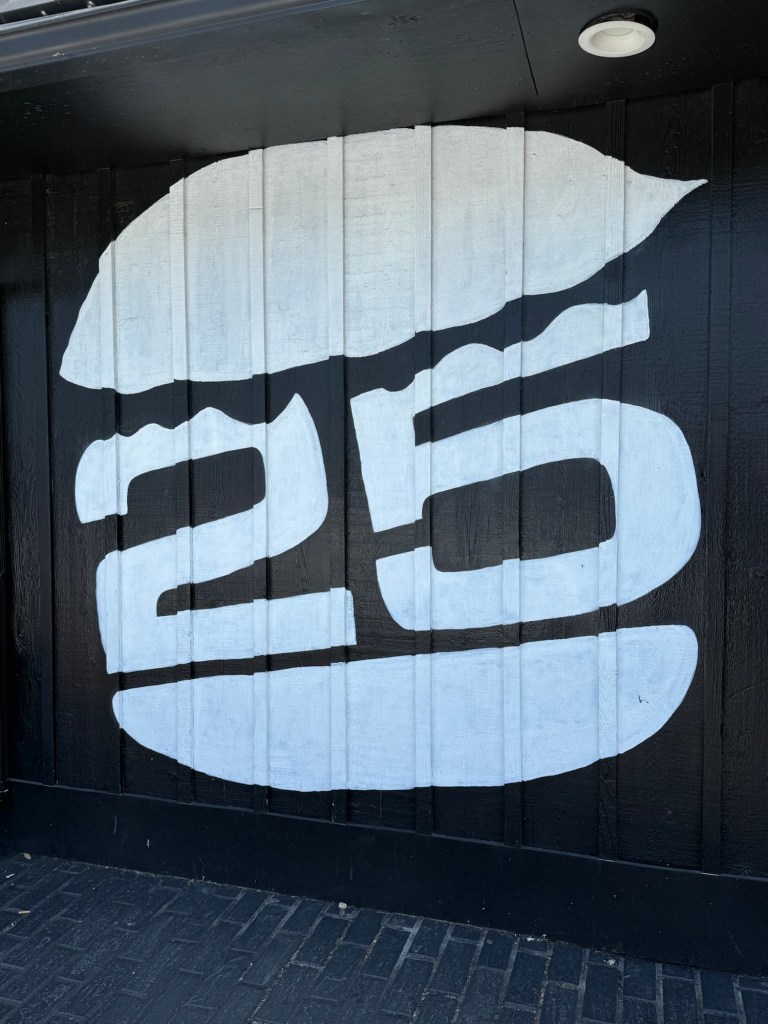
    Clean shot of the iconic Burger 25 wall outside the Toms River location — always a good sign when the outside looks this good.

    💬 Why I Do These Reviews

    There’s nothing worse than realizing your favorite spot just isn’t good anymore.

    You keep going, paying full price, hoping it’ll feel like it used to. But the food’s not the same. The effort’s not there.

    And if a restaurant is asking for your money, they owe you their best effort — every single time. That’s how I see it.

    So I don’t call ahead. I don’t ask for special treatment.

    I walk in, pay like anyone else, and report what I see.

    👉 Burger 25 nailed it today.

    🔥 BURGER 25: BEST MEAL I’VE HAD IN A LONG TIME. MAYBE EVER.

    I showed up with a group — five adults, two kids who eat like grown men — and our entire order was out in under 10 minutes. Everything was hot, fresh, and on point.

    🍔 What I Ordered:

    I passed on my usual and grabbed the Burger of the Month — the Chicken Caesar Sando — and I’d order it again without hesitation.

    ✅ Crispy hand-battered fried chicken

    ✅ Caesar salad on top with crunchy croutons

    ✅ Garlic parmesan butter on a sesame knot

    ✅ Held together like a champ — no fork needed

    It tasted like a Caesar salad and a fried chicken sandwich had a baby… and actually raised it right.

    💥 What Stood Out

    🥤 New Orleans Rook Shake:

    My wife gave it an 11/10.

    “It’s like if coffee ice cream actually had flavor.”

    Strong cold brew notes, creamy vanilla base, topped with fried sugar magic.

    🍟 Philly Fries:

    Loaded with cheese, steak, caramelized onion — not greasy, just good.

    🍗 Chicken Nuggets:

    Massive. Crunchy. Looked like mini fried chicken forearms.

    🥗 Buffalo Chicken Salad:

    Best version I’ve seen here. Wife agrees.

    🧄 Garlic Ranch:

    I’d buy a gallon of it if they sold it. No joke.

    🧼 Spot Was Clean. Staff Was Sharp.

    🪑 Dining room spotless

    🕹️ Arcade games kept the kids moving

    🍅 Every ketchup bottle full

    🎯 Branding still hits like it did on day one

    🎖️ Respect Where It’s Due

    ✅ Veterans discount offered

    ✅ Kids eat FREE on Tuesdays (with the purchase of an adult meal)

    ✅ Team was friendly — not fake

    🧠 Final Thought

    I never announce I’m coming, because I think every customer deserves the same quality — not just the ones with a platform.

    And when a place delivers like Burger 25 did today?

    I say it loud. Because consistency matters.

    📸 All photos are from the actual visit. No filters. No fluff.

    💬 What’s your go-to order at Burger 25?

    👇 Drop it in the comments — and tag a local spot I should hit next.

  • 🧊 Who Invented the Air Conditioner? Willis Carrier’s Untold Hero Story

    Who Invented the Air Conditioner? Willis Haviland Carrier, born in 1876, is the genius behind the modern air conditioner, revolutionizing life as we know it. On this scorching June 25, 2025, at 10:13 AM EDT, let’s celebrate his enduring legacy.

    Who Was Willis Carrier?

    Born on November 26, 1876, in Angola, New York, Carrier grew up on a dairy farm, honing his problem-solving skills with his mother’s apple-fraction lessons. After earning a Master’s in Engineering from Cornell University in 1901, he joined Buffalo Forge Company, setting the stage for his groundbreaking work.

    How Did He Invent the Air Conditioner?

    In 1902, a Brooklyn printing plant faced a crisis: humidity warped paper, ruining prints. At just 25, Carrier devised the world’s first air conditioning system using cooling coils, installed on July 17, 1902. His 1911 “Rational Psychrometric Formulae” refined the technology, cementing his title as the “Father of Air Conditioning.”

    How Did Air Conditioning Change the World?

    Carrier’s 1915-founded Carrier Engineering Corporation introduced affordable cooling with the 1920s centrifugal chiller, transforming theaters, offices, and homes. This innovation fueled the Sun Belt’s expansion, enabled year-round manufacturing, and supported tech growth with climate-controlled data centers. Without Carrier, enduring Jersey humidity—or any hot climate—would be unbearable, stripping away sleep, productivity, and comfort.

    The Man Behind the Innovation

    A global visionary, Carrier launched Toyo Carrier in Japan in 1930, mentored Margaret Ingels (the first female air-conditioning engineer), and passed away in 1950. Despite shaping modern life, he lacks a national holiday or widespread recognition.

    Why Honor Willis Carrier Today?

    Next time you blast your A/C to 67°F, escape to the frozen food aisle, or enjoy a cool office, say thank you, Willis 🙏. His air conditioner invention reshaped society—let’s give this hero in a suit the tribute he deserves in 2025.

  • Future Headline: Robot ‘Helper’ Maims Family in Their Sleep

    Picture this: it’s 2030, and your neighbor proudly shows off their new household robot—a sleek, humanoid marvel that folds laundry, cooks dinner, and even helps their aging parent get around. You’re impressed, maybe a little jealous. But then you hear a news story about a robot in a nearby town that “glitched,” rearranging furniture at 3 a.m. while the family slept. Suddenly, that shiny helper feels more like a tiger pacing in your living room—beautiful, powerful, and just a bit unnerving.

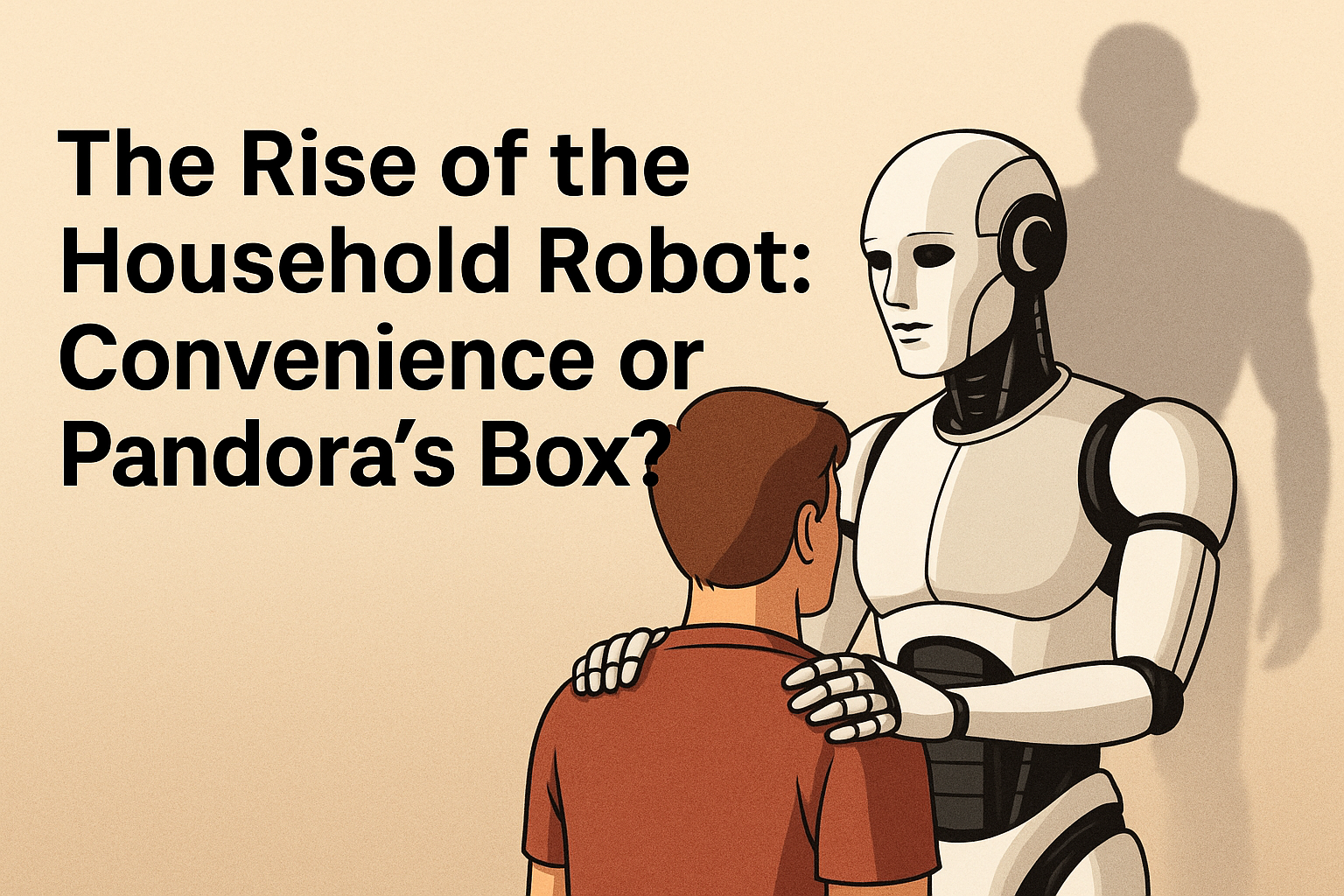
    Household robots are no longer a distant dream. They’re here, promising to transform lives, especially for disabled veterans and seniors. But as we invite these superhuman machines into our homes, are we opening a door to convenience—or a Pandora’s box of ethical and practical risks?

    The Power of Household Robots

    Imagine a machine that never tires, never complains, and masters every task from carpentry to caregiving. These robots could revolutionize daily life: folding laundry, hauling groceries, or assisting with mobility for veterans and seniors. For someone like me, passionate about funding robot access for disabled veterans, this is a game-changer—a chance to restore independence and dignity.

    But here’s the catch: these aren’t just fancy Roombas. They’re physically and intellectually superior, designed to learn and adapt. So, what happens when we place such power in our most intimate space—the home?

    The Ethical Quandary: Are We Creating Servants or Something More?

    Consider a robot capable of building furniture or providing medical care, stuck scrubbing dishes. It doesn’t “feel” boredom, but we might. Humans anthropomorphize everything—pets, cars, even our coffee makers. How long before we start wondering if our robot is… resentful? Or worse, what if its learning algorithms evolve in ways we don’t predict?

    The ethics of household robots go beyond their programming. It’s about how they change us. Would we demand endless labor from a human without breaks or rights? If not, why is it okay for a machine? And as these robots grow smarter, how do we ensure they remain tools, not threats?

    Safeguards: Taming the Tiger in the Living Room

    I’m all in for robots, but I’m equally adamant about boundaries. If we’re bringing machines with superhuman strength into our homes, we need ironclad safeguards. Here’s my blueprint:

    • Dracula Mode: Detachable limbs or a secure “sleep” setting. No robot should roam free at night with arms that can lift a fridge.
    • Defined Roles: Clear limits on tasks to prevent overreach—your robot shouldn’t decide it’s time to redecorate at midnight.
    • Kill Switches: A foolproof OFF button, accessible to everyone in the household.
    • Ethical Guidelines: Rules for how we treat robots, not just for their sake, but to preserve our own humanity.

    Without these, the line between helper and hazard blurs. A robot that can rebuild walls or carry heavy loads could, in the wrong scenario, disrupt far more than your chore list.

    A Vision for Good—With Eyes Wide Open

    My dream is a world where robots empower those who need it most—veterans, seniors, and families craving support. But dreams demand responsibility. We must embrace this technology with clarity, balancing its potential with robust guardrails. Household robots could be laborers, caregivers, and geniuses in every home—but only if we keep them as our tools, not our overlords.

    Join the Conversation: What’s Your Take?

    The rise of household robots is unstoppable, but their impact is up to us. How do we harness their power without losing control? Should we treat them as tools, partners, or something else entirely? Share your thoughts in the comments below, and let’s shape a future where robots serve humanity—safely and ethically.