Turn off the lights on Broadway. Shut down the glow in Times Square. If you really want to conserve power, maybe start with the buildings blasting neon ads into the night sky 24/7.
We’re being told to keep our air conditioners at 78 degrees to help the grid out.
Look, I’m not telling anybody how to spend their money or run their lights. That’s their business. But I also don’t want to hear how I’m personally responsible for saving the grid by sweating through July like I’m in a parked car at a rest stop.
78 degrees? That’s not air conditioning. That’s dog breath with taxes. It doesn’t cool you down—it just lets the sweat simmer more efficiently.
And choosing to keep it at 78? That’s not comfort. That’s like standing behind a car exhaust in January and calling it heat.
When I was a kid and my hands were cold and wet from playing in the snow, I’d warm them up by standing over the dryer vent outside the house. If you think 78 degrees is the move in the middle of a heatwave, you’re that same kind of psycho.
Let’s have a little common sense with all this. If you want to help the grid, great. If you want to stay cool, also great. But let’s not pretend regular folks keeping it at 72 are the problem while Times Square is glowing like it’s the Vegas strip.
What’s your optimal thermostat temperature in summer? Be honest. Comments are open.
The other night I was talking with my father‑in‑law about old movies, and somehow we ended up deep down the rabbit hole of The Ten Commandments (1956). As we talked, one thing became absolutely clear — the sheer number of names in that movie is completely crazy.
An epic vision of ancient power and prophecy — the world of The Ten Commandments brought to life in timeless style.
I mean, sure, everybody remembers the headliners:
• Charlton Heston as Moses
• Yul Brynner as Rameses II
• Anne Baxter as Nefretiri
• Edward G. Robinson as Dathan
• Yvonne De Carlo as Sephora
But when you start looking closer, the list goes on and on:
• John Derek (Joshua)
• Sir Cedric Hardwicke (Seti I)
• Nina Foch (Bithiah)
• Martha Scott (Yochabel)
• Judith Anderson (Memnet)
• Vincent Price (Baka)
• John Carradine (Aaron)
• Olive Deering (Miriam)
• Douglass Dumbrille (Jannes)
• Frank De Kova (Abiram)
• Henry Wilcoxon (Pentaur)
• Eduard Franz (Jethro)
• Donald Curtis (Mered)
• Lawrence Dobkin (Hur Ben Caleb)
• H.B. Warner (Amminadab)
• Julia Faye (Elisheba)
And that doesn’t even scratch the surface.
You’ve got smaller roles with faces and names that movie lovers might catch, like:
• Fraser Heston (Charlton Heston’s infant son) as Baby Moses
• Woody Strode as the King of Ethiopia
• Tommy Duran as Gershom
• Eugene Mazzola as Rameses’ son
• Joan Woodbury as Korah’s wife
• Abba El Boughdadly as Rameses’ charioteer
• John Miljan as The Blind One
• Francis J. McDonald as Simon
And of course, the army of featured extras that made the Exodus scene feel real:
14,000 extras and 15,000 animals were used. That’s not just epic — that’s cinema on a biblical scale.
My father‑in‑law and I were laughing as we went down the list, realizing how many people came together to create this monumental film. It wasn’t just a movie — it was a massive collaboration, a landmark moment in Hollywood history.
If you haven’t watched The Ten Commandments in years — or ever — do yourself a favor. You’ll be surprised how many familiar faces you recognize… and how many legendary names you might be learning for the first time.
On the second day of summer, multiple water-related incidents served as a powerful reminder that accidents happen fast. Here’s how to stay safe around pools, lakes, and beaches this season.
Water safety starts at home. Accidents happen in seconds
The second day of summer brought more than just sunshine to the Jersey Shore — it brought real, urgent reminders of how quickly things can go wrong around the water. While we won’t go into the details out of respect for those involved, we saw firsthand how fast emergencies can unfold.
Water safety isn’t just a good idea — it’s essential.
With school out, temperatures rising, and backyard pools and beaches filling up, here are a few critical steps that every family can take:
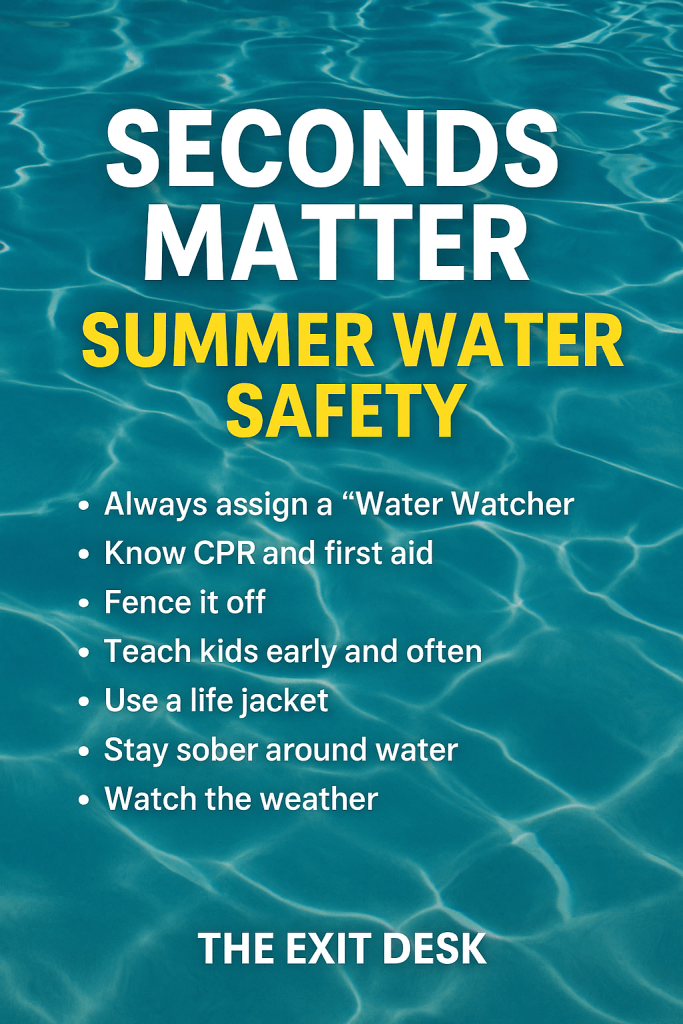
💦 7 Simple Ways to Stay Safer Around Water:
1. Always assign a “Water Watcher.”
One adult. One job. One set of eyes on the water — no phones, no distractions.
2. Know CPR and first aid.
If the unthinkable happens, being prepared could save a life. Seconds matter.
3. Fence it off.
Make sure pools are enclosed with a self-latching gate. Keep toys out of the water when not in use to avoid attracting children.
4. Teach kids early and often.
Even basic swimming skills can dramatically reduce risk. But remember: swimming lessons don’t equal supervision.
5. Use coast guard-approved life jackets.
Especially on boats, docks, or around open water — floaties and water wings don’t count.
6. Stay sober around water.
Alcohol and water don’t mix — whether you’re swimming or supervising.
7. Watch the weather.
If thunder roars, head indoors. Storms can turn deadly on open water in minutes.
🌊 One Second Can Change Everything
Most water-related emergencies don’t look like they do in the movies. There’s no flailing or screaming. It’s fast. It’s silent. And it’s terrifying.
The Exit Desk is committed to keeping you informed, prepared, and safe this summer. Please take a moment to review your family’s water safety plan — and share this post with someone you love.
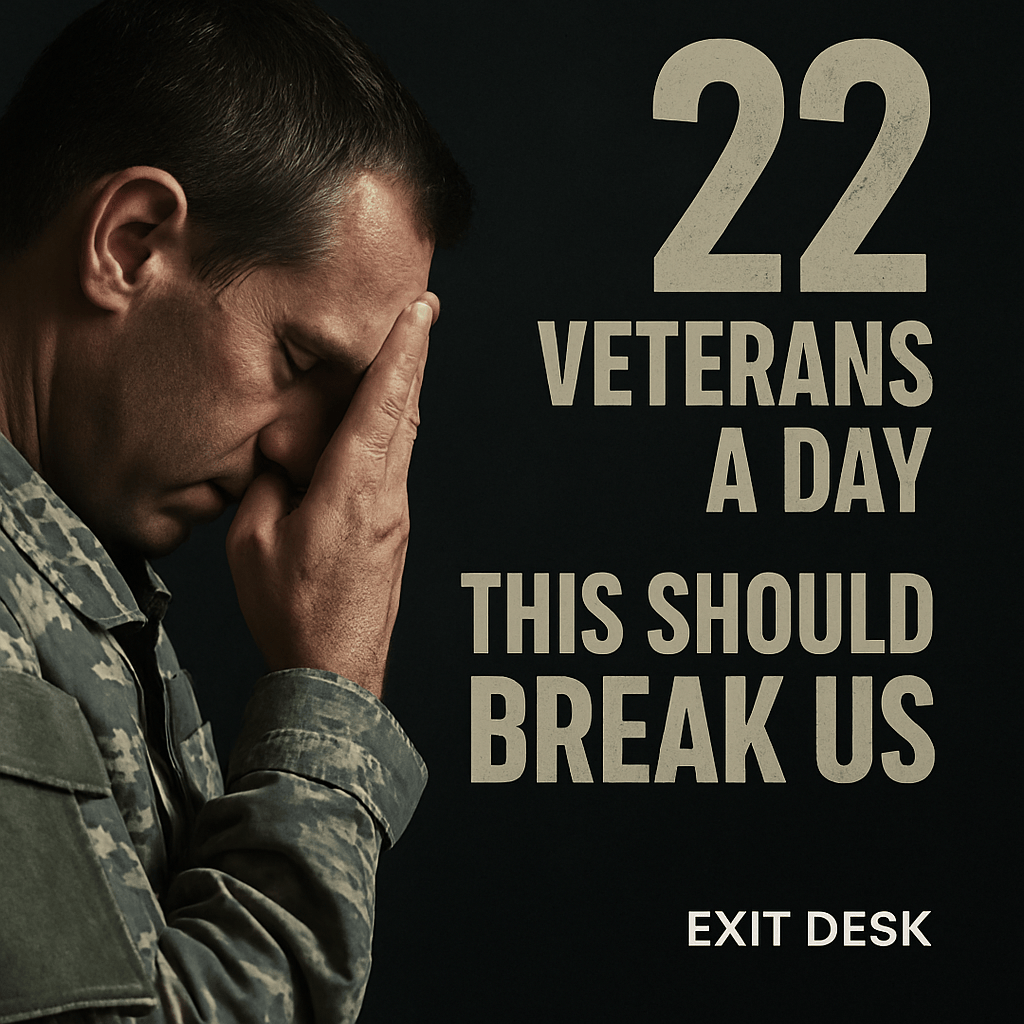
Every day, 22 veterans die by suicide. That’s not a slogan. It’s a failure — and it’s still happening.
The number 22 has echoed across the veteran community for over a decade. It represents a devastating estimate: that 22 former service members take their own lives every single day in this country.
Despite awareness campaigns, hashtags, push-up challenges, and VA outreach programs — the number hasn’t moved enough. Some reports say it’s even worse. And for those of us who’ve worn the uniform or stood beside those who have, it’s more than a number. It’s personal.
🎖️ These Are the Casualties After the War
Not all wounds are visible. Not all pain is loud. Some of the strongest people you’ll ever meet are the ones quietly carrying the heaviest weight.
Veterans take their lives for many reasons — untreated PTSD, chronic pain, moral injury, isolation, loss of purpose, financial stress, survivor’s guilt, and often, the sheer exhaustion of navigating broken systems that were supposed to help.
Some asked for help and got waitlisted.
Some didn’t ask — because they were trained not to.
Some wore the mask until they couldn’t anymore.
🛑 22 a Day Is 22 Too Many
We lose more veterans to suicide than we lost in Iraq and Afghanistan combined.
That fact should stop this country cold — and yet it rarely makes headlines.
Here’s what no one wants to admit:
The veteran suicide epidemic is not a mystery.
It’s a systemic failure — of access, care, connection, and cultural understanding.
It’s about stigma.
It’s about red tape.
It’s about being told “thank you for your service” one day and being left on hold by the VA the next.
🔧 What Needs to Change
Faster access to mental health care. Crisis response teams trained in veteran-specific trauma. More peer-led programs and vet-to-vet outreach. Real enforcement of disability accommodations — not just lip service. Families and communities educated in suicide warning signs.
📞 If You’re a Veteran and You’re Struggling:
You are not alone. You are not weak. You are not a burden.
Veterans Crisis Line: Dial 988 and press 1 Available 24/7, nationwide. Text Support: Text 838255 to connect with a trained responder Talk to someone you trust. Call a friend. Call a fellow vet. Reach out. You do not have to carry this alone.
🗣️ Today We Talk, Tomorrow We Fight
If you’re a veteran — tell your story.
If you’ve lost someone — say their name.
If you’re angry — use it. Turn it into pressure, action, and awareness.
EXIT DESK is listening.
If you’ve been let down, shut out, or left behind — send your story in We’ll share it if you want us to. We’ll hold it sacred if you don’t.
📢 Call to Action
22 a day is not just a number — it’s a line in the sand.
Veterans with PTSD and invisible disabilities are being failed in public spaces where ADA accommodations should protect them — and it’s time for real change.
The Hidden Struggle of Veterans with PTSD in Public Spaces
For veterans living with post-traumatic stress disorder (PTSD) and invisible disabilities, a simple outing to a concert, parade, or public event can turn into a nightmare. These brave individuals, who’ve sacrificed so much, often face neglect and dismissal when they need support the most.
As a 100% disabled U.S. Army combat medic veteran, I’m heartbroken by the stories from our community — and I’m calling for urgent change to ensure ADA accommodations in public venues protect those with PTSD, anxiety, and sensory challenges.
The Harsh Reality for Many Veterans
Far too often, veterans with PTSD walk into public events hoping for a simple, enjoyable experience — but instead, they’re left to battle their condition alone in the middle of a crowd.
Imagine being overwhelmed by noise, flashing lights, or unexpected triggers. Your heart races. Your body trembles. Your breathing becomes labored. And yet, as you struggle, you’re met with blank stares or complete indifference.
Instead of trained staff stepping in to offer help, many veterans are left sitting on the ground or huddled against a wall, fighting through panic attacks with no chair, no safe space, and no comforting voice to remind them: “You’re safe. You’re not alone.”
Some are dismissed outright. Told to “handle it” or directed to stand in the back if they can’t cope — as if their service-connected disability is an inconvenience, not a reality.
This is happening across parades, concerts, and public events nationwide — and every time it happens, it sends a cruel message: “You’re on your own.”
Why Public Venues Fail Veterans with PTSD
Under the Americans with Disabilities Act (ADA), public venues like concert halls, stadiums, and event spaces must provide reasonable accommodations for individuals with disabilities, including PTSD and anxiety disorders. Yet, too often, these venues fall short:
Lack of Staff Training: Employees aren’t equipped to recognize or respond to PTSD panic attacks or sensory overload, leaving veterans unsupported.
Inadequate Safe Spaces: Venues rarely offer quiet zones or accessible areas for self-regulation, forcing individuals into crowded, triggering environments.
Dismissive Attitudes: Veterans are told their disability is “their problem,” mirroring the neglect faced by countless others before them.
Systemic ADA Violations: Failure to engage in an interactive process for accommodations violates Title III of the ADA, undermining basic disability rights.
These failures aren’t just inconvenient — they’re dangerous. A PTSD episode in a crowded venue can escalate into a full-blown crisis, causing severe emotional distress and long-term harm.
What Veterans and Disabled Individuals Need
Veterans with PTSD and invisible disabilities don’t want pity — they want respect and safety. Simple changes could transform public spaces:
Trained Staff: Employees should learn to identify PTSD symptoms (e.g., shaking, disorientation) and offer support, like escorting to a quiet area or providing reassurance.
Accessible Safe Zones: Venues must designate low-sensory areas for self-regulation, as required by ADA compliance.
Proactive Communication: Staff should engage when a disability is disclosed, not dismiss requests with “go to the back” or “deal with it.”
Cultural Shift: Public venues must prioritize veteran mental health support and disability inclusion, ending the “your problem” mentality.
As the U.S. Department of Justice emphasizes, ADA accommodations are a legal obligation, not optional. Organizations like Mission 22, which supports veteran mental health, show how advocacy can drive change. It’s time for venues to step up.
Your Story Matters: Join the Fight for Change
These stories are a wake-up call. We can’t let another hero feel abandoned in a crowd.
I’m launching this conversation to amplify veteran voices and push for ADA access in public spaces. But I need you:
Have you faced neglect during a PTSD episode or disability crisis at a concert, parade, or event? Share what happened and how it felt.
What’s it like when venues fail to support you, or when people dismiss your struggle as “your problem”?
How can we make public spaces safer for veterans and those with invisible disabilities? Better training, safe zones, or real ADA enforcement?
Drop your story in the comments below. Every voice fuels the fight for veteran mental health support and disability rights. Share this post, tag a friend, or spread the word on social media with #VeteransDeserveBetter and #ADAAccessNow.
Together, we can demand public event accessibility and ensure no veteran feels invisible again.
Let’s make this loud. We’re in this for every veteran, every day.
The Future of Energy: Balancing Green Initiatives with Technological Demands
In recent years, the rapid advancement of technology, particularly in artificial intelligence (AI) and big data, has led to an unprecedented increase in energy consumption. Companies like Amazon are at the forefront of this transformation, driving significant changes in how energy is produced and consumed. A notable trend is the shift towards nuclear power to meet the growing demands of data centers, sparking a debate on the future of green energy initiatives.
The Energy Dilemma
Data centers, the backbone of our digital world, require immense amounts of energy to operate efficiently. As AI and other technologies continue to evolve, these energy requirements are only expected to rise. Traditionally, renewable energy sources such as solar and wind have been championed as the solution to our energy needs, offering a clean and sustainable alternative to fossil fuels. However, these sources are not without their challenges.
Solar and wind power are inherently intermittent, relying on weather conditions that can be unpredictable. While advancements in energy storage technologies are being made, they are not yet sufficient to ensure a constant and reliable energy supply on the scale required by massive data centers. This has led companies like Amazon to explore alternative energy solutions, including nuclear power.
Nuclear Power: A Viable Solution?
Nuclear power offers a reliable and constant source of energy, capable of meeting the high demands of modern technology infrastructures. Unlike renewables, nuclear plants can operate continuously, providing a stable base load of power. This reliability makes nuclear an attractive option for tech giants seeking to power their expansive and energy-intensive operations.
Amazon’s investment in nuclear power highlights a broader trend within the industry. As the race for AI supremacy heats up, ensuring a steady and ample supply of energy becomes critical. The question then arises: Will the pursuit of technological dominance force a compromise on green energy initiatives?
The Green Initiative at a Crossroads
The shift towards nuclear energy raises important questions about the future of green initiatives. On one hand, the environmental benefits of reducing reliance on fossil fuels are clear. On the other hand, the urgency of technological advancements necessitates reliable energy sources that current renewable technologies cannot consistently provide.
Abandoning green initiatives in favor of nuclear power is not a straightforward decision. Policymakers, industry leaders, and environmental advocates must weigh the immediate benefits of nuclear energy against the long-term goals of sustainability and environmental protection. The solution likely lies in a balanced approach that incorporates multiple energy sources.
A Balanced Approach
Achieving a sustainable balance between technological progress and environmental stewardship requires innovative thinking and a willingness to invest in diverse energy solutions. This includes:
Advancements in Energy Storage: Improving the efficiency and capacity of energy storage systems can enhance the viability of renewable sources, making them more reliable.
Diversification of Energy Sources: Combining nuclear power with renewables and other energy sources can provide a stable and sustainable energy mix.
Investment in Research and Development: Continued investment in R&D can drive innovations in both energy production and consumption, leading to more efficient and sustainable technologies.
Policy and Regulation: Governments play a crucial role in shaping energy policies that balance economic growth with environmental protection. Incentives for clean energy technologies and stringent regulations on emissions can guide the transition towards a more sustainable energy landscape.
Conclusion
The intersection of energy demands and technological advancements presents a complex challenge. While nuclear power offers a reliable solution to the immediate needs of companies like Amazon, the long-term vision of a sustainable and environmentally friendly energy future must not be overlooked. By embracing a balanced and innovative approach, it is possible to support both the green initiatives and the relentless march of technological progress, ensuring a sustainable future for generations to come.
Call to Action: What are your thoughts on the use of nuclear power to meet the energy demands of modern technology? Share your opinions in the comments below and subscribe for more insights into the evolving landscape of energy and technology.
Bill Spadea, renowned for his passionate advocacy for American manufacturing and innovative technologies, recently highlighted an impressive development in New Jersey’s educational landscape. In a recent visit to Warren County, Spadea toured WarrenUAS at Warren Community College, a facility that boasts one of the top unmanned drone programs in the nation. This visit underscored the potential of drone technology in addressing several critical issues facing New Jersey.
A Hub of Innovation in Phillipsburg
WarrenUAS, located in Phillipsburg, has quickly risen to prominence as a leading institution for unmanned aerial systems (UAS) education. The facility provides cutting-edge training and research opportunities, positioning itself as a national leader in drone technology. Spadea’s tour revealed the breadth of the program and its state-of-the-art facilities, which are designed to prepare students for careers in the rapidly evolving field of drone technology.
Bringing Manufacturing Back to America
Spadea’s vision extends beyond education; he envisions a future where drone technology plays a pivotal role in revitalizing American manufacturing, particularly in New Jersey. He argues that within the next few years, drones could be instrumental in addressing several key issues impacting the state. One of the most pressing areas is flood mitigation. Drones can efficiently map areas for dredging, de-snagging, and rebuilding riverbanks, reducing the time and cost involved in these critical projects.
Precision Farming and Wildlife Management
Another significant application of drones is in precision farming. By deploying drones, farmers can target specific crops, optimize water usage, and apply nutrients more effectively, leading to increased productivity and sustainability. Additionally, drones can provide accurate counts of wildlife populations, such as deer and bears, helping to manage overpopulation and minimize the damage to crops.
Infrastructure and Safety Inspections
New Jersey’s aging infrastructure is another area where drones could make a significant impact. The state has over 2,500 bridges in need of repair, with 442 considered structurally deficient. Drones can conduct thorough inspections both above and below water, identifying specific repair needs without the need for lane closures or risking the safety of inspectors. This technology promises to streamline infrastructure assessments and expedite necessary repairs.
Economic and Employment Benefits
Spadea also emphasized the economic benefits of investing in drone technology. By creating an incubator for entrepreneurs to manufacture and deploy drones locally, New Jersey can reduce its reliance on imported products, particularly from China. This initiative has the potential to generate thousands of jobs and millions in new tax revenue, positioning New Jersey as a leader in drone technology and manufacturing.
Conclusion
Bill Spadea’s visit to WarrenUAS highlights the transformative potential of drone technology in New Jersey. From improving flood mitigation and precision farming to enhancing infrastructure inspections and boosting the local economy, drones offer a versatile and efficient solution to many of the state’s challenges. As Spadea continues to advocate for these innovations, New Jersey stands poised to lead the way in drone technology and American manufacturing.
For more details on Bill Spadea’s initiatives and his recent visit to WarrenUAS, you can visit his official website and listen to his radio show on NJ 101.5.
In our ever-evolving society, it’s crucial to champion equal opportunities for all, regardless of gender. While the movement to empower women and girls has made significant strides, an important question lingers: Are we inadvertently leaving our boys behind in certain aspects? One example of this lies in the world of youth fundraising.
Girl Scout cookies, those iconic treats, have become a nationwide obsession. Their success story is not just about selling cookies; it’s about branding, recognition, and an irresistible product. On the flip side, the Boy Scouts’ popcorn fundraiser seems to pale in comparison, leaving many to wonder if our boys are getting a fair shot. As we explore this disparity, it’s crucial to note that rather than victimizing the situation, we must take responsibility for addressing it. This article aims to inspire action and engage communities in supporting our boys in their fundraising endeavors.
The Irresistible Allure of Girl Scout Cookies
Why Girl Scout Cookies Dominate
Girl Scout cookies are nothing short of a phenomenon. They’ve mastered the art of branding and have created an iconic product. Here’s why they’ve cornered the market:
Year-Round Appeal: Girl Scout cookies are available year-round. This constant presence keeps their brand alive in our minds.
Universality: Anyone can enjoy Girl Scout cookies. They cater to diverse tastes, from Thin Mints to Samoas, offering something for everyone.
Masterful Marketing: Girl Scouts have perfected the art of marketing. Their cookies are more than just treats; they’re symbols of tradition, empowerment, and community support.
Nostalgia and Tradition: Many of us have fond childhood memories of Girl Scout cookies, creating a deep emotional connection to the brand.
The Popcorn Predicament
Why Boy Scouts Struggle
On the other side of the fundraising spectrum, we find the Boy Scouts and their popcorn fundraiser. While popcorn may be a beloved snack, it struggles to compete with the allure of Girl Scout cookies for several reasons:
Perceived Boredom: Popcorn, by nature, is considered a mundane snack compared to the mouthwatering appeal of cookies. It lacks the same excitement and variety.
Lack of Year-Round Presence: Popcorn sales are seasonal, which means the Boy Scouts’ presence in fundraising activities is limited, and their branding opportunities are less frequent.
Brand Recognition: Girl Scout cookies are instantly recognizable, while Boy Scouts’ popcorn doesn’t enjoy the same level of brand recognition.
Seeking Solutions and Taking Responsibility
Rather than lamenting the situation, it’s vital that we recognize our role in shaping the future for our boys. It’s not about arguing or diminishing the success of the Girl Scouts, but rather about taking responsibility and inspiring action to bridge the fundraising gap.
Empowering Our Boys
It’s clear that the success of Girl Scout cookies is unmatched, and it’s unrealistic to think that popcorn can replicate their level of allure. However, there are ways to level the playing field and ensure our boys have equal opportunities:
Diversify Fundraising Products: Boy Scouts could explore a wider range of fundraising products beyond popcorn. Consider products with broad appeal that can be enjoyed year-round.
Enhance Branding and Marketing: Invest in branding and marketing strategies that make Boy Scouts’ fundraising efforts more visible and appealing.
Community Involvement: Encourage greater community involvement in supporting Boy Scouts’ fundraisers to boost recognition and success.
Collaboration: Explore partnerships with local businesses or organizations to enhance the reach and impact of fundraising campaigns.
Modernize Fundraising: Embrace online platforms and digital marketing to adapt to changing consumer preferences and broaden the reach of fundraising efforts.
Conclusion: Be the Change
As we reflect on the fundraising disparities between the Girl Scouts and the Boy Scouts, let’s remember that we have the power to make a difference. It’s not about playing the victim but rather taking responsibility for shaping a better future for our boys. By diversifying products, enhancing branding, and embracing modern fundraising strategies, we can empower our boys to thrive in the world of youth fundraising.
This is a call to action for communities to come together, support, and uplift the fundraising efforts of our boys. It’s about being the change we want to see and ensuring that American male youth are not left behind. Let’s take responsibility and work collectively to bridge the fundraising gap, providing equal opportunities for success and personal growth for all our young people.
Since March 2020, my approach to health has undergone a remarkable transformation. For what should be obvious reasons, I haven’t taken a single dose of medicine, not even a trusty Tylenol. It’s a significant shift from the days when I used to carry around a bottle of DayQuil in my carpenter’s pouch, ready to pop a pill at the slightest sign of discomfort. Yet, today, I find myself embracing a different path, one of natural remedies and self-reliance, and at the heart of it all is our homemade elderberry syrup. Join me as I share the journey of how our family’s wellness routine shifted, and how crafting our own elderberry syrup became a symbol of health, empowerment, and tradition.
The Remarkable Elderberries
Elderberries: A Natural Immunity Boost
For generations, elderberries have held a special place in my health routine. These small, dark berries are packed with antioxidants and vitamins that bolster the immune system, making them my go-to remedy for warding off colds and flu. Let me introduce you to the star of my wellness routine.
Gathering Our Ingredients
What We Need
Before we embark on this journey, let’s gather our ingredients and equipment. These are the staples in our homemade elderberry syrup recipe:
Ingredients:
1 cup of dried elderberries or 2 cups of fresh elderberries (with stems removed)
4 cups of water
2 tablespoons of fresh or dried ginger
1 teaspoon of cinnamon
1/2 teaspoon of cloves
1 cup of honey (or as desired)
Equipment:
A medium-sized pot
A wooden spoon
A fine-mesh strainer or cheesecloth
Glass bottles or jars
Crafting Our Syrup
The Heartwarming Process
Combining Ingredients: In our pot, we add the elderberries, water, ginger, cinnamon, and cloves. As the mixture comes to life, the aromas fill the kitchen, promising good health with each simmer.
Mashing and Straining: We stir and mash the elderberries as they simmer, ensuring every drop is captured.
Adding Honey: Once it’s cooled to room temperature, we add the honey, a touch of sweetness and a natural preservative.
Bottling Our Syrup: With a sense of accomplishment and pride, we carefully pour our homemade elderberry syrup into glass bottles or jars.
Using Our Wellness Elixir
Sharing the Tradition
Our homemade elderberry syrup isn’t just a remedy; it’s a tradition of self-reliance. Here’s how I use it:
Daily Nourishment: I take 1-2 tablespoons daily, as part of my wellness routine.
Versatile Pairings: Elderberry syrup is versatile. I take it directly or mix it into tea, yogurt, or smoothies.
When Illness Strikes: Should a cold or flu threaten, I up the dosage to help alleviate symptoms and shorten the duration of my illnesses.
Safety First
Prioritizing Health
While elderberry syrup has been a godsend for me, it’s vital to exercise caution. Before incorporating it into your wellness routine, consult a healthcare professional, especially if there are underlying health conditions or medications involved. And remember, never consume elderberries raw – they can be toxic if not properly prepared.
Conclusion
Homemade elderberry syrup isn’t just a recipe; it’s a part of my journey towards better health. Crafting it brings me closer to nature, and using it keeps me connected to my well-being. I invite you to join me in this heartwarming tradition of making and using elderberry syrup. Craft your own wellness, strengthen your health, and savor the sweetness of a more natural and nurturing approach to well-being.
Now, I’m curious: What are some of the remedies or wellness practices that you and your family have embraced for better health? Share your experiences and insights with us in the comments below.
Life is a meandering and unpredictable odyssey, often taking us down paths we could never have foreseen. This article revolves around the remarkable theme of life’s unpredictability and the invaluable lessons we can derive from embracing its capricious nature.
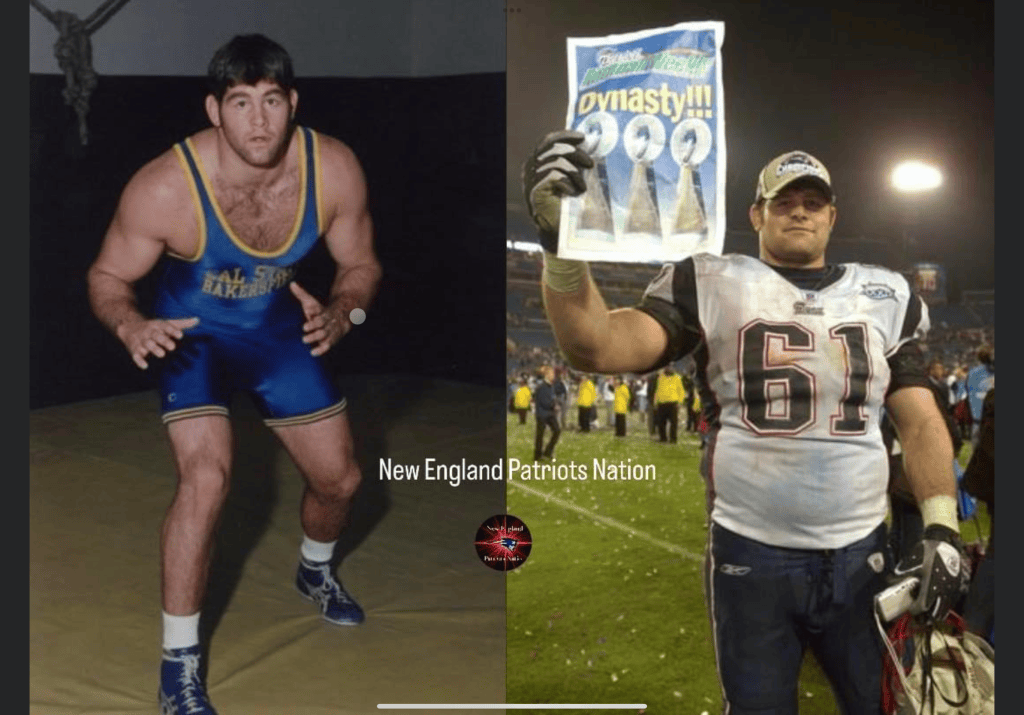
Stephen Neal’s story serves as a captivating example of life’s twists and turns. Picture the astonishment of a dedicated football aspirant upon discovering that Neal, a revered figure in the annals of the New England Patriots, never set foot on a college football field. Instead, he was a two-time National Champion wrestler. It’s a surprising revelation that leaves us contemplating the whims of fate.
For many individuals, the pursuit of lifelong dreams commences in childhood, whether it’s stepping onto Pop Warner football fields at the tender age of five or embarking on other passionate endeavors. These individuals commit themselves to their crafts, adhering to rigorous diets, embracing strenuous exercise routines, and immersing themselves in the nuances of their chosen fields.
Such dedication comes at a cost, requiring them to forgo family vacations, carefree beach days, and leisurely summer afternoons. Instead, they dedicate their summers to the unforgiving sun at football camps, grueling practices, and the guidance of private coaches.
Life, however, often throws us curveballs. Consider the irony that dedicated athletes might experience when they discover that their chance at glory has been granted to someone like Stephen Neal, who pursued an entirely different path.
Neal’s extraordinary journey from the wrestling mat to NFL stardom underscores a fundamental truth: life has its own plan, distinct from the meticulous blueprints we create. His story serves as a compelling reminder that life’s deviations can lead us precisely to our intended destinations, even if it’s a route we never fathomed.
In the grand narrative of existence, replete with stories both amusing and perplexing, we discover wisdom and humor. The theme of embracing life’s quirks is a constant thread in our lives. It teaches us that there’s no one-size-fits-all formula for success. Sometimes, life’s unexpected detours become the most enriching segments of our journey.
As we navigate our unique paths, let’s remember that life’s surprises, whether they amuse or mystify us, ultimately guide us precisely to where we’re meant to be. Ultimately, it’s the quirkiness of life that imparts depth, richness, and an enduring sense of wonder to our collective human experience.