
What the States Say Happened
From 2016 to 2024, GM enrolled millions of drivers in OnStar Smart Driver. It was sold as a safe driving tool. According to the attorneys general, Smart Driver tracked speeding, hard braking, rapid acceleration, seat belt use, trip times, and precise vehicle location, in some cases, the FTC said, location collected as often as every three seconds. The states allege GM sold that data to data brokers, including LexisNexis and Verisk, who passed it to insurance companies. Insurers used it in reports to set rates and deny coverage. Drivers, the FTC alleged, went through a misleading enrollment process and never gave informed consent for that sale. Then there is the part that should make any driver stop reading and check their own app history. The attorneys general say the OnStar app mistakenly told more than 370,000 drivers they were not enrolled in Smart Driver, when they actually were enrolled and GM was collecting and selling their data. GM discontinued Smart Driver in 2024 after reporting by The New York Times exposed the practice. GM admitted no wrongdoing in the multistate settlement. These are allegations resolved by settlement and by an FTC order, and I am labeling them that way.
Three Actions, Three Different Results
First, the FTC. In January 2025 the FTC alleged GM and OnStar collected and sold geolocation and driving behavior data without informed consent. The FTC finalized the order on January 14, 2026, by a 2 to 0 vote. For five years, GM and OnStar may not disclose geolocation or driving behavior data to consumer reporting agencies. For the full 20 year life of the order, GM must get affirmative express consent before collecting, using, or sharing connected vehicle data, with limited exceptions such as emergency response. GM must also give U.S. consumers a way to request a copy of their data and ask for deletion, disable location collection where the vehicle supports it, and opt out of geolocation and driving behavior collection. Second, California. On May 8, 2026, California announced a $12.75 million penalty and a five year ban on sales to consumer reporting agencies, with deletion requirements. That money goes to the state, not to drivers. Third, the multistate settlement. On October 29, 2026, 36 attorneys general announced $220 million. New Jersey Attorney General Jennifer Davenport said New Jersey drivers should not have to worry about insurance rates going up because personal information was secretly sold to data brokers. New Jersey receives $8,948,159. Under the settlement, GM must obtain explicit consent before collecting or sharing driving and location data. Read that again. $220 million to the states. No payment in these settlements goes directly to the drivers whose braking, speeding, and location were sold. There is no claim form in the attorneys general announcements for an individual driver to file for a check from this settlement.
This Was Never Just a GM Problem
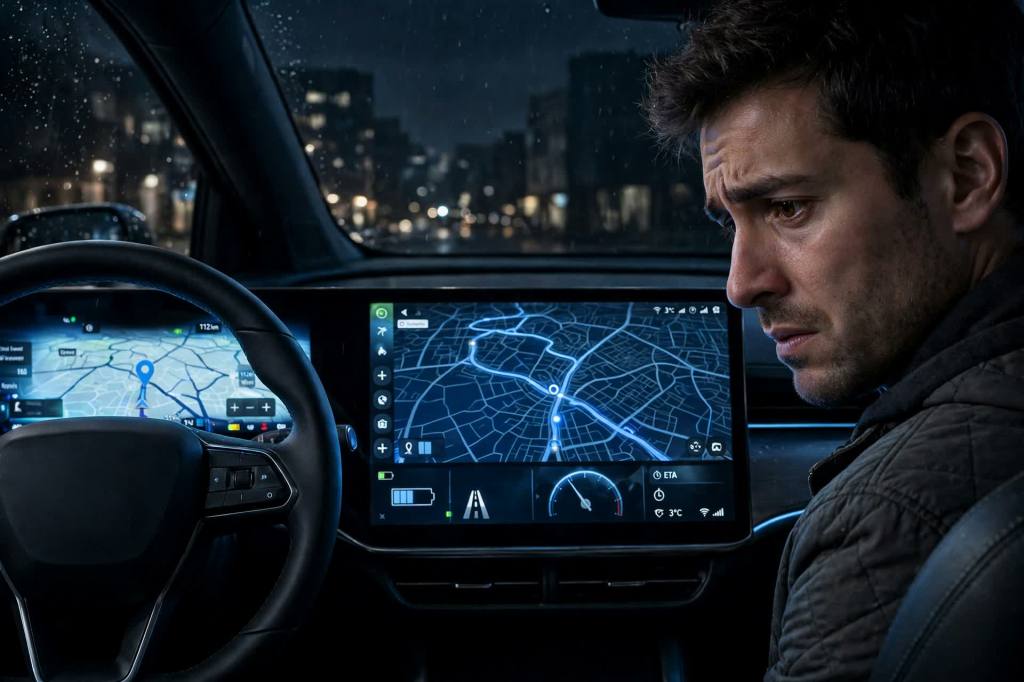
GM is the company that got caught, settled, and put under a federal order. It is not the only automaker collecting connected car data. That is the scary tech part of this story that survives the settlement. Your car is a rolling sensor platform. It knows where you park, when you leave, how hard you brake, and whether you drive late at night. The question is never whether the car can collect it. The question is who agreed to what, in what screen, buried in what flow, and where the data went after. A consent screen at a dealership is not the same thing as a driver understanding their location history will end up in an insurance risk report. Regulators, in the FTC’s words from January 2025, called GM’s conduct an egregious betrayal of consumers’ trust. I do not need to top that language.
What a New Jersey Driver Can Do Now
If you drive a GM vehicle, use the rights the FTC order requires. Request a copy of the connected vehicle data GM holds on you and ask for deletion where the order and GM’s privacy tools allow it. Turn off location collection in the vehicle or app where that setting exists, and opt out of driving behavior collection. If you drive another brand, do the same audit anyway: find the connected services privacy settings, turn off marketing and data sharing toggles you do not need, and ask the automaker how to request and delete your data. Check your insurance file, too. If a rate jumped and nobody could explain why in plain English, ask what data the insurer used. You cannot fix a report you have never seen. And the next time a car, an app, or a dealer tablet asks you to tap agree to a safety score, read what the score is for, who receives it, and whether an insurer is on the other end. Safe driving feedback for you is one product. Your driving record sold to a broker is a completely different product wearing the same name.
My Bottom Line
New Jersey got $8.9 million. The states got $220 million. The FTC got a five year ban and a 20 year consent order. The drivers who supplied the data got a lesson: in a connected car, you are not just the customer. Your trips are inventory, unless you turn the collection off and use the deletion rights now on paper.
More in this lane: Data centers and your electric bill, REAL ID in New Jersey, and Drone delivery is headed for New Jersey.
Sources
- New Jersey Attorney General, Final Consent Judgment, General Motors and OnStar, filed October 29, 2026, Mercer County, Docket MER-C-000087-26. https://www.njoag.gov/wp-content/uploads/2026/10/2026.10.29-Consent-Judgment-Filed.pdf
- Jersey Vindicator, October 29, 2026, https://jerseyvindicator.org/2026/10/29/new-jersey-to-receive-8-9-million-in-settlement-over-gm-sale-of-drivers-private-data/
- Federal Trade Commission, FTC Finalizes Order, January 14, 2026.

